










































Nigerian Rural Mothers' Knowledge of Routine Childhood Immunizations and Attitudes about Use of Reminder Text Messages for Promoting Timely Completion
University of Ibadan
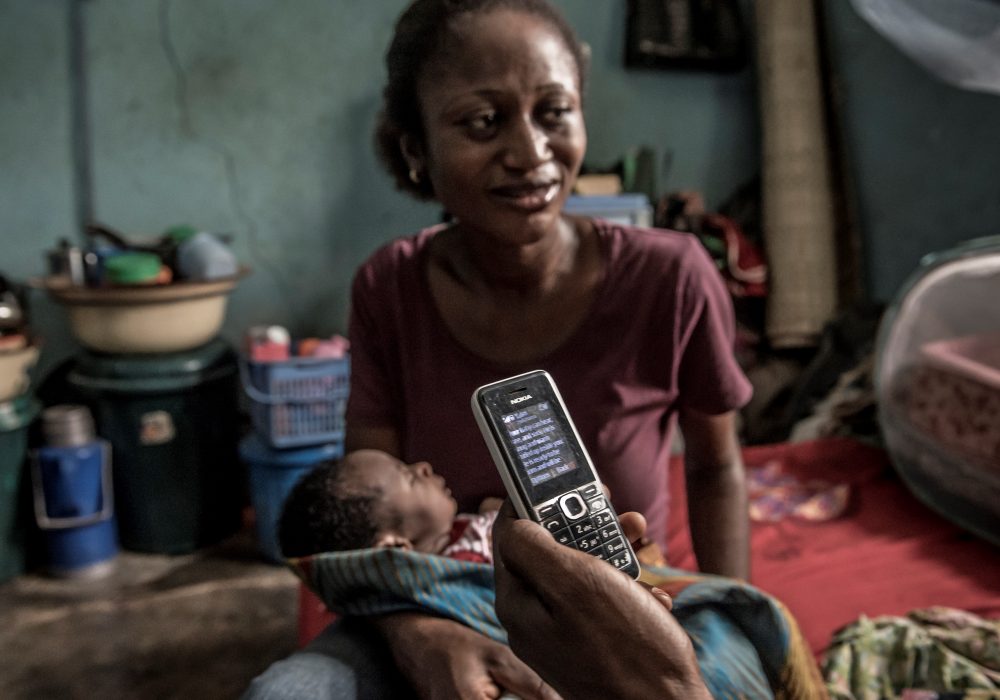
Mothers' poor knowledge of and attitudes toward routine immunisation contribute to the consistently low trends in immunisation coverage in Nigeria. This paper shares baseline results of a research project whose goal was to assess the effectiveness of using SMS reminder text messages to influence full and timely completion of routine vaccinations by mothers of children aged 0-12 months in rural Nigerian communities. Findings will be used to design the SMS messages for implementation.
Conducted between November 2017 and March 2018, the study adopted a descriptive cross-sectional design among 3,440 consenting mothers (most (60.2%) of whom fell into the 20- to 29-year age category) of infants in 6 randomly selected Nigerian states and in the Federal Capital Territory (FCT). The study team used a focus group discussion (FGD) guide and validated questionnaire to collect data; they analysed data using a thematic approach and descriptive statistics.
Selected findings with regard to vaccine-related knowledge and attitudes:
- Most respondents (66.5%) had "low" knowledge of routine immunisation, and only one-third of the respondents correctly reported the routine immunisation schedule. The 2 most cited advantages of childhood immunisation were "it prevents children from all diseases" (67.1%) and "it makes them strong and fit/of sound health" (51.2%).
- Prominent factors perceived as affecting timely and full completion of routine immunisations for children aged below 12 months include lack of awareness of immunisation (61.6%) and of subsequent doses (58.4%), and fear of side effects (59.7%). Others include rumours (for example, an association with future infertility) (56.3%), family problems, including illness of mother (58.9%), and child illness (57.6%).
- Most respondents (73.6%) had a positive attitude towards routine immunisation. Most (91.3%) "strongly agreed" or "agreed" that they trust the safety of the vaccines used. Most (71.6%) "strongly agreed" or "agreed" that it is necessary to immunise children against any communicable diseases, as a prayer to and faith in God is not sufficient to protect. Most (86.7%) "strongly agreed/agreed" that once a child is fully immunised, he or she is safe and free from vaccine-preventable diseases. However, 18.0% of the respondents "strongly agreed/agreed" that mothers could be anxious concerning immunisation because they perceive it as dangerous to children's health, while 20.0% held the view that immunisation is not necessary because it makes children sick.
Findings related to mobiles phones and SMS communication:
- All respondents possessed at least one mobile phone, and 11.7% had more than one active line. The majority, 89.3% and 87.5%, respectively, could open and read text messages on their mobile phone/s. Most (84.2%) reported knowing how to send text messages, and 58.5% reported ability to read or send texts in the English language. Nearly half (49.7%) had experienced mobile phone network failure; most (62.3%) have access to other mobile phones if their own are faulty.
- Most (90.5%) indicated willingness to accept reminder text messages for routine immunisation, and 91.5% opined that mobile phones can be effective in providing such information. About two-fifths (41.1%) indicated a willingness to receive reminder text messages any time of the day; 31.8% preferred morning reminders. A little more than half, 58.0% and 58.1%, would not have difficulties receiving or reading text messages on their phones, respectively, and 61.6% reported that reminder messages would help them keep immunisation appointments.
Reflecting on the findings, the study team notes that most respondents' education exceeded high school completion, which contributes to their ability to read text messages. However, they did not expect mothers' knowledge of vaccine-preventable diseases and routine immunisation to be so low, in light of the fact that most of them had given birth to more than one child. This suggests that educational messages from the clinic's health workers may not sufficiently equip them with adequate knowledge about the different diseases and vaccines.
Respondents' willingness to accept a reminder SMS for routine immunisation service delivery in the study was positive, but the study team suggests that research is needed on mothers who do not take their children to immunisation clinics, even after sending reminder text messages to them about desirable schedules.
In conclusion: "To achieve higher childhood routine immunization uptake, the proposed intervention should incorporate the mothers' preferred language and time of receiving the SMS messages into the messaging process." Furthermore, well-designed and culturally sensitive persuasive messages could help encourage mothers to act on the messages sent to their phones.
Journal of Public Health Policy (2019). https://doi.org/10.1057/s41271-019-00180-7. Image credit:Jhpiego
- Log in to post comments