










































Neglected and Forgotten: Women with Disabilities during the COVID Crisis in India
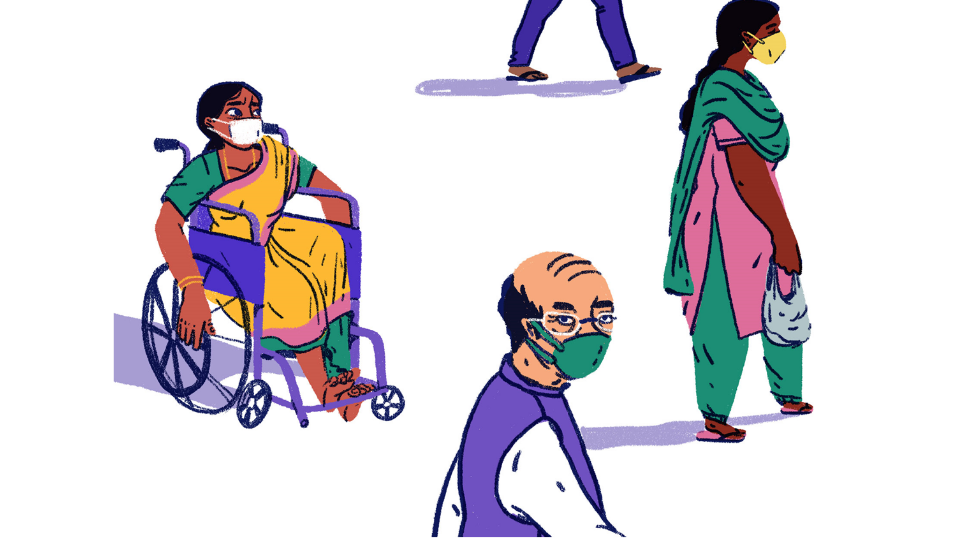
"...undertaken with the aim to amplify voices and narratives of women with disabilities in an effort to ensure that they are not left behind in policy, systemic and societal responses in the current times."
The COVID-19 pandemic has exacerbated the discrimination, isolation, and marginalisation that India's 11.8 million women with disabilities experience. To understand the extent of the challenges and to recommend remedies, the civil society organisations Rising Flame and Sightsavers undertook research, led by disabled people themselves, on women with disabilities during the COVID-19 crisis in India.
The data for the study were collected in May 2020 through a series of facilitated semi-structured group discussions with 82 women with disabilities and 12 experts across 19 states of India, along with 9 self-identified disability groups. Eight consultations were organised - 4 of which were held online over Zoom and 4 of which were conducted as conference calls over the telephone. Reasonable accommodations by way of sign language and live captioning were provide, and one call was specifically designed to ensure the full and effective participation of deaf, hard of hearing, and deafblind women. Calls conducted in languages other than English and Hindi had translators present. Dissemination of the invitation to the calls was done over email, via social media, and over the phone. It also involved outreach to disabled peoples organisations (DPOs) and other partner organisations.
In brief, 75 out of 82 participants and all those who identified as deaf, deaf blind, and hard of hearing faced access barriers with regards to information and communication, digital spaces, remote/digital education, social protection, food and essentials, and physical and psychological support. From the discussions, thematics were identified around several issues, many of which were interlinked. These are some of the findings:
- Since many of the persons with disabilities are already immunocompromised, they are especially vulnerable to the novel coronavirus. Many participants expressed anxiety, fearing exposure to the virus - both for themselves and their caregivers.
- There were hurdles in regular communication because of the extensive and necessary use of masks, making lip-reading and following facial cues difficult for those with hearing difficulties. "I worry that if I were to get hospitalized in this situation, I wouldn't be able to hear the doctors and the nurses," said a 35-year-old woman who is hard of hearing from Mumbai.
- Announcements, press releases, news reports, and all other information regarding the pandemic have not been available in accessible formats. Participants reported that not all applications (apps) and websites follow Web Content Accessibility Guidelines, making digital spaces inaccessible. A 31-year-old blind woman from Trivandrum said, "The Aarogya Setu app is not accessible for people with disability. This is one of the most important apps. There are guidelines being circulated which is not accessible for blind people. It is a scanned document in pdf document. This is not readable by screen-readers." And a 35-year-old deaf woman from Delhi shared her experience of only having been partially informed about the lockdown: "My friends told me everything is shut. I didn't know what the problem was. Later on, I learnt from ISH news, a news channel for the deaf community."
- While the Disability Inclusive Guidelines for the lockdown have supposedly enabled at-home delivery of food and essential services for persons with disabilities, the general fear of the virus among delivery persons often causes them to refuse to go to visit homes. Even if supplies are dropped off, there can be barriers; a 54-year-old woman with locomotor disability from Ghaziabad said, "If online store people have dropped the groceries at my society gate, they don't offer to help. I am not able to pick up the weight, but when I request them to carry it for me, they refuse." The lockdown has imposed further challenges in accessing other non-COVID necessities such as medicines, menstrual hygiene products, assistive devices (e.g., hearing aids and batteries for hearing aids), and adult diapers.
- As the country shifts towards online payments and banking for safety reasons, many apps, such as Paytm and Bharat Interface for Money (BHIM), remain inaccessible to blind and low-vision users in the country.
- The education system has responded to the pandemic and the lockdown by shifting to online classes and exams. But for persons with disabilities, including both students and teachers, the shift hasn't been accommodating of their needs. A 20-year-old deafblind college student from Delhi, said: "No special assistance, no captions or text are shared. Most of the assignments are PDFs scanned and sent which means someone needs to read out to me." Teaching staff with disabilities were also disadvantaged by the shift online, as they have not been given any training for these platforms, which, in many cases, are not fully accessible.
- Similarly, the pandemic has led to a shift to work-from-home and remote work settings (if not pay cuts and/or lay-offs). For many of the disabled women who retained their jobs, these changed ways of working through video calls and voice calls also come with challenges. Many persons with disabilities do not have access to independent or privately-owned phones or digital devices due to factors such as rural location, illiteracy, and lack of autonomy or agency in general. The burden of work is often made worse by the added household chores that fall upon women.
- An indirect impact of the lockdown and the pandemic has been a rise in cases of domestic abuse. Women and girls with disabilities are also often at the receiving end of violence from their families or people they live with.
The report outlines short-and long-term recommendations to cater to areas where women with disabilities have been denied equal access and availability of resources; here is a selection only:
- Ensure, as an immediate action, that all guidelines and policies developed around prevention and interventions in cases of domestic violence experienced during the lockdown and its aftermath are inclusive of and accessible to women and girls with disabilities and designed to address barriers to reporting.
- Ensure accessibility of all communications, information, announcements, and helplines regarding COVID-19 in a range of accessible formats, including sign languages, braille, audio versions, and easy-to-read versions, at the same time as these sources of guidance are available to the general population.
- Ensure doorstep delivery of food and other essentials, including menstrual hygiene products, to the doorstep of women with disabilities.
- Make the disability pension and ex gratia payments under government schemes responsive to the added costs incurred by persons with disabilities.
- Conduct awareness campaigns to reach parents and families with the message that they need to prioritise and take the education of women/girls with disabilities seriously, so as not to constrain them in gender-stereotypical roles that might lead them to drop out of school (sometimes never to return), particularly during this pandemic.
- Encourage the manufacture of masks that comply with safety standards yet use transparent material to facilitate access to lip reading for deaf individuals, and promote the use of these masks by essential workers.
- Ensure that skills development programmes run by the public and private sector, which are now moving online, comply with accessibility requirements and be designed to address barriers faced by women with disabilities, and conduct specific outreach through DPOs to encourage the training of women with disabilities.
- Consult with and actively involve women with disabilities in the development of strategies around domestic violence prevention, and make helplines, websites, and other complaint mechanisms regarding gender-based violence operational and accessible for women with disabilities facing domestic violence.
- Ensure access to support for all persons, including those experiencing mental or emotional distress during the COVID-19 outbreak, to call-in, in person, and online psychosocial support and peer support, based on respect for individual will and preferences.
- Facilitate the participation of women with disabilities in COVID-19 response (e.g., local and national advisory boards), building their capacities to make decisions and take on leadership roles in disaster management guidelines and processes.
In conclusion: "All stakeholders in the Government as well as private sector must be cognizant of the 'double edged' potential of technology to either close barriers of accessibility or throw them wide open. It is crucial that all stakeholders adopt inclusive approaches to rebuilding our communities and systems in the aftermath of COVID-19 and provide opportunities for leadership and showcasing of social innovations that organizations of and for persons with disabilities have developed in these challenging times, specifically around the inclusion and experiences of women and girls with disabilities."
Rising Flame website and "Neglected & Forgotten: Women With Disabilities During COVID-19", by Saakhi Chadha, FIT, August 25 2020 - both accessed on November 2 2020.
- Log in to post comments