










































National Communication Campaign and Community Engagement Activities for a Coordinated COVID-19 Response in Kyrgyz Republic
"...encouraging and supporting community engagement initiatives through trained Village Health Committees has proved successful in disseminating COVID-19 prevention messages and in fostering local adaptation and resilience to the pandemic."
In 2020-2021, in partnership with the Republican Centre for Health Promotion and Mass Communication (the agency mandated by the Ministry of Health), a World Bank team contributed to the development of a joint action plan for a nation-wide communication campaign to raise public awareness about COVID-19 and encourage preventive behaviours in the Kyrgyz Republic. Community-led communication campaigns and water, sanitation, and hygiene (WASH) interventions have also been implemented in schools and the wider community in various regions.
The project team produced communication materials - e.g., posters, infographics for social media posts, video clips (see one example, below) - were produced in both Kyrgyz and Russian and conveyed five key messages:
- Compliance with COVID-19 preventive behaviours in public places, including use of facemasks, handwashing with soap or hand sanitizer, and physical distancing;
- Proper disposal of face masks, gloves, and used tissues;
- Cleaning and disinfection of touch surfaces and personal belongings;
- Reduction of social stigma associated with COVID-19; and
- Personal belongings recommended to carry or have at home during the pandemic, such as facemasks, gloves, disposable tissues, etc.
The approved video clips have been widely disseminated across the country since November 15 2020 via national and regional TV channels and social networks (WhatsApp, Telegram, Facebook). Printouts have been delivered by the Community Development and Investment Agency (ARIS) and the Republican Centre for Health Promotion and Mass Communication to regional health promotion centres, district health offices, and village health committees (VHCs - non-profit volunteer unions of rural residents mostly recruited among women and youth).
With a focus on community engagement for greater ownership of the COVID-19 response, the project team also:
- Contributed to the development of technical guidance for communities and community-based services (e.g. how to interact with COVID-19-positive patients);
- Trained existing VHCs on COVID-19 and associated preventive measures to increase outreach in communities, especially to vulnerable and marginalised people;
- Adjusted capacity-building activities of ongoing WASH projects to integrate COVID-19 messaging and to honour physical distancing regulations;
- Conducted additional training of trainers to cascade information and guidance to local governments, project staff, teachers, and VHCs;
- Provided community health workers with guidance and training on COVID-19 case management;
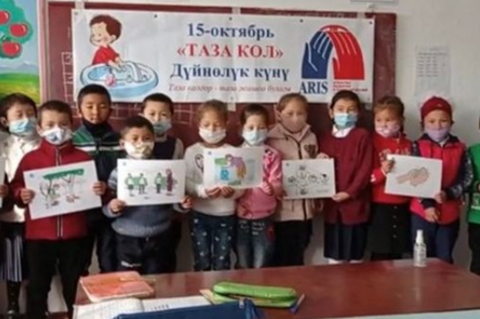
- Built the capacity of teachers to organise awareness-raising activities on the importance of handwashing with soap at school, encouraging use of interactive activities such as handwashing demonstrations and production of video clips to sensitise their communities through social media; and
- Installed handwashing facilities in public places, upgraded handwashing and sanitation facilities of all schools, and promoted sanitation improvements at home through incentive grants and training.
Further outreach activities are planned to reach local governments, teachers, volunteers, and workers in the services sector (drivers, waiters, hairdressers, social workers).
COVID-19
Context:
Landlocked in Central Asia, the Kyrgyz Republic has a population of 6.5 million people, two-thirds of whom live in rural areas. At the start of the pandemic, the lack of awareness about COVID-19 preventive measures and associated messages among healthcare workers was a challenging gap to cover. The lack of accurate information at the early stages of the pandemic also favoured the circulation and development of rumours and stigma around the pandemic and COVID-19-infected patients.
Impact:
In response to the project, VHCs in many villages have partnered with local governments to set up volunteer centres where people can seek information about COVID-19, ask questions, and provide feedback and comments. Anecdotal feedback has been mainly positive, especially on availability of appropriate and clear materials to inform their community about COVID-19 and preventive behaviours.
Positive feedback on COVID-related WASH programmes and training at schools has also been gathered from several teachers and local governments. Improvements of WASH facilities in schools in response to the pandemic has been reported to have had a positive impact on strengthening schoolchildren's handwashing and hygiene behaviours at school and at home. Per project organisers, the project has also increased the inclusivity of infrastructures for girls (especially during menstruation) and children with disabilities.
World Bank, Republican Centre for Health Promotion and Mass Communication.
Collective Service for Risk Communication and Community Engagement (RCCE), March 22 2021; COVID-19 HygieneHub; and "WASH Interventions for a Coordinated COVID-19 Response in Kyrgyz Republic: 5 Questions Answered", by Susanna Smets, Togzhan Alibekova, and Aidai Bayalieva, The Water Blog, January 21 2021 - all accessed on April 1 2021. Image caption/credit: First grade schoolchildren (6-7-year olds) celebrate the Global Handwashing Day in the Chaichi village, Osh region, Kyrgyz Republic
- Log in to post comments