
























Development action with informed and engaged societies

After nearly 28 years, The Communication Initiative (The CI) Global is entering a new chapter. 

Following a period of transition, the global website has been transferred to the University of the Witwatersrand (Wits) in South Africa, where it will be administered by the Social and Behaviour Change Communication Division. Wits' commitment to social change and justice makes it a trusted steward for The CI's legacy and future. 

On the transfer, co-founder Victoria Martin expressed her pleasure to see this work continue under Wits' leadership, knowing that co-founder Warren Feek (1953–2024) would have felt deep pride in The CI Global's Africa-led direction. 

As Wits, we honour the team and partners who sustained The CI for decades and look forward building from that strong base. This includes co-founders Warren Feek (1953-2024) and Victoria Martin as well as La Iniciativa de Comunicación (CILA), which continues independently at lainiciativadecomunicacion.com with links to The CI Global site. We are also eager to forge new partnerships and entertain new ideas as we consider how best to contribute to social and behaviour change in our rapidly evolving environment.

If you are joining the International Social and Behaviour Change Communication (SBCC) Summit in Panama, please join Wits and CILA on Monday, 22 June, to share your thoughts and suggestion for the relaunch of the Communication Initiative. We will be in Pacifica 5 from 12-1:25 for the Refuel, Reflect, and Renew Lunch Series: The Communication Initiative: celebrating a driving force for Communication for Social Change and the way forward. We will reflect on the legacy of Warren Feek and family in creating the Communication Initiative, consider the contributions of CI over the years and then turn our attention towards the future in this dynamic session. 

If you are unable to join us in Panama, we still want to hear from you. Please contribute your thoughts by following this link: https://redcap.link/CommunicationInitiative2026 or reaching out to ci_surveys@commint.com

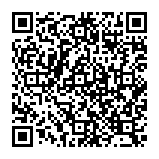
You can also follow the QR Code:

 https://redcap.link/CommunicationInitiative2026

Time to read
1 minute
Read so far

Nasha Ulitsa (Our Street) Radio Drama

0 comments
The Ukrainian Centre for Common Ground (UCCG) has produced a conflict prevention radio drama for young adults in Crimea, an autonomous republic within Ukraine. Designed to model new ways of working together across social and ethnic lines, Nasha Ulitsa (Our Street) depicts the complexities of conflict centred around everyday pressures on young adults, including school, drugs, parents, relationships, friends, government, and religion. The primary objective of the programme is to facilitate inter-ethnic understanding, conflict prevention in a multicultural context, and the development of conflict resolution skills among young people in Crimea.
Communication Strategies

In 2002, 13 pilot episodes of Nasha Ulitsa were produced by and for young adults aged 14-21 in Crimea. The series was created in collaboration with the inter-ethnic drama troupe Youth and Children Theatre on Moskoltso. In Winter 2002 the 13-episode pilot series aired on Russian Radio and Gala Radio (Simferopol).


The dramas features various characters and their friends and family as they struggle with issues related to growing up and finding one's identity in a multicultural community - that is, issues with which many young Crimeans grapple on a daily basis. Some of these characters encounter pressure to get involved in illegal activity (particularly drug dealing). Listeners hear about those who succumb to the pressure and those who fight it. Those young people who get into trouble are helped by their friends to understand that what they are doing is wrong. As a result of their spiritual regeneration, the kids from the street are inspired to create an alternative club.


This programme uses entertainment to help young people relate to people from different ethnic groups - an identification that will hopefully translate into real-life encounters. The characters are Ukrainians, Russians, and Crimean Tatars; as the story unfolds, the drama deals with interethnic issues and conflicts among them. Both characters and (it is hoped) listeners learn skills for dealing with conflicts in their everyday life, and are pressed to make hard choices in tense situations. The idea here is that, by listening along to these characters' experiences, young Crimeans will develop their own set of moral values based on the drama's messages - for example, ethnicity should serve neither as a basis for conflict nor as a barrier to resolving conflict situations.

Development Issues

Youth, Conflict.

Key Points

Given its history, Crimea has a potential for serious inter-ethnic hostility. Organisers explain that a complex set of issues revolves around the role and status - political, economic, social, and historic - of the Crimean Tatar minority in Crimea, which is estimated to account for about 12% of the peninsula's population. The Crimean Tatars were forcibly deported en masse (together with other national minorities) from Crimea in 1944. Beginning in the late 1980s, they have been returning from exile in Central Asia to what they consider to be their historic homeland. According to organisers, the Russian majority in Crimea (67%, according to the 1989 Soviet census) as well as the Ukrainians (25.8%) tend to view the Crimean Tatars as an "alien" and destabilising element in their midst. The Crimean Tatars maintain that they are routinely discriminated against, face hostile attitudes, and encounter indifference when they articulate their concerns.

Partners

UCCG, Youth and Children Theatre on Moskoltso.