Midterm Assessment: A Community Empowerment Success Story: Nigerian Communities Taking Action to Improve Health and Education
This report covers a midterm assessment of the community mobilisation component of the Community Participation for Action in the Social Sector (COMPASS) Project. According to the publication, community mobilisation is a cross-cutting component of the 5-year COMPASS project, funded by United States Agency for International Development (USAID) to address health and education in 51 Local Government Areas (LGAs) in 5 states in Nigeria. The assessment, which took place from March 15 to April 6 2007, suggests that community mobilisation is an important strategy for improving local governance, though efforts are needed to maximise this potential.
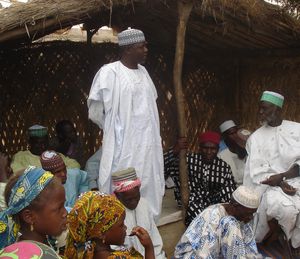
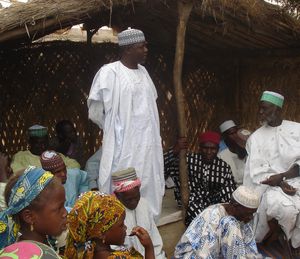
As the publication explains, the primary community mobilisation intervention consisted of the formation of community-based coalitions (CCs) and quality improvement teams (QITs) to identify and address problems related to health and education in their communities. Coalitions were formed at the community level, made up of representatives from community associations, traditional leaders, religious leaders, and service providers for both health and education, to serve as umbrella organisations for sensitisation, advocacy, fundraising, and coordination of quality improvement activities. The document states that these organisations likely reach as many as 51,000 association members who then potentially reach out to the population at large. Advocacy, particularly related to raising community issues with the LGA, is a key function of the coalitions. The assessment found that one of the most important outcomes was that people in the coalitions had a sense that they have a voice with their local government and that advocacy is an effective tool for addressing their needs. This strategy is designed to encourage government accountability to its constituents in a country where this has traditionally been absent.
The assessment found that the project achieved significant results in terms of impact, infrastructure improvements, other quality improvements, and development of local ownership. The report states that community mobilisation had the following results:
- Health service utilisation for family planning, antenatal care, facility deliveries, and routine immunisations is considerably higher in facilities with CCs and QITs than in matched facilities without these structures.
- Improvements in infrastructure and service provider/community relations, and regular monitoring of services by the QITs led to better quality education and health services. Specific issues such as confidentiality, client respect, and student absenteeism have also been addressed.
- Funds for health and education improvements were leveraged through donations and advocacy to contribute to infrastructure, equipment, drugs, and supplies for both education and health.
- Both women and men were sensitised on immunisations, safe motherhood, family planning, and enrollment in school, particularly for girls.
- There is significant enthusiasm and ownership for the CCs/QITs, as evidenced by them supporting their own operating costs, meeting regularly, independently generating new problems and activities, and monitoring the progress of their activities.
The report points out that despite best efforts, there is still limited participation by women and youth in most of the coalitions and QITs. Even in those coalitions where women do participate, they have been included primarily to sensitise other women and do not seem to have, nor do they expect, any real decision-making influence. Youth have become involved in a few of the coalitions and tend to be primarily involved with sensitising other youth on reproductive health. They are few in number and feel like they cannot really participate actively in the presence of their elders.
According to the document, some of the most significant strategies contributing to the success of the community mobilisation are:
- Use of associations and existing traditional and community-based structures as a foundation for the coalitions has led to their achieving broad reach and scope. This in turn leads to high coverage as well as flexibility and resources in addressing whatever priority problems arise.
- The CCs and QITs are highly complementary structures - each supporting what the other is trying to accomplish.
- The insistence by COMPASS on not paying operational costs has shifted the focus of the coalitions by sending the clear message that the coalitions do not belong to COMPASS. This was summarised by one assessment team member: "The communities realised they had underestimated what they could accomplish by themselves with little to no inputs from government or donors."
The report concludes that coalitions and QITs have significant impact in improving health and education, increasing accountability in service delivery, and changing relationships within the communities. However, even more impact could be achieved if they were truly utilised as a platform for all of the COMPASS interventions. Finally, while the process has been well implemented and a large number of active coalitions and QITs have been formed, there is still work to be done in order for these organisations to be able to sustain themselves after COMPASS phases out.
COMPASS Nigeria website, December 5 2008 and November 4 2009.