










































Men Who Care: A Multi-Country Qualitative Study of Men in Non-Traditional Caregiving Roles
Instituto Promundo - Brazil and Promundo - US (Barker, Greene, Nascimento, Segundo, Ricardo, Taylor, Kato), CulturaSalud/EME -Chile (Aguayo, Sadler), Centre for Health and Social Justice - India (Das, Singh), El Colegio de México (Figueroa, Franzoni, Flores), Medical Research Centre of South Africa (Jewkes), and University of Cape Town (Morrell)
"The study sought to understand in the words of men themselves how they came to participate to a greater extent in care work than their male peers (in the home as in caregiving professions) and how men describe their care work."
From the Men and Gender Equality Policy Project (MGEPP), coordinated by Instituto Promundo and the International Center for Research on Women, this study sought to analyse men’s involvement in care work related to gender and concepts of masculinity. "The 'Men Who Care' study is a five-country (Brazil, Chile, India, Mexico, and South Africa) qualitative study that sought to explore these issues by listening to men who are involved in non-traditional forms of care work - in the family and professional realms....The collaborating researchers from the five countries identified men who were carrying out atypical kinds of care work or were much more extensively engaged in it than other men in their settings. A total of 83 men were interviewed."
The study found that, in most cases, life circumstances led men to care work at the family level - separation, divorce, death of partners, etc. If men saw their fathers involved in family or professional care work, they were more likely to participate in it. "The quality and nature of men’s relationships with partners (particularly the mothers of their children - [and especially] "the understanding and support from a loving partner and their children") greatly affected to what extent men participated in care work in the household....Many men who carried out care work sought to give it a traditional masculine meaning or make it fit within their self-image as traditional or hegemonic men." Men variously found value in care work for the family if they knew it was appreciated and also found loneliness and depression. Men who worked professionally maintained better self-esteem and identity.
"It was apparent by the way men framed and discussed masculinities that they were continuously reconstructing and negotiating their masculinities. Precisely because of the lack of care references and incentives to become involved in caregiving, the Men Who Care had to actively seek out experiences of being cared for and caring for others. As a qualitative study, these results cannot be generalized to the wider population. Nonetheless, taken together with the results from IMAGES [a 2011 study by Barker et al.] they contribute to understanding pathways to gender equality - in particular toward understanding how to speed up the process of encouraging men to take on a greater share of care work, for the benefit of gender equality, for children and for men themselves."
Conclusions suggest that these men were unique, each in his own trajectory, due to culturally different assumptions about gender and varying life circumstances. In addition, the policy context on gender and development varied by country. "Finally, this data points to a key question: What is being done to promote men’s participation in caregiving?"
Recommendations for action include:
- "Conduct more research on patterns, changes in the life cycle, contributing factors, and perspectives from women, men and beneficiaries on men’s participation in care work in diverse settings, with particular attention to attitudes in the work setting;
- Conduct couple-focused research in the Global South and North in which we ask both partners about their caregiving activities and their negotiation practices related to their caregiving;
- Direct more attention to men’s roles and the perspectives of men and women in the formulation of gender equality and social welfare policies;
- Pay more attention to men’s attitudes toward caregiving practices within existing HIV and sexual and reproductive health and rights and gender-based violence programs and policies, understanding the role of caregiving as a part of men’s identities;
- Enhance initiatives to change norms and rules in workplaces and other social services spaces (hospitals, schools, daycare centers and the like) related to men’s and women’s multiple roles as providers and caregivers;
- Support more efforts to implement global and national-level policies promoting flexible work schedules and other efforts to support equitable work-life balance;
- Pay greater attention to the needs and realities of men in poverty reduction and income support policies, particularly re-examining how such initiatives can promote men’s greater involvement as caregivers; and
- Direct closer attention to the change that is already happening in men’s participation in caregiving, as well as to the benefits to men of forming closer relationships with others."
The research was funded by the John D. and Catherine T. MacArthur Foundation, the Government of Norway (Ministry of Foreign Affairs and Norad), the Ford Foundation, and an anonymous donor. Portions of the analysis and country-level work were supported by the Bernard Van Leer Foundation, UN Women (Chile), and Universidad de Chile.
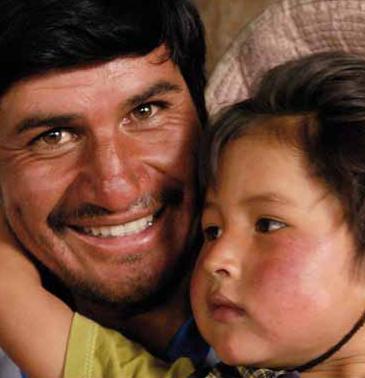
MenCare website, October 9 2012. Image Credit: David Isaksson
- Log in to post comments