










































Malawi RapidSMS Nutrition Surveillance
According to organisers, the INFSS system relied on paper data forms sent from health centres to the central government. However, the system faced many challenges. There was an average of two to three months delay between data collection and delivery to the government; paper forms were sometimes illegible or contained incorrect data; health surveillance assistants (HSAs) rarely received feedback; and the system had high operational costs.
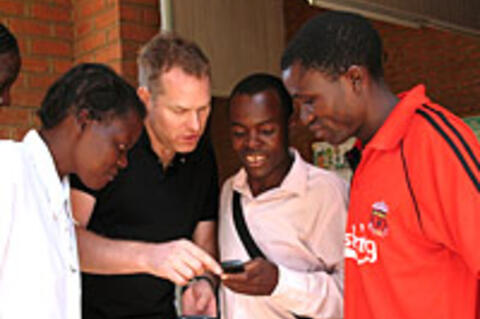
Using the RapidSMS system, HSAs input information into mobile phones; this is then transmitted and immediately captured by a computer that stores the national nutritional and food-security statistics in Lilongwe, the capital. According to the organisers, the quick collection and availability of data can help government and other aid agencies intervene if the statistics show a crisis is unfolding. It was also designed to provide immediate feedback to HSAs. For example, after submitting a child's measurements, HSAs automatically receive an SMS confirming data submission. If data indicates malnutrition, they receive an SMS providing instructions for treating the child. In the event of a data entry error, an SMS is sent instructing the HSA to resend corrected data.
Organisers say one of the most significant automated functions is the weight for height calculations, which help healthcare workers identify malnutrition. RapidSMS automatically performed this calculation for every patient and alerted HSAs of their patient's nutritional status. Organisers say that at one site, HSAs reported that they had identified and treated ten mildly malnourished children who would have otherwise been missed.
The RapidSMS platform was designed to keep the data input as close to the paper format as possible - the same variables (height, weight, age, etc.) are entered in the same order as the original system. For the pilot study, approximately 30 HSAs were trained in RapidSMS reporting. The organisers say they registered 210 children and tracked them for a period of four months. According to the organisers, the system significantly improved data quality. 15 data entry errors were reported, and these occurred during the first reporting period. During the final three months, there was not a single unusable data set.
Recognising the need for improving the system, the organisers have also implemented unique child registrations, tracked longitudinally, linked to specific geo-spatial coordinates, as well as to automatic triggers identifying child ‘no-shows’ if no follow-up report is inputted within 40 days. They have also integrated automated monthly data summaries that are texted to health care workers.
Children, Health, Nutrition, New Technologies.
The Government of Malawi plans on scaling RapidSMS up nationally. They are also interested in expanding this to a country-wide campaign to register child births, and in deploying RapidSMS in other sectors, including education and HIV/AIDS. UNICEF hopes to make the system available, free of charge, to organisations and other implementing partners.
The Malawian programme was developed after UNICEF's success with the system in monitoring and delivering the protein-rich ready-to-use therapeutic food, Plumpy-nut, in drought-hit Ethiopia in October 2008. The RapidSMS system was designed by UNICEF and Columbia University's School of International and Public Affairs. It won first prize in the Development 2.0 Challenge, run by the United States Agency for International Development (USAID), for its innovative design, adapting a commonly accessible technology to monitor the health and nutritional status of children.
UNICEF, Columbia University's School of International and Public Affairs, and the Government of Malawi.
RapidSMS website and UNICEF website on July 19 2010.
