










































Time to read
less than1 minute
Making Local Government Work: An Activist’s Guide
Image
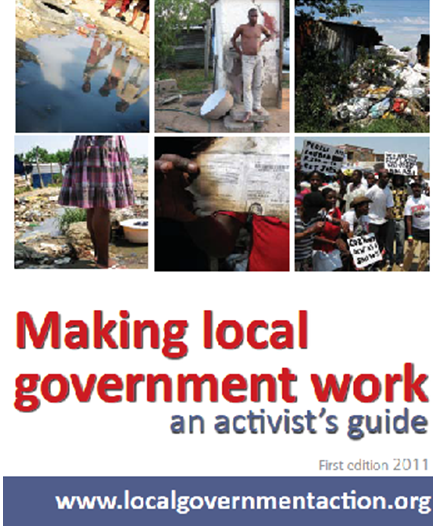
SummaryText
Designed for activists, this guide contains general advice on current law and rights related to local government in South Africa. It sets out the legal responsibilities of local government and people's rights under the Constitution and in law and discusses strategies of how to engage government - from inside, by participating in formal processes, and from outside, by going public through complaints, petitions, protest actions, the media, and the courts. Published as a joint project by SECTION 27, the Treatment Action Campaign (TAC), the Socio-Economic Rights Institute of South Africa (SERI), and Read Hope Phillips, the guide is intended to be a practical resource to assist communities and organisations to participate in municipal processes and consolidate national democracy.
The guide is designed to help activists:
The guide is designed to help activists:
- understand local government and what it should be doing for every community;
- monitor (or keep track of) what local government is doing;
- find out what to do when local government ignores the community or breaks the rules;
- take action to enforce rights to water, sanitation, electricity, housing, and health; and
- find organisations that can help.
- Use your power
- The responsibilities and powers of local government
- Engaging with local government
- Participate in key processes
- Knowing and using your basic services-related rights
- Mobilising communities and building community organisations
- Now get organised
- Law and policy you must know
Publishers
Publication Date
Languages
English
Number of Pages
124
Source
Local Government Action website on November 17 2011.