










































Leadership or Stagnation - The Future of Media Viability in Bangladesh
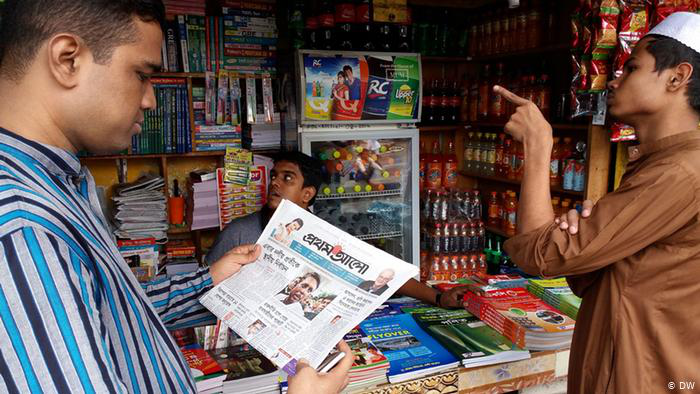
Journalism and Media Studies Centre, Hong Kong University (Joss); Omnispace (Ahmed)
"A viable media industry creates a foundation for economic, cultural and civil society growth. As Bangladesh transitions to a middle-income country, the media industry has the opportunity to support continued economic growth..."
This report explores the future of the media in Bangladesh, looking at five factors that influence the news industry and that could determine its viability. These factors are: audience, audience attitudes, traditional media, digital media, and advertising. Published by the Media Resources Development Initiative (MRDI) and Fojo Media Institute, the report highlights two potential scenarios based on the findings - one of leadership in the regional media industry and the other of stagnation and the slow erosion of the industries' ability to provide quality, impactful news content.
To give some context, the report explains that the viability of media in Bangladesh to support the regular production of high-quality, impactful journalism is at a crossroads. "The historically strong traditional media industry, dominated by television and newspapers, is being overwhelmed with the changes brought about by a digital transition, similar to those experienced elsewhere in South and Southeast Asia. Audiences have experienced strong growth in media availability through both increased access to satellite/cable TV and currently the almost universal access to mobile internet. In this environment, traditionally trusted news providers have failed to keep pace, leaving almost universally online audiences with limited volume of engaging content. With disinformation beginning to fill in the shortfall, the high level of media trust is also waning. In response, Bangladesh government has created a mix of laws and regulations to control and regulate media outlets to eliminate the adverse effects of 'yellow journalism' or 'fake news'. At the same time, these laws undermine the ability of traditional media to adapt to changing media landscape and constrain new media entrepreneurs from offering quality alternatives." All these changes are being exacerbated by the demands of the COVID-19 pandemic.
The concept of media viability on which the report is based was developed by Deutsche Welle (DW) Akademie. They examine media viability by looking at the forces that impact a media industry's ability to produce quality impactful journalism in a sustainable and recurring fashion. These are: 1) community: the audience and its relation to media outlets; 2) technology: access to technology necessary for successful media operations; 3) economics: the media industry business dynamics; 4) content: traditions and standards of content; 5) politics: the government's role in regulating the industry. (See Related Summaries, below.)
The report offers an outline of the Bangladesh media industry by examining a number of factors that are critical to the viability of the industry. Each section seeks to highlight key elements in the local media industry that inform the five viability factors as defined by the DW Akademie. The following represents a summary of some of the findings:
Audiences (audiences' media and financial access and usage): The report explains how Bangladesh may be one of the most heavily served media markets in the world, adding that TV audiences can choose from over 30 domestic channels, including eight news-only ones, apart from dozens of international providers. Print media presents an even more crowded market, with more than 700 publications registered with the government. However, these offerings have two distinct media audiences: urban and rural. The study shows that both turn to television as their preferred source of news. Online media plays a secondary role for both, with Facebook playing a more dominant role among rural users. Urban consumption shows heavy engagement among younger users, while rural internet consumption remains constrained by slow speed and limited coverage. Newspapers continue to dominate as an important news source among middle-aged and older urban audiences. Rural audiences are substantially less dependent on newspapers - most likely due to lower literacy and poorer coverage of rural or regional issues.
Audience attitude (their understanding of and relationship with the media): Although Bangladesh's audience size and growing media access creates an attractive platform for news media to thrive, audience attitude and lack of trust weakens the case for viability. The general lack of understanding of the news media's function and role, the declining regard for journalists and media operators, and the prevalence of "fake news" are weakening the foundation for a strong and profitable media industry. The report makes the point that understanding "media trust" and "news literacy" is important to start rebuilding trust, which is necessary for the industry's viability.
Traditional media (fragmentation and concentration): The current structure of the traditional media industry is shown to be fragmented and mostly unprofitable. Local newspapers rely mainly on government advertisement to continue operations that would otherwise not be commercially viable. For these media outlets, the focus is more on government needs than on audience needs. Low profitability also forces operators to keep expenses low, which most often translates into low pay or delayed salaries, which in turn affects professionalism and the quality of journalism. The larger and more viable newspapers are often corporatised, which can put editorial objectivity and independence at risk. Traditional media in Bangladesh are also fragile, as their potential audiences are in rural areas where there is less access to digital technology. Yet these media outlets provide limited regional coverage, and even fewer have a dedicated focus on regional audiences.
Digital (tradition, control, and innovation): Although digital media can be a catalyst to re-energise traditional news reporting, new legal controls and regulations on digital media are hindering both startups and traditional media newsrooms from transitioning towards a more robust online presence. The report highlights that although digital advertising is growing and there is adequate space for paid content platforms, long-term media viability will require innovation and experimentation to serve new audiences - both among young adults and rural audiences just joining the internet. In order to facilitate innovation, a more predictable regulatory environment will be necessary for media innovators to take the risks needed to serve these emerging audiences.
Advertising (growth and challenges) - Although Bangladesh's advertising industry is the cornerstone of media financial viability, the advertising market suffers from some structural issues, such as underdeveloped retail and distribution systems to support the increased sales that are the goal of advertising. For example, for TV advertising, rating surveys are not reaching rural populations, so they are being excluded from any market-related statistics. In addition, globalisation in digital and cable TV has created significant leaks in the local advertising market, with digital advertisers going to international digital platforms. As stated in the report, "streamlining these structural weaknesses will require joint efforts of the industry and the government. Efforts are needed to mandate a realistic national TV rating method that meets the needs of advertisers, agencies and the media and also provides an authentic TV content consumption pattern of Bangladeshi audiences. The most difficult challenge will be devising policies and practices to 'plug the leak' in digital advertising, ideally incentivising major international platforms like Facebook, Google, Netflix and others to establish offices in Bangladesh, pay taxes, contribute to the development of digital media and promote innovation."
Based on these findings, the report outlines two scenarios for the future of the media in Bangladesh:
- Stagnation - "The value that the audience sees in the news media continues to decline. Readers and viewers resort to digital sources for news and other content, mostly distributed through Facebook, Google and Youtube. Media advertising revenue continues to fall as advertisers shift to the international platforms. As revenue falls, so do the resources needed for quality news reporting. Consequently, the quality of journalism declines further, pushing audiences away."
- Leadership, which is required to make the necessary changes. "Bangladesh begins by rectifying challenges in the advertising market. Digital platforms are required to operate within Bangladesh, opening offices, hiring and training local talent, adhering to local laws, including payment of taxes. Matrix used to set advertising schedules and prices are reformed and neutrally audited. Government media regulation is standardised and de-politicised. Bangladesh's traditional media and new media entrepreneurs begin developing new reporting genres and 'beats' and devise suitable digital news formats to serve Bangladesh's large and evolving audience. Bangladesh has a long history of cultural leadership, including journalism. To continue and solidify this role, the current industry scenario will need reform and innovation. The alternative is a slow atrophy and stagnation."
Media Resources Development Initiative (MRDI) website on January 28 2021; and email from Tanim Ahmed to The Communication Initiative on January 29 2021. Image credit: Deutsche Welle Akademie
- Log in to post comments