










































The Importance of Mobile for Refugees: A Landscape of New Services and Approaches
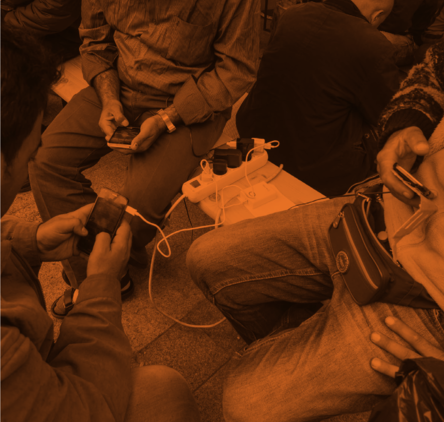
"So important were mobile phones that, on arrival, many refugees asked for Wi-Fi or charging services ahead of food, water, or shelter. This phenomenon has generated significant interest, both from aid agencies - which are now recognising that refugees regard connectivity as a basic necessity - and mobile network operators (MNOs), which see new customer bases, growing markets, and an opportunity to develop and provide innovative new services that can have a positive impact on the lives of refugees."
Data from 2016 on the global refugee crisis indicate that more than 65 million people are forcibly displaced, 21.3 million of whom are refugees. Refugees are 50 percent less likely than the general population to have an internet-enabled mobile phone. This GSMA landscaping report provides a snapshot of the current interest and activities of the mobile industry and aid agencies in catering to the connectivity needs of refugees. The report attempts to consolidate the wide-ranging approaches taken to provide connectivity for displaced populations across different sectors and regions, outlining activities being undertaken across 5 key themes:
- Connectivity: "In addition to mobile network coverage, connectivity also involves issues of access, usage and affordability, ranging from mobile device and SIM card ownership to charging facilities, digital literacy, relevant content, and data services. Given that a significant proportion of refugees arriving in Europe were mobile users in their home countries, one of the key questions is how to establish continuity in access to mobile services while refugees are on the move and relocating in new countries for the foreseeable future. Beyond Europe, where long-term and persistent refugee crises are common, delivering long-term connectivity for refugees is a real challenge. Providing reliable and sustainable mobile connectivity is crucial as it enables a range of other mobile services - education, financial, information, and others..."
- Digital tools and platforms: "There has been significant growth in the development of digital tools for refugees, with particularly innovative mobile applications emerging in the context of the European response. Apps have been especially popular with volunteer technology communities and MNOs, but more research is needed to map the adoption of these apps and understand their actual impact on refugee communities."
- Family reconnection: "For refugees, separation from family is a stark reality. The potential of mobile services and online platforms to facilitate reconnection is being explored by organisations such as REFUNITE - a platform supported by Ericsson and several MNOs around the world - as well as the International Committee of the Red Cross (ICRC), Télécoms Sans Frontières, and UN [United Nations] agencies, such as the United Nations Children's Fund (UNICEF)'s Rapid Family Tracing and Reunification (RapidFTR) project. Several platforms have been rolled out to support family reunification, and although the adoption of some of these platforms and their impact is still nascent, it is clear that mobile technology has a critical role to play in facilitating reconnection."
- Education: "There has been heavy interest in the potential of mobile services to overcome the many challenges of providing education to refugees, including a lack of language-appropriate school materials and the availability of teachers. Projects that use mobile technology to deliver education and partnerships between MNOs and humanitarian agencies are relatively advanced, with some initiatives like Vodafone Instant Schools Programme and Ericsson's Connect to Learn initiative now several years old. Assessments of these programmes have found that digital education services need to be planned with care and require appropriate commitments of time and money to deliver."
- Livelihoods and mobile money: "Mobile phones are an important tool in the livelihood strategies of refugees, enabling them to find employment, run small businesses and work in ancillary services, such as selling charging or credit services and mobile phone repair, as well as mobile money services....However, having proof of identity is a serious issue for refugees as it can be a potential barrier to accessing financial services and owning a mobile phone. Also, the mobile money ecosystem is still nascent in many refugee contexts....International Money Transfers are another critical facility for refugees, which can be accessed more affordably and easily through mobile."
Various case studies are included throughout the text to illustrate how connectivity issues have been addressed (and researched) in these and other areas. For example, the Vodafone Foundation deployed its Instant Network project in 2015, sending equipment and staff to meet the connectivity needs of refugees arriving on the shores of Greece. The Instant Network is an easily deployable kit consisting of an antenna, a foldable mast, an industrial computer, and a base transceiver station, all powered by a portable generator capable of providing instant connectivity for small geographical areas. From the start, it was clear that the refugees would be best served by providing WiFi, which "is easy to provide and cheap, and necessary – especially in locations where refugees cannot access or afford local data plans or only have access to feature phone handsets. But WiFi and longer term connectivity services are increasingly a matter for local MNOs, and those working with the refugees rather than a disaster response model."
The report looks ahead, offering some reflections and recommendations. For instance, "many of the barriers to providing mobile connectivity for underserved populations globally also apply to refugees: accessibility, affordability, and literacy. However, not only are these barriers more acute for refugee populations, mobile services are even more important because of their particular needs and vulnerabilities....Mobile services, apps, and infrastructure coverage need to be considered over the long term for refugees....Central to any long-term thinking about connectivity for refugees is the issue of identity. While aid agencies, MNOs, and other service providers can provide limited connectivity services in a camp context, this is not a long-term solution, nor one available to the majority of refugees who do not live in camps. Proof of identity is key to accessing mobile services, which usually require an ID to register a SIM card and services like mobile money. Mobile technology offers a way to collect attributes and credentials that can uniquely identify a person, accelerating the scale and reach of an inclusive digital identity, providing continuity of care for refugees, and reducing duplicate registration efforts."
"The state of the connectivity landscape for refugees highlights the need for humanitarian organisations and the mobile industry to make connectivity improvements a priority."
GSMA website and "At Davos: Mobile Recognised as a Critical Tool in Humanitarian Response", by Jenny Casswell - both accessed on February 7 2017; and email from Jenny Casswell to The Communication Initiative on February 13 2017.
- Log in to post comments