










































Impact of Peer Education and On-Site Clinical Services for Female Sex Workers in Bangladesh Brothels: A Link Up Evaluation Study
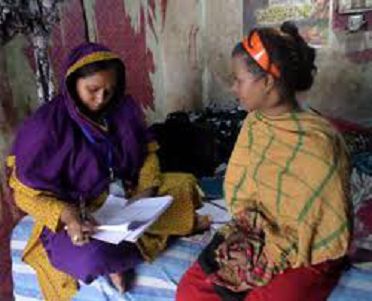
"The joint provision of social support, health education, and clinical care within the brothels may be a formidable strategy for addressing the substantial HIV and SRHR needs of young women who sell sex in Bangladesh brothels."
This brief describes an evaluation of a brothel-based HIV and sexual and reproductive health and rights (SRHR) intervention that combined peer outreach with the provision of on-site clinical services in 3 Bangladesh brothels. Female sex workers are particularly marginalised and stigmatised in Bangladesh's conservative cultural context; there, premarital sex is condemned and two-thirds of women are married by age 18. Furthermore, the convergence of inequitable gender norms and deeply entrenched poverty renders women who sell sex in Dhaka City particularly vulnerable negative social and health outcomes such as HIV and other sexually transmitted infections (STIs), sexual and gender-based violence, stigma and discrimination, and poor reproductive health. The Population Council carried out the study as part of Link Up, a global consortium led by the International HIV/AIDS Alliance aimed at improving the SRHR of young people in Bangladesh, Burundi, Ethiopia, Myanmar, and Uganda (see Related Summaries, below).
Peer educators from Daulatdia, Marwari Mondir, and Bagerhat brothels underwent training on communication, sexual and gender-based violence, substance use, and HIV and SRHR. Throughout the intervention period (August 2014 to March 2016), one to two trained peer educators conducted ongoing face-to-face outreach with residents in the brothel in one-on-one and group sessions, providing basic information on HIV prevention and SRHR. In addition, an on-site "satellite" Link Up clinic was opened within each brothel, where, one day per week, clinic personnel provided family planning counseling and methods (pill, injectable, and male condoms), HIV testing and counseling, STI diagnosis and treatment, antenatal and postnatal care, and general paediatric and adult health consultations.
After approximately one year of Link Up activities, in August-September 2015, the research team conducted interviewer-administered surveys of 531 female sex workers who resided in the 3 brothels. They conducted qualitative interviews among a subsample of 20 women who reported that they had received services at the Link Up satellite clinic in Jessore or Daulatdia brothels, as well as with qualitative interviews with 11 Link Up peer educators and satellite clinic providers. The researchers conducted bivariate analysis to compare outcomes of interest between women who had varying levels of exposure to Link Up activities: (i) no exposure to Link Up, (ii) contact with a Link Up peer educator, or (iii) both peer education contact and a visit to the on-site satellite clinic.
Selected findings include (see the report for full details, as outlined in various tables throughout):
- In the 3 brothels, nearly 70% of young female sex workers reported having some exposure to the intervention.
- Not only did women with more programme exposure have increased testing self-efficacy, but they were more likely to have received an HIV test. They also were more likely to know where to receive a test, among those who had not yet been tested.
- With increasing exposure to Link Up intervention activities, there were significant increases in confidence levels about sexual health decision-making. Among those who received both peer education and satellite clinic services, more than 98% expressed confidence to make good decisions about sexual behaviours and to talk to a partner about sexual health issues, compared to less than 85% who reported such confidence among women who received neither Link Up intervention.
- Women who received progressively higher levels of exposure to Link Up activities had higher knowledge about HIV transmission. For example, among those who received both peer education as well as satellite clinic services, 21% had high HIV transmission knowledge, compared to 13% among those who only received peer education and 4% among those who had no Link Up exposure. Likewise, HIV testing was more common among those who received higher levels of exposure to Link Up activities, with 76% ever tested among women who received both interventions, compared to 54% and 44% among those who just received peer education or no exposure. Knowledge of testing location and confidence to get tested also were significantly higher among those who received higher levels of exposure to Link Up interventions.
- Among women who received both peer education and satellite clinic services, a larger proportion reported high knowledge of female STI symptoms: More than one-third of those who got this most intense level of Link Up exposure had high knowledge, compared to less than 10% in the 2 lower exposure categories.
- "Participants felt that peer educators provided valuable social support and critical health information."
Despite these findings, overall, the intervention did not appear to have an impact on sexual behaviours. Reported contraceptive use was very high, so the lack of variation in family planning use across Link Up exposure levels was not particularly surprising to the evaluators. Nevertheless, the high abortion prevalence suggests that women may be using contraception inconsistently or incorrectly. It is recommended that future outreach efforts and clinical services for brothel residents emphasise the importance of using condoms with all partners.
It was also found that there were "strikingly high" levels of recent symptoms associated with STIs, with the highest prevalence observed among women who had received exposure to both Link Up activities. According to the evaluators, this finding may be explained by the possibility that women with symptoms were more likely to take the initiative to seek counseling and clinical care. Alternatively, those women who sought out the services may have had greater pre-existing knowledge. In this context, programmes should be proactive about offering STI diagnosis and treatment.
Providers and peer educators both expressed a need for more training, and providers felt the clinic space did not provide enough privacy.
All that said, providers and peer educators alike felt that their experiences as Link Up providers were rewarding, instilling in them a sense of pride in their efforts to improve women's lives in brothels.
Editor's note: For baseline results from this study, see "Sexual and Reproductive Health among Young Female Sex Workers in Bangladesh Brothels - Baseline Findings from Link Up" [PDF].
Link Up website, July 18 2016; and email from Eileen Yam to The Communication Initiative on July 26 2016. Image credit: ©Nargis Sultana/Population Council
- Log in to post comments