
























Development action with informed and engaged societies

After nearly 28 years, The Communication Initiative (The CI) Global is entering a new chapter. 

Following a period of transition, the global website has been transferred to the University of the Witwatersrand (Wits) in South Africa, where it will be administered by the Social and Behaviour Change Communication Division. Wits' commitment to social change and justice makes it a trusted steward for The CI's legacy and future. 

On the transfer, co-founder Victoria Martin expressed her pleasure to see this work continue under Wits' leadership, knowing that co-founder Warren Feek (1953–2024) would have felt deep pride in The CI Global's Africa-led direction. 

As Wits, we honour the team and partners who sustained The CI for decades and look forward building from that strong base. This includes co-founders Warren Feek (1953-2024) and Victoria Martin as well as La Iniciativa de Comunicación (CILA), which continues independently at lainiciativadecomunicacion.com with links to The CI Global site. We are also eager to forge new partnerships and entertain new ideas as we consider how best to contribute to social and behaviour change in our rapidly evolving environment.

If you are joining the International Social and Behaviour Change Communication (SBCC) Summit in Panama, please join Wits and CILA on Monday, 22 June, to share your thoughts and suggestion for the relaunch of the Communication Initiative. We will be in Pacifica 5 from 12-1:25 for the Refuel, Reflect, and Renew Lunch Series: The Communication Initiative: celebrating a driving force for Communication for Social Change and the way forward. We will reflect on the legacy of Warren Feek and family in creating the Communication Initiative, consider the contributions of CI over the years and then turn our attention towards the future in this dynamic session. 

If you are unable to join us in Panama, we still want to hear from you. Please contribute your thoughts by following this link: https://redcap.link/CommunicationInitiative2026 or reaching out to ci_surveys@commint.com

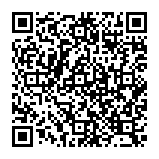
You can also follow the QR Code:

 https://redcap.link/CommunicationInitiative2026

Time to read
1 minute
Read so far

Impact Data - Sisimpur Community Outreach Project

0 comments
Date

Sisimpur is an educational television programme designed for Bangladeshi children between the ages of 3 and 7 years old. Designed by Sesame Workshop, the programme is supported by the Government of Bangladesh and the United States Agency for International Development (USAID). Sisimpur's messages are also featured in community outreach materials designed in partnership with Nayantara Communications, a Bangladesh company, for use in a variety of settings, including early childcare centres, pre-schools, kindergartens, and homes. The kits, which contain books, games, flash cards, and growth charts, are distributed to caregivers from low-income households through a series of 3 workshops conducted by specialised trainers from 12 non-governmental organisations (NGOs).

Methodologies
To evaluate the impact of Kit 1 (distributed in November 2005) researchers examined differences among control and intervention groups in health, hygiene, and nutrition outcomes using bivariate analyses and multivariate logistic regressions. The sample comprised a total of 1,801 participants: 600 caregivers and 600 children in the intervention group, and 301 caregivers and 300 children in the control group. Data were collected from 4 sites where Sisimpur outreach training occurred: an urban location (Dhaka) and three rural locations. In addition, one-on-one interviews were conducted with 20 caregivers in the intervention group and 5 trainers who conducted training workshops. Household observations were also completed in 150 homes (100 in the intervention group and 50 in the control group).
Practices
All findings are significant at p < .05:


Compared with non-participants, caregivers who participated in the outreach programme were:

  • 8.4 times more likely to own a toothbrush at home
  • 5.3 times more likely to own toothpaste at home
  • 4.0 times more likely to use a toothpaste to clean teeth
  • 3.8 times more likely to use toothbrush to clean teeth
  • 2.1 times more likely to have soap in the home
  • 2.1 times more likely to have a clean towel in the home
  • 4.4 times more likely to wash their hands with soap before having a meal
  • 2.1 times more likely to bathe 7 times or more a week
  • 3.0 times more likely to bathe with soap 4 times or more a week


Compared with non-participants, children of caregivers who participated were:

  • 8.6 times more likely to use a toothbrush to clean teeth
  • 5.0 times more likely to use toothpaste to clean teeth
  • 7.8 times more likely to clean teeth more than once a day
  • 2.8 times more likely to clean teeth after a meal
  • 10.9 times more likely to clean teeth at night
  • 8.0 times more likely to use soap to wash hands before a meal
  • 4.6 times more likely to use soap to wash hands after defecation
  • 3.0 times more likely to comb hair more than once a day
  • 3.0 times more likely to eat eggs daily
  • 3.0 times more likely to drink milk at least once a week