
























Development action with informed and engaged societies

After nearly 28 years, The Communication Initiative (The CI) Global is entering a new chapter. 

Following a period of transition, the global website has been transferred to the University of the Witwatersrand (Wits) in South Africa, where it will be administered by the Social and Behaviour Change Communication Division. Wits' commitment to social change and justice makes it a trusted steward for The CI's legacy and future. 

On the transfer, co-founder Victoria Martin expressed her pleasure to see this work continue under Wits' leadership, knowing that co-founder Warren Feek (1953–2024) would have felt deep pride in The CI Global's Africa-led direction. 

As Wits, we honour the team and partners who sustained The CI for decades and look forward building from that strong base. This includes co-founders Warren Feek (1953-2024) and Victoria Martin as well as La Iniciativa de Comunicación (CILA), which continues independently at lainiciativadecomunicacion.com with links to The CI Global site. We are also eager to forge new partnerships and entertain new ideas as we consider how best to contribute to social and behaviour change in our rapidly evolving environment.

If you are joining the International Social and Behaviour Change Communication (SBCC) Summit in Panama, please join Wits and CILA on Monday, 22 June, to share your thoughts and suggestion for the relaunch of the Communication Initiative. We will be in Pacifica 5 from 12-1:25 for the Refuel, Reflect, and Renew Lunch Series: The Communication Initiative: celebrating a driving force for Communication for Social Change and the way forward. We will reflect on the legacy of Warren Feek and family in creating the Communication Initiative, consider the contributions of CI over the years and then turn our attention towards the future in this dynamic session. 

If you are unable to join us in Panama, we still want to hear from you. Please contribute your thoughts by following this link: https://redcap.link/CommunicationInitiative2026 or reaching out to ci_surveys@commint.com

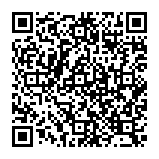
You can also follow the QR Code:

 https://redcap.link/CommunicationInitiative2026

Time to read
less than
1 minute
Read so far

Impact Data - Environmental Health Promotion and Waste Management - Gaza City

0 comments
Date
Practices
Citizens started using the waste containers, sweeping in front of their doors, and participating actively in neighbourhood committees to discuss the neighbourhood's development needs beyond garbage.
Attitudes
A 1997 socio-economic study indicated that approximately 90% of households had a very positive attitude to the solid waste management efforts with only 5% saying there had been no improvement.
Increased Discussion of Development Issues
13 Gazan women were trained as health promoters. Their main tasks were to raise public awareness on environmental health issues, to encourage citizens to comply with waste collection procedures, and to empower both municipal staff and citizens to act jointly. The aim was not only to establish adequate and sustainable solid waste management practices, but also to engage citizens and the Municipality in a dialogue on how to re-build other municipal services such as electricity, sewerage and drainage, and street paving.
Access
A total of 17 refuse collection vehicles now cruise the streets daily. 1,400 communal containers and 250 litter bins were placed throughout the city. Over 40 training courses in environmental management, finance and administration, health promotion, parliamentary elections, composting, English language, and many other subjects were attended by over 150 staff from the municipal Environmental Health Department, Workshop, and Finance/Accounting Department.
Source
Gaza City's Solid Waste Management's report to the WHO conference, 2000.