










































Humanye Obulamu Project (HOP)
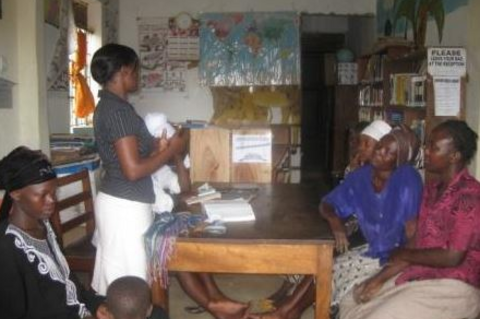
The Busolwe Public Library in Butaleja District in Eastern Uganda combines traditional library services with information and communication technology (ICT) and drama to provide health information to library users. The Humanye Obulamu Project uses internet, video, CDs, books, lectures, and drama to spread health messages in the local Lunyole language and English. Led by the Busolwe Public Library, the Humanye Obulamu Project is funded by the Electronic Information for Libraries-Public Library Innovation Programme (EIFL-PLIP).
With a small grant from EIFL-PLIP (US$15,000), the Busolwe Public Library installed a solar power system and five new computers in the library and is working with local health service providers and experts to build a database of health resources especially focused on health issues that are common in Butaleja District. Local nurses, doctors, and other medical personnel trained library staff and volunteers so that they have a good basic knowledge about common local health issues. They also received training to find reliable health information over the internet and build health resources at the library.
Working with the Lunyole Language Association, librarians now translate information focused on local health needs into Lunyole. Doctors and healthcare workers review the new material to make sure that the translations are accurate. The library also provides free access to the internet on the five new computers, and whenever possible, ensures that a healthcare worker is on hand in the library to help service users find relevant information.
A drama group has been formed, comprising health workers, librarians, and volunteers, who travel to different parts of Busolwe and perform short plays to mobilise communities to take steps to prevent disease and to raise health standards. This is intended to help people feel more comfortable with health workers, since they have the chance to meet them in a relaxed and entertaining situation.
To ensure that the health messages reach a large audience, the library also packaged health messages for broadcast on local radio and took part in live radio talk shows. Information is also distributed through print materials. Librarians work with schools to form health clubs. The pupils participating in the health clubs share health messages with their peers and at home. In addition, the library organises lectures and events to promote discussion of health issues in the community.
Health
Busolwe Public Library organises regular literacy classes for women. At every class, learners raised concerns about health, including how to improve access to health care and where to find reliable health information. The women especially expressed a need for health information in the local language, Lunyole. Based on these discussions, the library engaged with local health service providers and developed the Humanye Obulamu Project (HOP).
Busolwe Public Library is replicating Kenya National Library Service’s e-health corners. The service provides free internet access and an internet-based health information database to health workers and the general public, builds capacity to use the internet and the database, and hosts events focused on health.
Results and Impact
According to EIFL-PLIP, the results of the project have been far-reaching for the library and the community. The library‘s new resources and services, including the five computers, free internet access, ICT training and print resources increased visibility of the library, and librarians report that the number of library users per day almost doubled (2012/13). Community members surveyed said the service had encouraged them to improve their hygiene and nutrition habits. The library‘s health information service led to the launch of a new project, led by a small charity, A Little Bit of Hope Uganda, to improve sanitation in Hamila village. Training and access to ICT also improved healthworkers‘ ability to serve the community.
To learn more about the impact of their service and to plan future development, library staff surveyed 30 service users in 2013. Over 30% of people surveyed were health workers or health-care students. 77% percent of respondents said that the library‘s health information and events had helped improve their health; 23% said the service had helped them with their studies and work. All respondents reported that health information now available through the library had enabled them to better understand their health conditions and treatment options. Over 90% of respondents said the library was now much more importent to them as individuals, and to the community.
Busolwe Public Library, Electronic Information for Libraries, Lunyole Language Association