










































How Civil Society Organisations Can Use Gender-transformative Collective Action to Address Child Marriage and Advance Girls' Rights: A 7-step Guide
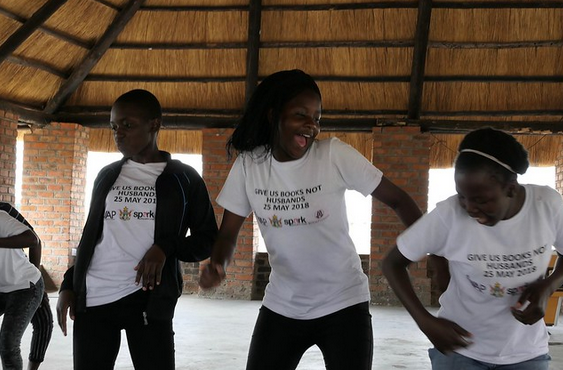
"Civil society organisations are key actors in enhancing understanding of what works to end child marriage. They can work from and with communities, building relationships based on trust and shared history, and finding joint solutions...across their networks for maximum impact."
Designed for any group of civil society organisations (CSOs) working collectively on child marriage at a national or sub-national level, this practical guide supports the role of civil society in ensuring girls and women know, and can exercise, their equal rights and agency, including if, when, and whom to marry. With this guide, Girls Not Brides: The Global Partnership to End Child Marriage aims to catalyse more intentional gender-transformative collective action by leveraging gender-transformative approaches (GTAs).
GTAs aim to promote gender equality by fostering critical examination of gender roles, norms, and dynamics. GTAs recognise and strengthen positive norms that support equality and aim to create an enabling environment by challenging the status quo, rebalancing power, and redistributing resources towards people who have been historically marginalised, excluded, and discriminated against on the basis of their gender.
Through a series of steps, the guide supports CSOs, as a collective, in strengthening their gender-transformative skills, knowledge, and leadership to systematically analyse and address the root causes of gender inequality, both at the individual and a systems level. The gender-transformative journey is organised around these 7 steps:
- Getting ready - Preparation, team formation, inception meeting
- Assess yourself as a collective - Where are you on the Gender Integration Continuum?
- Running your GTA Intensive Week: Day 1 - Getting to know the GTA core elements
- Running your GTA Intensive Week: Day 2 - Time to dive deeper
- Running your GTA Intensive Week: Day 3 - Creating an action road map
- Taking it to the next level - How small-grant GTA pilots can work for you
- Looking ahead - Where next on your collective GTA journey?
Through the 7 steps, the guide encourages workshop-based critical reflection and action planning to end child marriage by leading participants - as individuals and as a collective - through a process of critical engagement with country-level evidence and experience-sharing. It supports them to question the unequal distribution of resources and relationships of power, particularly those rooted in gender norms that discriminate against girls and women.
The processes and tools in this guide were piloted with Girls Not Brides national collectives in Mozambique and Nigeria. This means that a focus is given to Africa, but there is strong crossover and relevance for CSOs working in other regions and on education, sexual and reproductive health and rights, gender-based violence, gender justice, and minority rights more broadly.
The guide and tools were made possible thanks to the financial support of and collaboration with United Nations Population Fund (UNFPA) - United Nations Children's Fund (UNICEF) Global Programme to End Child Marriage and the UN/European Union (EU) Spotlight Initiative to eliminate all forms of violence against women and girls (VAWG).
The guide comes with a set of 21 tools, which are provided as amendable templates that can be adapted to a CSO collective's requirements.