










































A Guide to Working with the Media to Promote VMMC in Kenya
"Because these media are trusted and seen as accurate by many, they play a vital role as voluntary medical male circumcision (VMMC) programs are rolled out and scaled up as a key HIV-prevention practice."
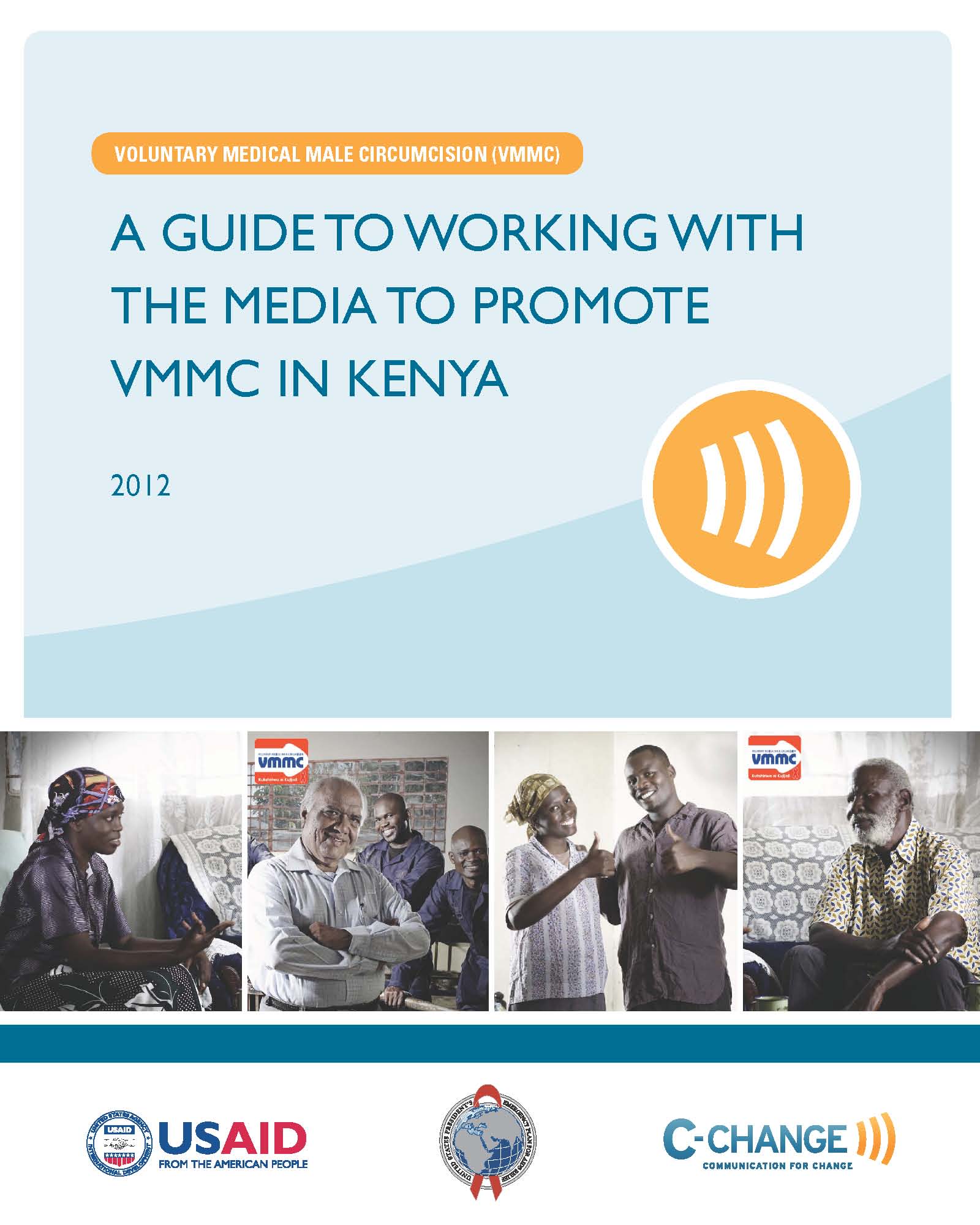
From the Communication for Change (C-Change) Project, this guide was developed in the Kenyan context for VMMC programme directors, task force leaders, and communication managers who need to engage the media. It outlines how to foster positive relationships with media professionals in order to get accurate and increased coverage of VMMC issues. The genesis of this guide was a consultation held on behalf of two task forces - the National VMMC Task Force and the Nyanza Provincial VMMC Task Force - and a one-day workshop with 22 journalists from 11 media houses in Nyanza Province.
Journalists at the workshop provided the following advice on how programmes can obtain media coverage that mobilises and educates the public on VMMC issues:
- Provide information on VMMC that simplifies the science.
- Highlight the advantages and risks of VMMC.
- Ensure two-way communication, including letters to the editor, call-in radio shows, and discussions led by experts.
Throughout the guide, many concrete strategies and activities are detailed. For example, "[a] prerequisite to a successful effort to engage the media and increase the amount and type of coverage on VMMC is to have well-written handouts for journalists - informative and error-free promotional materials on VMMC issues and services available and the work of VMMC programs." According to the guide, websites play a part in these promotional efforts, since journalists are likely to use them when searching for information for a VMMC story. This means that VMMC programme websites need to have: up-to-date contact information; background information on programmes; and key points and information about VMMC, press releases, and information on upcoming events.
Contents of the guide include:
- Introduction
- Reporting on VMMC: Challenges and Solutions
- Developing a Media Plan and Media List
- Getting VMMC on the Agenda of Editorial Boards
- Hosting a Media Event or Photo Opportunity
- Writing a Press Release and Media Advisory
- Holding a News Conference
- Being Interviewed by Broadcast Media
- Writing Letters to the Editor and Op-eds
- Responding to Misinformation and Negative Reporting
- Assessing the Effort to Engage the Media
- References
- Annex: Background to VMMC in Kenya
Publishers
English
30
Email from Sandra Kalscheur to The Communication Initiative on March 23 2012.
- Log in to post comments