











































A Guide to Tailoring Health Programmes: Using Behavioural and Cultural Insights to Tailor Health Policies, Services and Communications to the Needs and Circumstances of People and Communities
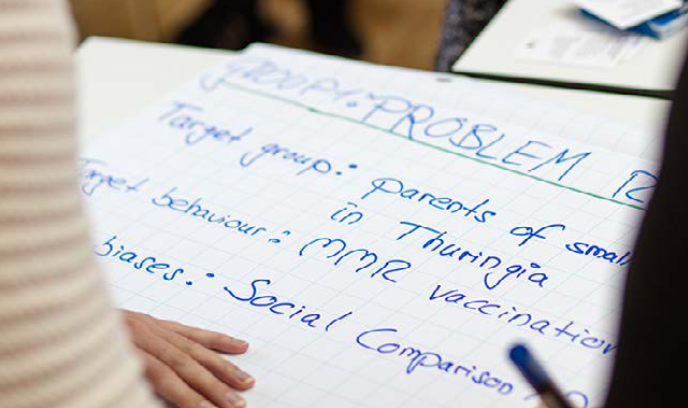
"Using evidence, models and methods from behavioural and cultural sciences allows [you] to tailor health-related services, policies and communication, thereby improving their outcomes."
Addressing persistent public health challenges, such as suboptimal uptake of vaccination, calls for evidence-based action that draws on an understanding of health behaviours and the cultural context in which they take place and that engages with those affected. This guide offers an approach to do so, the Tailoring Health Programmes (THP) approach. It is meant for public health units and experts who would like to apply behavioural and cultural insights (BCI) to any health behaviour in any population group. This guide was developed by the BCI Unit of the World Health Organization (WHO) Regional Office for Europe. It builds on the Tailoring Immunization Programmes (TIP) approach originally developed in 2012-13 for vaccination behaviours as well as subsequent versions adapted for antimicrobial resistance (TAP) and flu vaccination (TIP FLU).
The THP approach for applying BCI to health is: tailored; people centred; equity focused; participatory; evidence based; action focused; and evaluation informed. It is grounded in the COM-B model, which holds that there are three overall factors - capability, opportunity, and motivation (COM) - that need to be in place for any health behaviour (B) to occur. In addition, the approach is inspired by the Behaviour Change Wheel, which is a framework for translating research into interventions.
The THP evolves over 4 phases:
- Situation analysis, which involves reviewing existing data and knowledge, defining intended ("target") groups and behaviours, and engaging stakeholders.
- Research, which involves planning, conducting, and prioritising to arrive at insights into the barriers and drivers of the intended group's behaviour.
- Intervention design, which involves translating outcomes into intervention(s), refining and planning intervention(s), planning the evaluation, and engaging stakeholders.
- Implementation and evaluation, which leads to an understanding of the impact of the intervention on barriers, behaviours, and health.
Each of the 4 phases of the THP approach involves several steps. While the steps are presented in this guide in a certain sequence, they are deliberately not numbered, as they may not take place in the same sequence each time, and there may be overlap between them. In other words, the THP process is iterative.
For each step of the phase, there are corresponding considerations, exercises, and inspiration boxes in the tool book, which begins on page 42 of the resource. For example, Inspiration Box 10 (of 21 such boxes) explores stakeholder engagement, noting that which method to use will depend on the social, political, and cultural contexts within which the THP project is being carried out. Examples of different methods are described in this Inspiration Box (i.e., stakeholder workshops; patient participation groups (PPGs); and knowledge dialogues), and then related exercises guide the reader in defining (phase 1) and then prioritising (phase 2) intended groups and behaviours (phase 1).
Publishers
- Log in to post comments