











































Gender Mainstreaming in Latin American Parliaments: A Work in Progress
Consultants
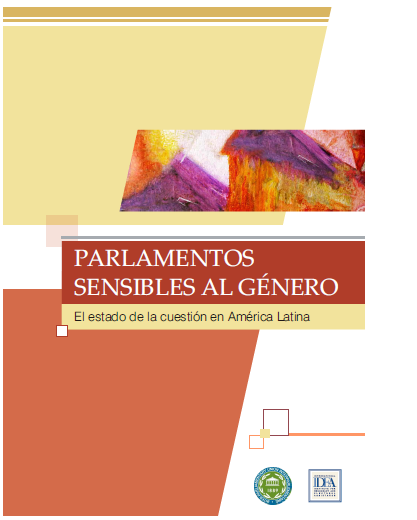
This report, sponsored jointly by the Inter-Parliamentary Union (IPU) and the International Institute for Democracy and Electoral Assistance (International IDEA), describes and analyses the progress of gender equality in Latin American parliaments. The two organisations believe that "gender equality in political participation is essential when evaluating the level of development of democracy." The report argues that because women have been systematically kept on the sidelines, their participation also raises the question of justice, and how and whether female legislators should represent gender issues.
The report is based on qualitative and quantitative data gathering about gender-sensitive parliaments. It begins by presenting the gender composition of parliaments in the region and some of their decision-making bodies. An analysis of the formal and informal rules guiding parliamentary working conditions follows, and then issues related to gender integration in standing parliamentary committees are examined, as well as cross-party women's caucuses and parliamentarians' positions on gender-focused parliamentary initiatives. The report then draws some conclusions with respect to the main trends identified in the region and the pending challenges. It also identifies good practices.
Some of the report's key findings include:
- The significant increase in the average number of women participating in national parliaments in Latin America is largely the result of the enactment of gender quota legislation in 12 countries; Political parties also play a role and some have voluntary quotas.
- Increased levels of inclusion of women in national parliaments have allowed women to begin to assume parliamentary leadership and decision-making positions.
- The formal rules regulating the working conditions in parliament generally do not take into account the growing presence of women and do not promote gender equality among members. This also represents a lost opportunity for the type of legislation that could improve working conditions for women in general (example, childcare and facilities for breastfeeding mothers). Furthermore, the predominance of male authority and of persistent prejudice regarding the alleged lesser abilities of women forces them to work harder and better than their male colleagues to advance their legislative proposals.
- Of particular importance on the issue of communication, the report found that national parliament's procedures and standing orders rarely include provisions to ensure the use of gender-sensitive language. This results in dominant, masculine forms of communication that create an artificial environment where the public sphere is viewed as a man's domain.
Strategies were suggested to advance the cause of gender equality, and some of those strategies have a particular focus on communication. For example, education and dissemination of the issues is badly needed in order for male and female legislators to be able understand the consequences of gender inequality. This communication should lead to new parliamentary norms to guide the social changes, which come slowly and need to be guided along. Because men tend to hold the leadership roles, and due to their lack of familiarity, interest, or support for gender equality, the authors recommend developing actions to raise awareness and provide training for men and women regarding the significance of a gender-based approach and the importance of gender mainstreaming in parliament.
IDEA website on March 19 2012.
- Log in to post comments