










































Gender in Ethiopian Media Landscape
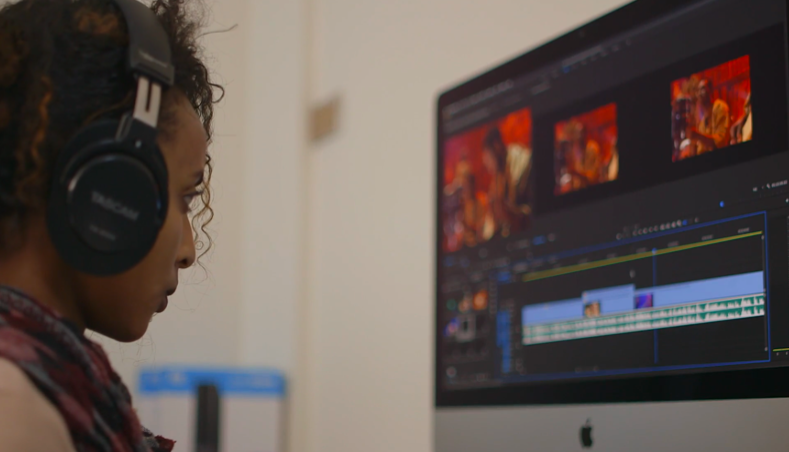
"... past research shows that the country's media has perpetuated deep-rooted stereotypes and prejudices against women - both in the newsroom and in the news produced by media organisations."
The purpose of this study, conducted by Fojo Media Institute (Fojo) and International Media Support (IMS), is to generate baseline information and programme recommendations on the state of gender and the media in Ethiopia. Specifically, it: offers a quantitative baseline of the number of women journalists working in newsrooms and their levels of seniority (including their participation in management structures); assesses the extent to which gender norms determine the kind of issues women are likely to report on; and provides a qualitative account of workplace policies and processes that support the empowerment of women in the newsroom.
The study forms part of "Media Reform in a Time of Change - Promoting Journalism and Democracy", a programme being implemented by Fojo and IMS in Ethiopia between 2020 and 2023. The overall objective of the programme is to enable men and women in Ethiopia to have access to independent and balanced public interest journalism, enabling democratic peaceful citizen engagement and accountable governance. The programme considers promoting women's representation in newsrooms, the fair and balanced portrayal of women and men in media content, and media access to women to be critical to realising these objectives.
The findings are based on: a desk review of available literature; a summary of gender-disaggregated data from seven media houses; and the results of 21 interviews and a focus group discussion with seven informants. Due to the small sample size, the report notes that the study should be considered indicative and as a reference point for discussion and further research. It should also be seen in light of an environment of rapid changes in the Ethiopian media landscape, a number of which have occurred since this assessment was finalised.
In summary, the major findings of this study include:
- The research confirmed an upward trend in number of women journalists working in newsrooms. Over 30% of the journalists employed in the seven surveyed media houses are women. However, women are disproportionately represented in managerial (15%) and editorial decision-making positions (26%) compared to men.
- Most female journalists report on so-called "soft news" topics. Historical and informal preferences for men reporting on certain topics, the gender bias of supervisors, and the personal interests of some women journalists appear to be the key factors determining this. However, this was not the case in all newsrooms, which suggests that the editorial roles in the newsrooms surveyed is not always strictly gendered.
- Most newsrooms lack a gender desk to coordinate reporting on women's issues or to respond to the needs of women journalists in the newsroom. While several newsrooms have adopted gender-sensitive guidelines developed with the help of UN Women, the extent to which these had been applied in a practical way in newsrooms was unclear. Gender-sensitivity training for journalists in newsrooms is also limited without outside intervention.
- Key workplace policies remain absent in many newsrooms, including policies on sexual harassment, policies that support women journalists with childcare responsibilities, and career development programmes for women journalists. At the same time, existing gender-based media associations and organisations are few and often too weak to support and advocate for gender-sensitive media content and operations.
- An increase in the number of female students enrolled in undergraduate studies in journalism and communication departments has been reported in recent years. However, there are few gender-related courses in undergraduate journalism and communications studies.
Based on the findings, the report concludes with a number of recommendations for media houses and other relevant media development organisations. Each recommendation is accompanied by a list of actions, which are only briefly summarised here (as per the Executive Summary):
- Create an enabling environment in the newsroom to advance gender equality in media content, programming, and operations, such as by motivating newsroom decision-makers to develop gender-sensitive policies, including editorial guidelines and codes of conduct, policies that create a supportive working context for women journalists (e.g., on sexual harassment), and policies that advance women in leadership positions in newsrooms. Newsrooms are also encouraged to establish gender desks.
- Build the institutional capacity of media organisations so they can implement gender policies effectively, such as by providing advanced gender training for editorial decision-makers, developing the technical capacity for newsrooms to monitor their gender coverage over time, and creating a directory of expert women sources for journalists.
- Build the capacity of women journalists, such as by designing training and mentoring programmes for women journalists and supporting peer-to-peer mentoring networks amongst women journalists.
- Strengthen multi-sectoral collaborations and learning, such as by: establishing and supporting a multi-stakeholder Technical Gender Advisory Committee; supporting forums for multi-stakeholder engagement; running webinars to learn about best practices; and creating stronger links between media houses and the Media Standing Committee of the House of People's Representatives and the Ministry of Women, Children and the Youth.
- Build the institutional capacity of the Ethiopian Media Women Association (EMWA), such as by helping EMWA redevelop its institutional capacity so that it once again becomes an effective advocacy actor in the media space.
- Support academic institutions to promote gender perspectives in journalism and communication education curricula, such as by addressing the absence of gender and media content in undergraduate curricula, sharing knowledge, and developing internship programmes with media houses that have a particular focus on gender in the media.
IMS website on March 12 2021.
- Log in to post comments