










































The Fairness Doctrine: is this the first big media debate under Obama and what does it mean for media development?
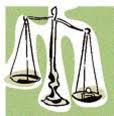
Rush Limbaugh, the right wing US radio talk show host, argues that one of the priorities of the new Democratic Congress will be the reintroduction of the "Fairness Doctrine".
This doctrine – implemented and overseen by the US Federal Communication Commission until 1987 – held that holders of broadcast licenses issued in the US had to present news and other public interest coverage in ways that were honest, balanced and equitable. It was designed to ensure that the public had access to a range of political perspectives, analysis and information.
Although there was substantial flexibility in how it could be accomplished, broadcasters were expected to cover news and public interest issues, and they were expected to do so fairly.
The Doctrine was abolished in Ronald Reagan's second term as President.
Limbaugh may be right. A newly empowered Democratic Congress may well attempt to reintroduce some kind of measure similar to the Doctrine. Chuck Schumer, Democratic Senator from New York, has raised the issue (and raised many hackles from conservative commentators in the process). House speaker Nancy Pelosi and Democrat Senators Jeff Bingaman, John Kerry and Richard Durbin have all argued that it should be reintroduced. Al Gore in his excellent book, The Assault on Reason, lambasts an increasingly polarised broadcast landscape in the US which, he argues, makes any real “marketplace of ideas” impossible. He bewails the abolition of the Fairness Doctrine in the process.
Obama himself has distanced himself from such calls. His office has argued that he "considers this debate to be a distraction from the conversation we should be having about opening up the airwaves and modern communications to as many diverse viewpoints as possible," adding, "That is why Sen. Obama supports media-ownership caps, network neutrality, public broadcasting, as well as increasing minority ownership of broadcasting and print outlets."
The debate is likely to have repercussions far beyond the shores of the United States and may well reinvigorate what is, I think, a stale and sometimes opaque debate about media regulation among those who support media development.
Most organisations working to support media in new democracies and developing countries claim to do so to establish a free media. Definitions of a free media tend in practice to be quite vague, characterised principally by a lack of government interference, intimidation or control.
However, most media development organisations have quite explicit expectations of what kind of media they hope will emerge from their efforts.
Most in media development want (I think) a free media that is not just free. It is a media – and specifically a broadcast media - that creates a more informed citizenry, that exposes people to differing perspectives, that has integrity and works in the public interest, that uncovers corruption without fear or favour to any particular party or interest group.
Most also want to see a media that does these things not just for the privileged elites of countries, but for those who do not constitute an advertising market, and particularly those outside the cities or in the slums for whom little media content is currently designed.
We are, as a community, generally concerned not only with freedom from government, but also from undue interference from other powerful political or economic interests. And we want a media capable of creating conversations across political, ethnic, religious and other boundaries, a media that is the antithesis to that which whips up hate against particular communities.
Many broadcast laws and much guidance on regulation from those working in media development make such aspirations explicit. The kinds of ideals that underpin the Fairness Doctrine are, let's face it, implicit in much media development debate.
And yet........
So much has changed since 1987 and there are many problems now with concepts such as a Fairness Doctrine.
Look at the dynamic energy that has emerged from the blossoming of commercial FM radio in Uganda, Ghana and Kenya and in so many other countries where commercial and political liberalisation has left radio largely to its own devices. Such radio has done as much for democracy in these countries as anything else. These are some of the flagship examples held up by media development proponents.
And what about community media, and a media that explicitly exists to project and give legitimacy to marginalised perspectives. What future for them under a Fairness Doctrine?
And doesn't the internet make the whole debate seem irrelevant. Not for many proponents of a Fairness Doctrine who want to see it extended to online content as well, but is it really possible to reverse the tide of ever greater democratisation and deregulation of content in a converged and digital age?
People in the poorest communities may get more of their information from mobile phone soon than from radio. Does that make regulation less relevant (it becomes impossible) or more important (information becomes ever easier to manipulate through viral rumour so that people increasingly demand common, trusted, mediated reference points where they can at least have access to facts, not just opinion).
And ultimately, isn't Limbaugh right when he argues that the whole idea of telling commercially independent broadcasters (who are not dependent on public subsidy) what they can and cannot say is an infringement of media freedom?
There is likely to be more of a debate of this kind in the coming months in the United States. Given the global popularity and influence of Obama, such a debate is likely to have repercussions globally. We in the development and media development communities should probably be better prepared for this debate than perhaps we are. Some on the left in the US consider that the Fairness Doctrine controversy is being deliberately stoked up by conservatives and want a better, more constructive debate on media regulation. We should be prepared for that too.
And we should also consider, given the wealth of experience we have internationally, that we might even have some useful contributions to make to these debates.
Comments

fairness in media reporting
I was struck by the frequency with which false information was published during the presidential campaign without being corrected or retracted by the media individuals/companies responsible.
It seems to me that American democracy would be well served with a higher degree of accountability and truthfulness.
David Buller
Melbourne,Australia.
Fairness and Balance is still relevant... but more is needed.
Hi James
Thanks for your stimulating article, and I want to post a quick response.
I can agree that there is something of a disjuncture between, on the one hand, what many media support organisations working in new democracies and developing countries believe is required to create the conditions of a “free media” – basically freedom from government control – and, on the other, what would really be required to bring into being the kind of media that they are hoping will emerge, media that creates an informed citizenry, is not afraid to stand up to vested interests of all kinds, and that can create the basis for respectful society-wide dialogue and understanding.
There is a genuine naivety, and maybe a little disingenuousness, in imagining that if governments would only keep their hands off the media, the public interest would best be served.
But the Fairness Doctrine (or ‘fairness and balance’ as it is known in Europe) is but one of a diverse set of tools that can be used to create a media environment conducive to securing the public interest. It is more useful in some cases than others, and can be applied judiciously, or across the board. So it is not entirely right to characterise the situation as: “So much has changed since 1987 and there are many problems now with concepts such as a Fairness Doctrine.”
The imposition of fairness and balance by regulation is most relevant where a single or small number of media/broadcasters have a dominant position in terms of where most people get their news and current affairs, and of course where it is practicable to enforce. The purpose of it is not to limit diversity of views. Quite the opposite: it is to ensure that vested interests cannot introduce systematic bias into such dominant media.
The predominantly privately owned media in the US clearly run such a risk of bias (as was proven once Fairness was dropped), in terms of news and current affairs that favour private corporate interests (as characterised by the Murdoch owned media, amongst others), but also in terms of a focus on maximising profits, for instance through advertising revenue and cost-cutting that in turn tends towards sensationalism, ‘infotainment’ and a focus on middle class interests.
Despite the growth in new media forms, from the internet to mobile phones to community media, broadcasting in many countries remains the single most important source of news and current affairs and is very often dominated by a small number of corporations. There is thus a continuing case for ‘fairness and balance’ regulation.
But it should be in conjunction with other forms of regulation that to some extent should render it redundant by blunting the tendency to bias – limits to concentration of ownership, encouragement of diversity of ownership, support for public service media, and so forth. As Chair of Dublin Community Television (www.dctv.ie) I am the first to argue for selective implementation of fairness and balance: we regularly make the case to the Irish regulator that community media introduces a degree of fairness and balance to the sector as a whole which we perceive as having a bias towards mainstream and establishment views. ‘Balance’ always implies some supposed central position, and the question is who defines this!
You are right that we need to look for new ways to regulate and support media – regulation that aims to actually liberate media from vested interests in a structural manner rather than constrain media against its own venal tendencies! The dynamic energy of commercial FM radio is so many African countries may, in the absence of such structural regulation, gradually concentrate into a few commercially driven radio networks, as has happened in so many countries including my own, Ireland, thereby blunting the original edge. Such ‘structural’ legislation and regulatory support for media would aim to serve the public and community interests through creating an environment to a great extent liberated from the tyranny of advertising, and with roots deep enough in people’s lives to withstand the pressures to commercialise.
Seán Ó Siochrú sean@nexus.ie
kuaile
can stop the world's events, I do not have that ability to control, and social system is built up by us, without us, taking the world there is no big deal, but still have to do anything to hold their own with time , Places, people are not ready, if ready for a major event can be dry, otherwise we will have to prepare for the preparation of the.
- Log in to post comments