










































Evaluation of the Confiance Totale Campaign in Togo: Associations Between Campaign Exposure and Family Planning Outcomes of Interest
Center for Communication Programs, Johns Hopkins University School of Public Health (Loll, Werwie, Vondrasek, Portillo, Naugle); JHUCCP West Africa Breakthrough ACTION Project (Tokplo, Prince-Agbodjan, Ouro-Gnao); CERA Group (Kassengne, Nagbe, Babogou)
"The results demonstrate the promise of high intensity and high frequency approaches to behavior change communication..."
In Togo, only 24.1% of married woman ages 15 to 49 use modern family planning (FP), and approximately 34% of women report having unmet need for contraception. Past research shows that, in addition to structural barriers and social norms, trust in providers is likely to also be a major factor affecting propensity to use FP. The West Africa Breakthrough ACTION (WABA) project developed the Confiance Totale radio campaign, which promoted couple communication about FP and planning for FP method access, use, and uptake. This study presents the results of an evaluation of Confiance Totale that investigates associations between campaign exposure and outcomes of interest.
As described at Related Summaries, below, Confiance Totale is based on Kincaid et al.'s ideational model of social and behaviour change (SBC) interventions, which posits that tailored communication can result in improvements in skills and knowledge as well as in ideational constructs such as attitudes, perceived norms, self-efficacy, and social support. In total, WABA created and aired nine 45-second radio public service announcements (PSAs) that promoted the messages that FP methods are safe and effective, could be used successfully during COVID-19 lockdowns, and could be accessed from pharmacies, as well as that providers and hotlines were available to speak to clients about their concerns related to FP methods. Confiance Totale PSAs were broadcast in Togo from July 2021 to December 2021 on local radio stations. Each spot was broadcast on seven radio stations in French and in the two principal national languages 15 times per day, as per the Saturation+ dissemination approach.
Following the broadcasts, the team conducted a cross-sectional household survey among 2,200 respondents in Lomé (Agoé Nyivè) and Blitta Ville (Blitta) in Togo in April 2022. Approximately 45% of the overall sample reported they had heard radio messages when the Confiance Totale jingle was played. In multivariable models controlling for respondent age, sex, district, marital status, religion, educational attainment, and socio-economic status, exposure to Confiance Totale was associated with many outcomes of interest, including current use of a facility-dependent FP method (odds ratio (OR) = 1.77, p < .001), intention to use FP (OR = 2.17, p < .001), intention to go to a health facility to obtain information about FP (OR = 1.77, p < .001), having spoken with one's primary partner in the past month (OR = 1.45, p < .001), intention to talk to one's partner about FP (OR = 1.47, p < .001), positive attitudes toward FP (β = 0.45, p < .001), the perception of supportive FP social norms (OR = 1.68, p < .001), positive postpartum FP attitudes (OR = 1.26, p = .02), increased knowledge of FP (β = 0.42, p < .001), increased self-efficacy to talk about FP at the health facility (OR = 1.86, p < .001), increased self-efficacy to speak with one's partner about FP (OR = 1.39, p = .006), and increased reproductive autonomy (β = 0.73, p < .001). Having spoken to a healthcare provider in the last month was not statistically significantly associated with exposure to the Confiance Totale campaign.
Several outcomes were positively associated with exposure among women only. Women who had been exposed to the campaign had higher odds of speaking to a health care provider in the last month, higher odds of communicating with their partner in the past month, and more accepting FP attitudes generally and postpartum FP attitudes. However, while men had significantly higher levels of exposure to Confiance Totale than women and higher overall scores on FP communication with partner and FP attitudes, the relationship between exposure and these outcomes was not significant among men. Of note, the association between campaign exposure and communication with partner about FP (as well as the self-efficacy to do so) was not significant among men in the stratified model. This limits the plausibility of a pathway effect from exposure among the men to increased male FP engagement with women to increases in FP use. The more pronounced effects of the campaign among women provide "evidence of the value of additional FP programming for increasing women's reproductive autonomy and continuing to work with men to support women's reproductive decisions and joint FP decision making."
In conclusion: "the consistent association between exposure to the campaign and positive ideational and behavioral variables may demonstrate the enduring effects of the campaign - even when no longer being actively broadcast. The results of this evaluation suggest mass media campaigns can be an effective way to reach individuals about FP within the context of disruptive or emergency contexts, such as those created by the COVID-19 pandemic."
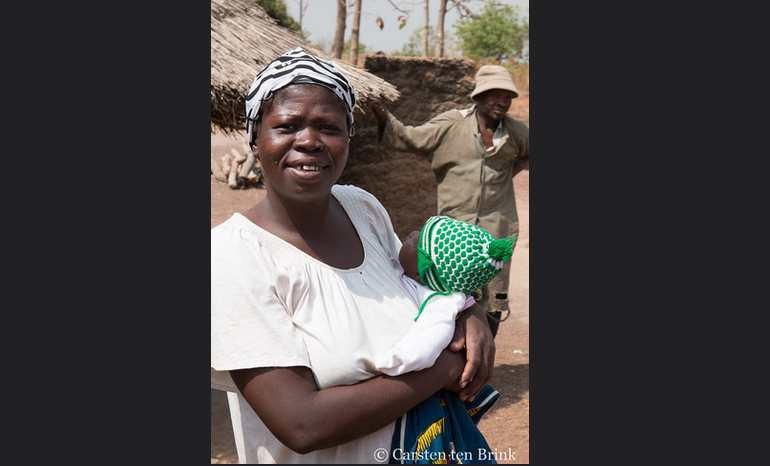
Journal of Health Communication, 00: 1-18, 2023. DOI: https://doi.org/10.1080/10810730.2023.2266426. Image credit: Carsten ten Brink via Flickr (CC BY-NC-ND 2.0 Deed)