











































Creating a Scalable Model for Healthcare Delivery and Patient Centered Care in Rural India using Telemedicine: A Positive Deviance Inquiry and Intervention
Summary:
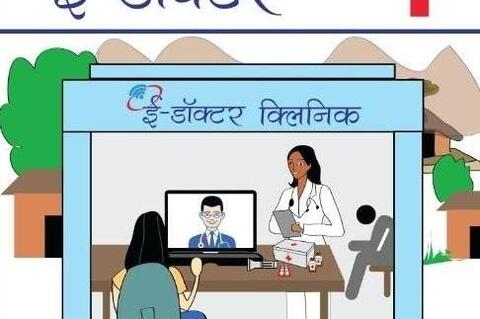
Known as e-doctor or e-clinic, Karma Primary Health Care's (KPHC) tele-medicine social business has made a unique mark in rural healthcare by making high quality primary health care affordable & accessible in rural areas of Haryana and Rajasthan. A nurse-mediated online consultation with doctors is carried out at the clinics. However, communities remain unaware and distant from the service. Thus, Positive Deviance Inquiry (an asset based communication strategy) was carried out to discover successful practices that stakeholders involved in the process of tele-medicine undertake, to enhance the quality of health care delivery at e-doctor clinics. In this inquiry, successful acts of communication were identified and some generated through a creative process to meaningfully add to patient care. The process gainfully led to designing intrinsic & extrinsic communication systems, whereby doctors, nurses, outreach workers and community members could enable uptake of the E-Clinics. A six-month capacity building program, and on the community front, a variety of rural marketing tactics were employed such as 'chai bethaks' (tea time), developing 'friends of e-doctor, 'swasthya salahakar samiti'(health advisory panels), and shifting offers to seasonal illnesses and pathology. The service observed a four-fold increase in patients, progressively during the six-month intervention. Communication dissemination became self-sustainable and communities became a part of the e-doctor community willfully, as the word of the e-doctor spread across. This case is suggestive of the communicative practices that allow for human connection, even when mediated by technology.
Background/Objectives:
Known as e-doctor or e-clinic, Karma Primary Health Care's (KPHC) telemedicine social business has made a unique mark in rural primary healthcare wherein affordable, high quality primary health care is made accessible in rural areas with the use of nurse mediated online consultation with doctors. However, despite the use of a sophisticated model, & enabling communities to save money, time and connect with qualified doctors from afar, telemedicine was not the first choice of the target communities. Thus, the objectives of the research and intervention were to understand and create connect between human and doctor consults mediated by technology.
Description of Intervention and/or Methods/Design:
A Positive Deviance (an asset-based communication strategy) Inquiry was carried out to discover successful practices for telemedicine undertaken to enhance the quality of health care delivery at e-doctor clinics. In this inquiry, successful acts of communication were identified and some generated through creative process to meaningfully add to patient care. Innovations and solutions from stakeholders & communities were then amplified into doable actions through a thoroughly designed communication & capacity intervention. The process gainfully led to designing intrinsic & extrinsic communication systems of how all the stakeholders can enable regular uptake of the E-clinics. The 6-month capacity building program for the organization using experiential techniques to disseminate internal innovations was implemented. On the community front, a variety of rural marketing tactics were employed such as 'chai bethaks'(tea time), developing 'friends of e-doctor', 'swasth salahakar samiti'(health advisory panels) and shifting offers to seasonal illnesses and pathology.
Results/Lessons Learned:
The social enterprise saw an increase in patients four-fold progressively increasing in the six-month intervention. The communication dissemination became self-sustainable and communities became a part of the e-doctor community willfully as the word of mouth spread. This case is suggestive of the communicative practices that allow for human connection even when mediated by technology and create 'care' central to the practice of telemedicine to ensure loyal customers and opting for e-doctors as the primary health care provider. The focus being communication between different stakeholders, the creative behaviors can be easily adapted and adopted for scaling up technology-mediated primary health care initiatives. The replicability of the actions is dependent on the stakeholder's personal touch as the conversion into a regular patient depends on how doctors and nurses talk to patients, make them feel and impart faith that they will be well cared for.
Discussion/Implications for the Field:
Even though the opportunity to seek quality healthcare is a fundamental necessity, it is only being fulfilled now with the aid of technology. The increasing digitalization and internet penetration has made health care accessible & affordable with telemedicine. However, this research and intervention point out to the very fact that technology alone cannot surpass the value of human communication in care & personal engagement with communities. Through the novel technology of telemedicine, this discussion will explore the importance of convergence of technology and human-mediated communication to experience services and information in a balanced way.
Abstract submitted by:
Pallavi Jain - The Change Designer
Anu Sachdev - The Change Designers
Arvind Singhal - University of Texas at El Paso
Jagdeep Gambhir - Karma Healthcare
Approved abstract for the postponed 2020 SBCC Summit in Marrakech, Morocco. Provided by the International Steering Committee for the Summit. Image credit: Karma Healthcare