
























Development action with informed and engaged societies

After nearly 28 years, The Communication Initiative (The CI) Global is entering a new chapter. 

Following a period of transition, the global website has been transferred to the University of the Witwatersrand (Wits) in South Africa, where it will be administered by the Social and Behaviour Change Communication Division. Wits' commitment to social change and justice makes it a trusted steward for The CI's legacy and future. 

On the transfer, co-founder Victoria Martin expressed her pleasure to see this work continue under Wits' leadership, knowing that co-founder Warren Feek (1953–2024) would have felt deep pride in The CI Global's Africa-led direction. 

As Wits, we honour the team and partners who sustained The CI for decades and look forward building from that strong base. This includes co-founders Warren Feek (1953-2024) and Victoria Martin as well as La Iniciativa de Comunicación (CILA), which continues independently at lainiciativadecomunicacion.com with links to The CI Global site. We are also eager to forge new partnerships and entertain new ideas as we consider how best to contribute to social and behaviour change in our rapidly evolving environment.

If you are joining the International Social and Behaviour Change Communication (SBCC) Summit in Panama, please join Wits and CILA on Monday, 22 June, to share your thoughts and suggestion for the relaunch of the Communication Initiative. We will be in Pacifica 5 from 12-1:25 for the Refuel, Reflect, and Renew Lunch Series: The Communication Initiative: celebrating a driving force for Communication for Social Change and the way forward. We will reflect on the legacy of Warren Feek and family in creating the Communication Initiative, consider the contributions of CI over the years and then turn our attention towards the future in this dynamic session. 

If you are unable to join us in Panama, we still want to hear from you. Please contribute your thoughts by following this link: https://redcap.link/CommunicationInitiative2026 or reaching out to ci_surveys@commint.com

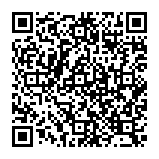
You can also follow the QR Code:

 https://redcap.link/CommunicationInitiative2026

Time to read
1 minute
Read so far

Egypt Last Push to Eradicate Polio

0 comments
Affiliation

UNICEF

Date
Summary

This was presented at the June 2004 UNICEF meeting dedicated to examining communication in the context of the final push to eradicate polio. The presentation provided an overview of the epidemiological history, current trends and risk factors in Egypt, as well as the country-specific communication strategies.


A summary of the Acute Flaccid Paralysis (AFP) surveillance data for 2003 and 2004 is provided, as is information regarding confirmed polio cases (1 in each of 2003 and 2004, both in the Upper Nile region). There are currently two main focus areas for the eradication effort: the Upper Nile and Greater Cairo. An assessment of National Immunisation Days (NIDs) in 2004 reveals improved coverage rates, with TV and megaphone announcements being the primary source of campaign information for community members. Results of an independent survey for the period from 2002 to 2004 are included, focusing on both the primary reasons for children being missed, and the locations where children were vaccinated. The communication environment includes positive support from both government and the media - primarily via TV, new FM radio channels, and megaphones.


Specific communication objectives are noted - including a focus on supporting coverage of the NIDs in children aged 0-5 in the Upper Egypt pockets of virus circulation. Strategies employed include advocacy (First Lady, private sector and celebrities), mass media (TV, radio, religious media, billboards etc., plus question and answer (Q&A) sessions for low literates) and community mobilisation (community awareness volunteers, religious leaders, mosque announcements, megaphones, community meetings). Campaign fatigue, rumours, and questions related to performance are identified risks, for which communication responses have been developed that include engaging the public in dialogue and providing interpersonal training to health and vaccination workers.


Click here to download the full presentation as a PDF file.