
























Development action with informed and engaged societies

After nearly 28 years, The Communication Initiative (The CI) Global is entering a new chapter. 

Following a period of transition, the global website has been transferred to the University of the Witwatersrand (Wits) in South Africa, where it will be administered by the Social and Behaviour Change Communication Division. Wits' commitment to social change and justice makes it a trusted steward for The CI's legacy and future. 

On the transfer, co-founder Victoria Martin expressed her pleasure to see this work continue under Wits' leadership, knowing that co-founder Warren Feek (1953–2024) would have felt deep pride in The CI Global's Africa-led direction. 

As Wits, we honour the team and partners who sustained The CI for decades and look forward building from that strong base. This includes co-founders Warren Feek (1953-2024) and Victoria Martin as well as La Iniciativa de Comunicación (CILA), which continues independently at lainiciativadecomunicacion.com with links to The CI Global site. We are also eager to forge new partnerships and entertain new ideas as we consider how best to contribute to social and behaviour change in our rapidly evolving environment.

If you are joining the International Social and Behaviour Change Communication (SBCC) Summit in Panama, please join Wits and CILA on Monday, 22 June, to share your thoughts and suggestion for the relaunch of the Communication Initiative. We will be in Pacifica 5 from 12-1:25 for the Refuel, Reflect, and Renew Lunch Series: The Communication Initiative: celebrating a driving force for Communication for Social Change and the way forward. We will reflect on the legacy of Warren Feek and family in creating the Communication Initiative, consider the contributions of CI over the years and then turn our attention towards the future in this dynamic session. 

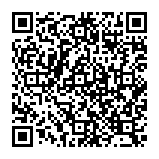
If you are unable to join us in Panama, we still want to hear from you. Please contribute your thoughts by following this link: https://redcap.link/CommunicationInitiative2026 or reaching out to ci_surveys@commint.com

You can also follow the QR Code:

 https://redcap.link/CommunicationInitiative2026

Time to read
1 minute
Read so far

Educational HIV/AIDS Campaign - Africa and the Caribbean

1 comment
In November 2003, the BBC World Service Trust, in partnership with the Kaiser Family Foundation (KFF) and Viacom Inc., launched a radio campaign to combat the spread of HIV/AIDS in Africa and the Caribbean. This 6-month public education campaign featured 60-second-long public service announcements (PSAs); programmes and services produced under the partnership are available rights-free to other broadcasters. The radio spots were designed to promote responsible sexual behaviour and thereby reduce the number of new infections. A key population addressed was 19- to 25-year-old men.
Communication Strategies

The campaign incorporated 3 waves of spots, each lasting 2 months, with a break of 2 months between each wave. Specifically, 60-second educational radio spots were broadcast 3 times per day at peak listening hours. The spots carried messages about HIV/AIDS, tailored to suit individual languages and countries to which they are broadcast. The messages educated people about how to protect themselves against HIV (particularly by using condoms), minimise risk, make sensible choices, and tackle misconceptions about the disease. The spots focused on 3 main areas: risk, consistent condom use, and stigma. They used a combination of humour and drama to get the messages across. Broadcasts were in 8 languages: English for Africa; French for Africa; Portuguese for Africa; and Hausa, Swahili, Somali, Kinyarwanda/Kirundi, and English for the Caribbean.


Click here to listen to the spots and/or read the transcripts.


A 5-minute special call-in segment was also produced as part of the weekly English-language programme "Postmark Africa."

Development Issues

HIV/AIDS.

Key Points

Research was carried out in 15 cities across Africa to assess the impact of the project.


This collaboration builds on the Viacom and Kaiser KNOW HIV/AIDS campaign, which launched in the United States in January 2003. The reach of the World Service in Africa and the Caribbean is as high as 30% of the radio audience in certain countries. The BBC reaches 60 million people per week in Africa and the Caribbean.


Organisers note that Africa, particularly sub-Saharan Africa, has the highest HIV/AIDS prevalence rate of any region in the world. 29.4 million or 70% of all those with the disease live in sub-Saharan Africa, with more new infections and AIDS deaths in 2002 than any other part of the world. The Caribbean has also been severely impacted and is the second-most affected region.

Partners

BBC World Service Trust, the Kaiser Family Foundation, and Viacom Inc.

Comments

User Image
Submitted by Anonymous (not verified) on Tue, 11/30/1999 - 00:00 Permalink

To Ben.Williams,

Thanks to all great compaign and radio intervention you are doing in Sub-sahara Africa.My name is Emmanuel Ruranga and I am a clinical Therapist working with HIV/AIDS in Newark,New Jersey,USA