Development action with informed and engaged societies

After nearly 28 years, The Communication Initiative (The CI) Global is entering a new chapter. 

Following a period of transition, the global website has been transferred to the University of the Witwatersrand (Wits) in South Africa, where it will be administered by the Social and Behaviour Change Communication Division. Wits' commitment to social change and justice makes it a trusted steward for The CI's legacy and future. 

On the transfer, co-founder Victoria Martin expressed her pleasure to see this work continue under Wits' leadership, knowing that co-founder Warren Feek (1953–2024) would have felt deep pride in The CI Global's Africa-led direction. 

As Wits, we honour the team and partners who sustained The CI for decades and look forward building from that strong base. This includes co-founders Warren Feek (1953-2024) and Victoria Martin as well as La Iniciativa de Comunicación (CILA), which continues independently at lainiciativadecomunicacion.com with links to The CI Global site. We are also eager to forge new partnerships and entertain new ideas as we consider how best to contribute to social and behaviour change in our rapidly evolving environment.

If you are joining the International Social and Behaviour Change Communication (SBCC) Summit in Panama, please join Wits and CILA on Monday, 22 June, to share your thoughts and suggestion for the relaunch of the Communication Initiative. We will be in Pacifica 5 from 12-1:25 for the Refuel, Reflect, and Renew Lunch Series: The Communication Initiative: celebrating a driving force for Communication for Social Change and the way forward. We will reflect on the legacy of Warren Feek and family in creating the Communication Initiative, consider the contributions of CI over the years and then turn our attention towards the future in this dynamic session. 

If you are unable to join us in Panama, we still want to hear from you. Please contribute your thoughts by following this link: https://redcap.link/CommunicationInitiative2026 or reaching out to ci_surveys@commint.com

You can also follow the QR Code:

 https://redcap.link/CommunicationInitiative2026

Time to read
2 minutes
Read so far

Digital Storytelling Project
0 comments
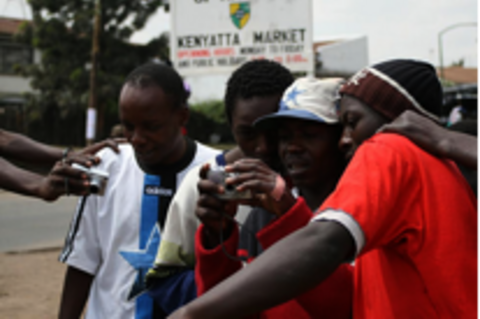
The Digital Storytelling Project, initiated in 2008, is a programme of the Undugu Society of Kenya (USK), an organisation focusing on street children rehabilitation and community empowerment in sub-Saharan Africa, in collaboration with one of its partners, the Advocacy Project. The project aims to allow vulnerable young people between the ages of 14 and 22 to speak out about issues affecting their lives and to share their stories with a wider audience. In order to achieve this, the project trained 17 young people, many of whom were living and working on the streets, to write blogs, take photographs, and put this material online. Some of the issues that the students raised included life on the streets, poverty in informal settlements, police harassment, environmental degradation, drug use, and post-election violence. With the potential to reach local and global audiences on the internet with these stories, the project aims to lobby key stakeholders, such as government officials, development partners, parents, and communities, in order to effect real policy reform around issues that impact the lives of children and youth. It also hopes to change negative public attitudes and stereotypes that tend to hold back children and youth living and working on the streets. It seeks to show the public that through empowerment, these children and youth can engage in productive activities and can contribute positively to Kenya's growth.
Communication Strategies

All of the youths involved in the Digital Storytelling Project came from other USK programmes, such as the Street Children and Youth Association, the Non-Formal Schools programme, and the Vocational Skills Training Programme. Selected by the teachers and field officers who work closely with them, they were given the opportunity to participate in the project based on their age, enthusiasm, and level of engagement. Girls and students with lower literacy skills were especially encouraged to participate.

During the first 3 months of training, a trainer from the Advocacy Project instructed the young participants in basic writing and photography through both theory and practice. With the help of the trainer, the participants wrote stories about their daily lives and went into their communities to take photographs. Using computers at local internet cafés, they also learned how to create their own blog.

According to the organisers, the Digital Storytelling Project is committed to youth participation, and hopes to be fully youth-run in the near future. To help reach this goal, the Advocacy Project will conduct a 3-month "Training of Trainers" workshop to teach 12 students the leadership skills they will require to teach other children. In addition, 2 of the young participants will be trained on a full-time basis so that they can lead the project in 2009 and beyond.

USK officially launched the Digital Storytelling Project in October 2008 in Nairobi by holding a forum entitled "Listening to Children and Youth". At the forum, youths involved in the project as well as other USK programmes spoke to government leaders, police officers, development agencies, and non-governmental organisations about issues important to them. At this event the Digital Storytelling Project also held an exhibition of the photographs taken by the students and a fundraising auction for the project. In order to expand the audience for this youth-generated work, the project held another photography exhibition in Kisumu, western Kenya, in early 2009.

Click here to view the photographs. Click here to read the blogs.

Development Issues

Youth, New Technologies

Key Points

According to the organisers, so far, the public's response has been very positive. Comments from readers posted on the blogs show that public attitudes towards youth on the streets are shifting towards a more positive impression of their abilities and their potential to lead healthy and productive lives.

Teaser Image
http://www.comminit.com/files/USKstorytelling.png