










































COVID-19 Vaccine Community Leader Mobilization Training
Image
SummaryText
"As a community leader, you are uniquely positioned to assist and mobilize others..."
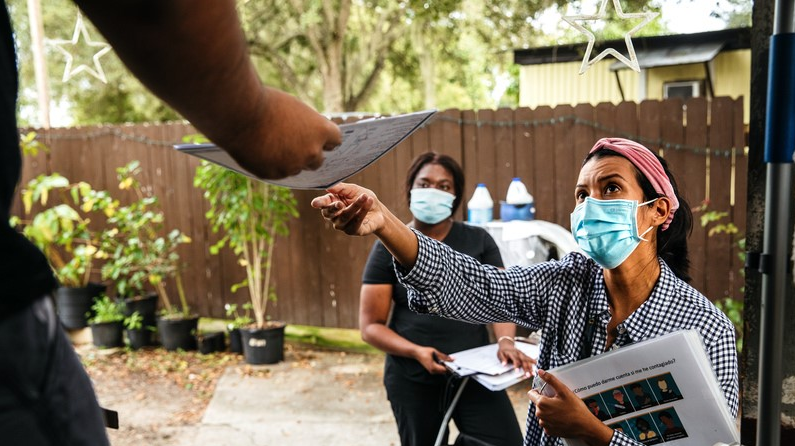
From Partners In Health (PIH) United States, this resource deck is intended for use in training messengers and community leaders to conduct community-based outreach and education around the COVID-19 vaccine. The goal is to share accurate, science-based evidence and that trusted messengers can draw on to engage in discussion that enables individuals to make informed decisions about their own health. Grounded in community participation principles, its ultimate aim is to help create local champions in the COVID-19 vaccine rollout.
Main sections include:
- Your role as a community leader - This role involves, in part, sharing feedback from the community with state and local leaders, tailoring outreach and messages to your community's needs, and connecting those in need to social supports and information
- Information on COVID-19 vaccine efficacy and access - This section covers, for example, the structural, logistical, and information-related barriers to COVID-19 vaccine access, such as misinformation circulating on social media.
- Vaccine confidence and why it matters - As outlined in this section, every person starts at a different point along the path to vaccination, and so different engagement, support, and communication strategies are required. Community leaders can understand their community's particular needs and concerns, such as racism and inequality and other factors influencing vaccine confidence that may cause reluctance to receive the COVID-19 vaccine.
- Actions for community leaders:
- Share key messages about vaccine safety, efficacy, and distribution - for example, by leading with the positive, acknowledging people's hesitancy, and sharing your own personal story, perhaps in a virtual town hall (best practices for such an event are outlined).
- Enable access in your community - for example, by thinking back to the barriers to access faced by individuals in your community and identifying the resources available in your community to overcome them.
- Be an advocate - for example, by working shoulder to shoulder with local government.
- Next steps in supporting your community - Community leaders are invited in this section to explore opportunities for local mobilisation around COVID-19 vaccination, with the help of some additional resources.
Publishers
Publication Date
Number of Pages
48
Source
PIH website, November 24 2021. Image credit: Scott McIntyre for Partners In Health