










































Combating the Spread of COVID-19 Through Community Participation
Manipur University (Khongsai, Anal, A.S., Kh.); Dhanamanjuri University (Shah); Institution of Engineering and Technology, or IET (Pandey)
Community participation through various measures is the only way to limit the spread of the virus."
India is particularly vulnerable to COVID-19 due to easy human-to-human transmission, insufficient testing laboratories, a poor public health system, non-availability of medicines, and a high number asymptomatic infected persons. The present study investigates the potential of social intervention and involvement to control the pandemic and its cascading effect. The study identifies 5 "S"s - namely, segregation, sensitisation, social fencing, solidarity, and social services - to control the disease through people's participation.
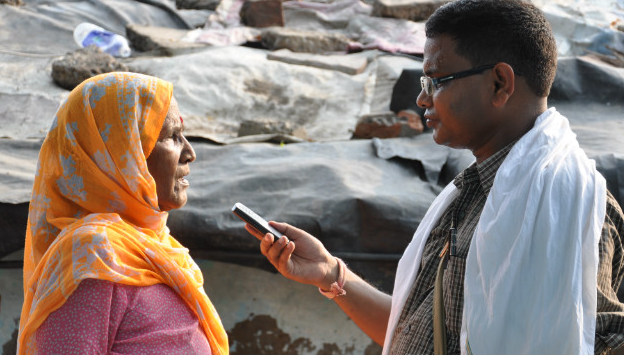
As noted here, local communities and governments can work in concert to control the spread of COVID-19 by acting as a watchdog in reporting a suspected case, helping make it possible to isolate travellers, and educating the illiterate rural masses through information, education, and communication (IEC). Specifically, the 5 S model entails:
- Segregation: Community leaders and social organisations can play a role by segregating vulnerable people, especially senior citizens and children, from associating with travellers. This segregation will minimise the size of the outbreak and impact on the public health system until an effective vaccine becomes available.
- Sensitisation: Social distancing measures and personal etiquette like wearing a mask in public and frequent hand washing can be strengthened through public awareness campaigns that reach to the community level.
- Social fencing: Bans on mass political, educational, cultural, and religious gatherings and stay-at-home orders can only be achieved with the people's participation. The imposition of guidelines and standard operating procedures (SOP) must be focused, action-oriented, and non-coercive; community interventions with sufficient transparency, trust, and engagement are needed to encourage compliance.
- Solidarity: Moral and physical support to frontline workers and to infected persons and their families can be encouraged through proper awareness and education at the community level. Social distancing can have a significant impact on people's psychological and mental health, especially the young, elders, and physically and mentally challenged people; thus, it should really be "physical distancing" that is enforced, avoiding emotional distancing. Community leaders should be aware of human affairs and social norms - and the need to combat stigma - while enforcing COVID-19 control measures. "Stigma within the community is a sign of lack of mass awareness among the people."
- Social services: The distribution of relief materials by politicians and other influential people can be done transparently by local clubs and organisations through the proper arrangements and regulations. Community leaders can act as a watchdog by ensuring that relief materials reach the intended population.
In short, this article has explored the importance of social and community engagement in tackling transmission of COVID-19 in India. The authors conclude: "intervention by the government through community involvement is the need of the hour."
Global Social Welfare (2020). https://doi.org/10.1007/s40609-020-00174-4. Image credit: Suprabhat/Shutterstock