











































Climate Change Media Partnership
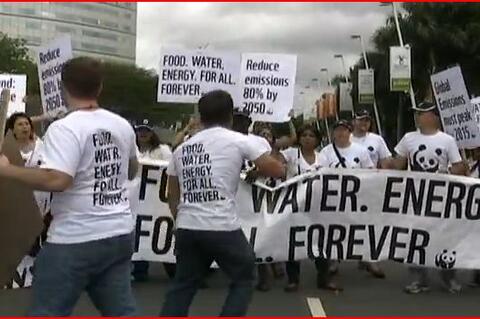
The Climate Change Media Partnership centres around a fellowship programme in which up to 40 journalists per year receive support to attend and report from UN conferences related to climate change. For example, 19 journalists from 15 countries were awarded fellowships to attend the COP17 conference of the UN Framework Convention on Climate Change to report on the intergovernmental negotiations in Durban, South Africa, in December 2011. While there, they received training, editorial support, special briefings from senior scientists, and a field trip, among other activities. According to CCMP, since 2007, it has provided over 170 fellowships to enable journalists to attend and report on the UN climate change negotiations, producing 900 stories.
The CCMP publishes stories on the CCMP website, which provides a platform for the fellows' climate-change reporting as well as useful resources for other journalists. The website includes photo, print, audio, and video stories produced by the fellows, as well as links to support materials and related websites, news briefs, and information about the fellows.
CCMP has also created a roster of experts blog to promote accurate and accessible journalism about climate change by helping journalists and their sources to connect. The roster is a directory of experts who are able to talk to journalists about various aspects of climate change.
Climate Change
According to CCMP, the impacts of climate change are far-reaching - with those living in poverty being most vulnerable. However, most economically poor people are left out of discussion and planning; thus, they lack information to help them adapt to the impacts of climate change. The media have a key role to play in raising understanding and awareness at global and local levels about climate change. Strong media can create debates, spread knowledge, influence policies, and help citizens hold decision-makers to account. However, in most developing countries, there is little media coverage of climate change, and Southern journalists are marginalised within international discussion and decision-making. The CCMP was created to address this marginalisation and support journalists to raise awareness and encourage debate in their own countries.
The United Nations Framework Convention on Climate Change has been trying to reach an agreement to fight against climate change, collaborating with its member countries through Conference of Parties (CoP) each year since 1995. However, scientific messages on climate change and political negotiation have not yet reached many of the world's billion people.
Internews, Panos London, and the International Institute for Environment and Development (IIED)
Panos London website; and CCMP website on October 31 2011 and October 16 2012.
- Log in to post comments