










































Centre for Coastal Environmental Conservation (CCEC)
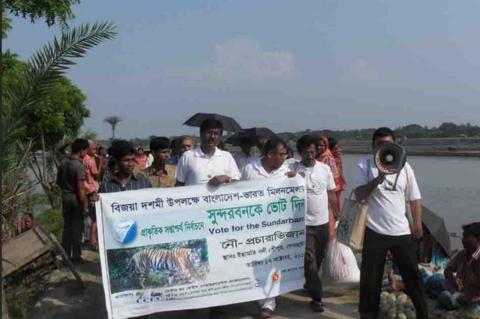
CCEC is a research organisation using a variety of communication approaches to raise awareness among Bangladesh's coastal communities in order to develop environmental ethics, skills, attitudes, and commitment towards environmental conservation and sustainability. The group's work is based on the conviction that addressing environmental issues in a sustainable way requires attention to a complex and delicate web of ecological, social, and economic relationships, which calls for an integrated approach. Membership is open to all national citizens who are interested in environmental sustainability and who subscribe to the objectives of CCEC.
CCEC works on: coastal environment protection using environmental education; poverty reduction on the part of stakeholders of Sundarbans (literally translated as "beautiful jungle" or "beautiful forest" in the Bengali language) through cooperative society; counselling for Sundarbans stakeholders; community-based mangrove ecosystems conservation; disaster risk reduction and recovery; climate change adaptation strategies; marine biodiversity conservation; ecotourism development; health, education, and human rights; child labour and child rights; and environmental awareness through cultural song/drama.
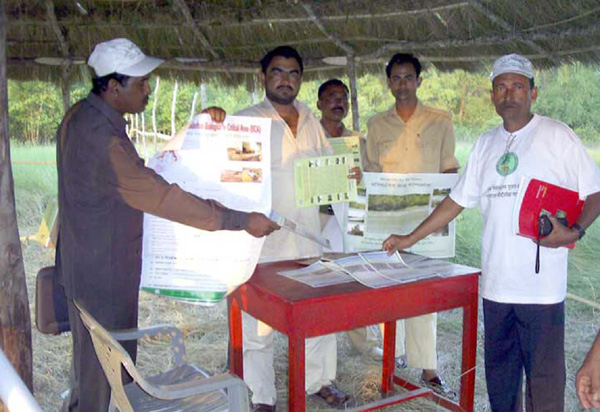
CCEC stresses that there is a growing recognition that strategies for sustainable environmental management and conservation can only be achieved through local-level participation based on indigenous knowledge; a top-down process is not likely to be sustainable or beneficial. To this end, key CCEC actions include raising awareness about issues such as mangrove protection (e.g., through a newsletter and poster highlighting the problem and encouraging participation in "Mangroves Action Day" - July 26), organising group and individual meetings with CCEC advisory board members to develop proposals and find development partners for cooperation, and mobilising local resources by disseminating environmental messages around issues such as increased salinity, marine pollution, river silt, sea level rise, and biodiversity depletion. The organisation has developed a package that consists of a teacher's manual, student's booklet, and poster/flipchart. CCEC has also trained over 1,000 primary school teachers in an effort to create EE-conscious citizens.
In 2015, 300 teachers were trained on tiger-human conflict minimisation, which involved the development of tiger conservation booklets and a documentary film/DVD.
To read more about all of CCEC's activities and to access reports and publications produced by the organisation, click here.
Environment.
Emails from CCEC and from Mowdudur Rahman to The Communication Initiative on July 30 2006 and July 14 2010, respectively and email from Mowdudur Rahman to The Communication Initiative on July 1 2015; and CCEC website, July 16 2010 and July 2 2015.
- Log in to post comments