










































Campaign against Mobile Tower Radiation: Bhatti mein Shahar (City in Furnace)
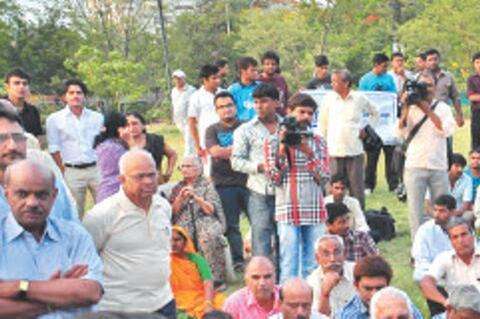
The Rajasthan Patrika Group (Rajasthan, India) of newspapers launched a campaign, Bhatti mein Shahar, in 3 states against illegal installations, lack of licensing norms, and excessive levels of radiation of mobile cell towers. The newspaper found that, for this technology, no policy was in place to monitor possible health effects nor were conclusive studies ever brought to light. Patrika - Media Action Group (MAG - the social action wing of the newspaper group) engaged and educated concerned citizens, launched a helpline, and raised the issue, through concerned citizens, by filing "Public Interest Litigation (PILs)".
The group used media as a vehicle to: collect sufficient evidence of cancer and other illness from radiation; dig out facts; and require the legal system to safeguard citizens' health interest by removing towers and seeking policy on cell tower safety and citizen rights.
The Bhatti mein Shahar campaign for public health rights and safe technology regarding mobile towers found that this safety issue was under study without definitive local or state policy in place. Thus, it chose to take "preemptive action" to prevent long-term impact on public health of radiation from what it considered indiscriminately installed mobile phone towers (in residential areas, schools and hospitals, etc. ) emitting high and unregulated levels of radiation.
According to Patrika: "A citizen whose two brothers suffered from excess radiation from tower became a whistle blower and got the radiation measured and approached central agencies for advocacy on the issue. Patrika began to investigate in order to give the issue media exposure by purchasing a radiation measuring device and measuring radiation in order to validate its journalistic efforts." An inter-ministerial committee of the centre had recommended lowering radiation levels to 1/10th, but deadlines for doing so were being postponed; media pressure resulted in greater compliance in the initial phase of the campaign. Patrika - MAG encouraged citizens to participate in filing PILs at the State High Court, engaging more citizens to file applications in the court to add volume in support of the cause. It also organised public dialogue and meetings with experts to "educate all about the issue and lead the citizens to join hands for the cause."
Through media surveillance, Patrika kept track of central and state government orders, moves of the companies, hearings in courts on PIL, and views of activists/ experts across the country. Based on newspaper stories, a memorandum was sent to the state radiation committee, chief secretary, and chief minister of the state. Complaints from citizens on tower nuisance, queries on procedure, and questions about radiation measurement were routed to appropriate agencies. Patrika - MAG linked with "the stakeholders to form a knowledge group that included technical experts, social jurists, whistle blowers, and activists." They state that: "There is regular sharing and exchange of developments which led the campaign in the desired direction and raised right issues in the newspaper to build pressure on government agencies and companies to comply. We represented our case with citizen groups at every forum sponsored by Tower companies to face the fight with full confidence and argued in favour of public health." The Patrika - MAG Blog Citizens Connect for Change is used for campaign updates.
Rights, Health.
According to Patrika, in some states, including Rajasthan, there were bylaws by municipal bodies for tower installation norms, but those were never compiled, nor were any national guidelines for safety from towers in place. As stated by the organisation, this left the citizens and the media vulnerable to the power of mobile tower companies. As Patrika raised the issue, it made public that it lost advertising revenues for being the voice of a public demanding safe technology.
Following the campaign and PIL, the Rajasthan High court passed a verdict to remove towers from schools, playgrounds, hospitals, and heritage buildings - a decision challenged by the tower companies in India’s Supreme Court of India. Meanwhile, Madhya Pradesh municipality has passed an act for licensing and installation norms of towers. The Department of Telecom issued a guideline in September 2012 about the safety measures for new installations and set up a committee to document cases of cancer caused by radiation exposure.
Email from Dr. Shipra Mathur to The Communication Initiative on December 2 2012 and April 12 2013.
- Log in to post comments