










































Binational Front of Indigenous Organizations [Frente Indígena Oaxaqueño Binacional (FIOB)]
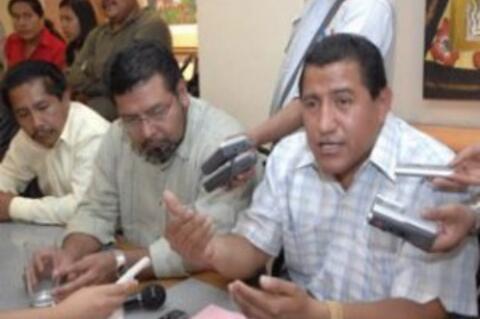
Founded on October 5 1991, FIOB works to secure the rights of indigenous Mexicans living in the United States and Mexico. It is a binational, community-based organisation made up of indigenous peoples - most of whom are migrants from isolated communities in the most remote mountains of Oaxaca, Mexico - who are living in Mexico or the United States (US). FIOB's mission is to contribute to the self-determination of indigenous migrant and non-migrant communities by promoting cultural integrity as well as economic and social development in Oaxaca, Baja California, and California. FIOB accomplishes this through the creation and implementation of community-based projects that promote human rights, family health, community integration, and gender equality. Objectives include:
- facilitating internal communication in order to strengthen the organisation's binational work;
- creating bonds between the Oaxacan communities abroad and the communities that remain in Oaxaca;
- strengthening links between FIOB and its allies at the local and binational level across the continent;
- informing and influencing public opinion with regard to key issues such as immigrant rights and indigenous rights in Oaxaca; and
- having a greater impact at different levels of the Mexican and US governments.
Beginning in the 1970s, thousands of Oaxacans immigrated to the United States; FIOB's perceived lack of government attention given to their native communities has led the organisation to develop communication and media strategies that serve as tools to further the binational defense of the participating indigenous communities' rights. The activist strategies of FIOB are aligned with the values of justice, democracy, and equality for indigenous nations. It also works to defend the indigenous communities' right to political autonomy, to improve their living standards, and to respect human rights related to their land, natural resources, and culture. The organisation fights for the rights of indigenous peoples both within and outside of Mexican territory and in addition, autonomously organises the defense, rescue, spread, and consolidation of their traditional customs, languages, and cultures. The organisation fights for the unity and solidarity of immigrant and non-immigrant workers and works in solidarity with other minority groups in the United States and other communities in the world working to free themselves all kinds of human rights violations.
The continued sense of belonging that the indigenous immigrants feel toward their origin communities has been one of the factors that has created a need for constant communication between those who remain in Oaxaca and their fellow community members that reside elsewhere. When the immigrant communities were first coordinating the formation of FIOB, they communicated via mail. Telephone communications were also maintained. With the passing of time, the immigrants found other forms of communication such as the internet, Skype, and webcams, among others.
Over the years, FIOB activities have included:
- Publication of La Puya Mixteca newspaper (1991), El Tequio bulletin, and the binational tri-annual El Tequio (2006-present).
- Production of the radio programme "La Hora Mixteca" broadcast in the Mixteco language in the San Joaquín Valley, California (1995-present).
- Production of the televisión programme El Despertar Indígena, broadcast by KNXT in Fresno, California, since 2000.
- Co-production of the radio programme "Nuestro Foro", which broadcasts on the community radio station KFCF 88.1. The programme touches on subjects such as immigration, civic participation, social development, and the economy.
- In 1997, FIOB established a multimedia, multilingual website to share information related to the communities that remain in Oaxaca and the immigrant communities, more than 15 years of archives and details about current projects, access to the El Tequio news magazine, and more.
- From 2003 to 2005 FIOB collaborated with the Chatina filmmaker Yolanda Cruz in the making of two documentaries, "Mujeres que se organizan avanzan" ["Women Who Self-organise Advance"] and "Sueños Binacionales," ["Bi-national Dreams"], which demonstrate the organising force of FIOB in both the origin communities and the immigrant communities.
The communication aspect of FIOB's work is a complementary strategy to other forms of struggle such as mobilisations and protests, among others. For instance, faced with the manipulation of information during the repression of June 14 2006 (click here and scroll to "Repression of the Media" for context), FIOB took advantage of new technologies to generate its own communication network through the use of the internet, cellular phones, and internet-based video. Immediately after the repression, FIOB members in Los Angeles as well as Oaxacans from diverse communities throughout Southern California took part in marches and protests that ended at the Mexican consulate there. FIOB began bringing media attention to the protests, which were soon after covered in newspapers, radio, and local television stations. The Oaxacan immigrants demonstrated their solidarity by joining in chanting slogans of solidarity, and bands from Oaxacan towns played traditional Oaxacan songs. Then, in December of that year, a sit-in was undertaken in front of the Mexican consulate in Los Angeles as well as an APPOsada (from "posada," a December holiday celebrated in Mexico) at the St. Cecilia church in Santa Monica. The celebration included many popular culture activities and demonstrations protesting the deaths (around 26) caused by the repression in Oaxaca. In this case, as in many others, FIOB sought to engage both the mass media and the alternative media by issuing communiqués, holding press conferences, and monitoring the information published on the events in Oaxaca by the media to compare it with that which was actually happening on the ground. In addition, FIOB held community assemblies to inform the people of the truth of what was happening throughout the state.
Rights.
Oaxaca is a state in Southern Mexico predominately populated by indigenous communities. Oaxaca's total population is estimated to be around 3.5 million, 500,000 of whom are immigrants living outside of Oaxaca in different parts of the United States as well as Mexico, including Mexico City, Mexico, Sonora, Sinaloa, and Baja California. According to FIOB, the state of Oaxaca has high levels of poverty, corruption, and democratic obstacles. Since 2006 it has been the site of a social conflict. The Oaxacan media only reproduces the government's version of the facts. There exists intense repression of independent media, including attacks on journalists. The communication and radio laws at the federal level attempt to prohibit community radio stations from operating.
FIOB's approximately 5,000 accredited members come from various ethnic groups, including Mixtecos from Oaxaca and Guerrero; Zapotecos, Triquis, Mixes, Chatinos, and Zoques from Oaxaca; and Purépechas from Michoacán. The members are organised into community committees in the Mixteca, Central Valleys, and Isthmus regions of Oaxaca as well as in Mexico City, Estado de México, and Baja California. FIOB is also present in Los Angeles, Fresno, Santa María, Greenfield, Hollister, San Diego, Santa Rosa, and Merced, California. Support groups can be found in the states of Oregon, New York, Arizona, and Washington.
"Indigenous Communication in a Global World: Strategies Used by the FIOB in the United States and Mexico", by Bertha Rodríguez Santos, February 3 2009 - part of the CIP Americas Program's series of 10 Citizen Action Profiles on Communication Rights; and Apiana website and FIOB website - both accessed April 7 2010.
- Log in to post comments