










































Off the Beaten Track: Avahan's Experience in the Business of HIV Prevention Among India's Long-Distance Truckers
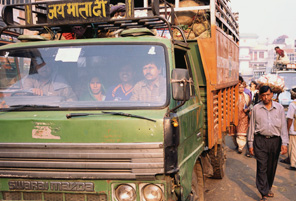
This 28-page publication explores the thinking behind the behaviour change communication (BCC) activities comprising one component of Avahan, an HIV prevention programme launched in 2003 by the Bill and Melinda Gates Foundation in 6 of India's states. Working with the Transport Corporation of India Foundation (TCIF), Avahan sought to provide HIV prevention services along 8,000 kilometres of national highways to "free agent" long-distance truckers, who are three times more likely than men in the general population to have sex with someone who is not a regular partner.
Based on the belief that "less is more" when dealing with a mobile population, in the final analysis organisers focused interventions on the largest impact locations (17 locations). The decision to focus investment on a limited number of high-yield locations allowed the programme to maximise coverage among the 10,000-70,000 truckers in these selected sites, as opposed to dividing resources across a large number of intervention sites. Each intervention site now offers high-visibility multimedia communication activities set up in and around broker and transporter offices. These natural traffic areas also provide the space for satellite clinic services that are allied with a large static clinic at each location. The project also conducts monthly health camps at the intervention sites on a fixed day to provide truckers with quality specialist health services, building visibility through corporate sponsorship of these events.
In order to address the challenge of fragmented engagement with a mobile population, the programme focused on building a uniform look and feel of services across intervention sites. Moreover, the programme's nationwide network of clinics is branded across the 17 locations. This network of Khushi clinics ("khushi" is Hindi for "happiness") is staffed by over 80 doctors, nurses, and counsellors. To avoid becoming stigmatised as "STI clinics," the clinics treat a range of general health ailments. The brand and logo were developed in consultation with truckers through focus group discussions. "Khushi" stands for the shared values the programme is trying to promote, such as responsible masculinity and pride in the
trucking profession, and, therefore, according to the document, "belongs" to the trucking community. To build brand awareness and recall for Khushi clinics, signs with the Khushi logo are prominently posted at check-posts, along highways, and at several points in the intervention locations themselves. The programme has also used celebrity endorsement (actors from Hindi films) to help build trust and create visibility for the brand.
In an effort to counter messaging fatigue and cynicism among truckers towards HIV prevention programmes relying on didactic information provision strategies, organisers have made truckers the face of the programme by engaging them as peer outreach workers. This dialogue-based interpersonal communication approach now employs 348 truckers and ex-truckers (50% of whom are active truckers) across the major transshipment locations where the programme operates. They were fully trained on HIV-related issues and facilitation skills to prepare them to conduct approximately 5,000 group discussions with fellow truckers every month. These peer workers use 9 participatory tools and visual aids to facilitate 60- to 90-minute discussion sessions among groups of 10-12 fellow truckers about HIV, STIs, common misconceptions, and the importance of condom use. The discussion starts with some topical issue, with HIV being brought in gradually. The peer assumes the role of a facilitator as opposed to an educator, navigating the discussion from problem identification to self-reflection and brainstorming around potential solutions. Several peers reach out within their networks informally as well, to encourage truckers to adopt safe sex practices and access programme services if necessary.
As reported here, interpersonal communication is complemented by events including street plays, supplemented with kiosks where truckers can play games that reinforce select themes. Films are also used to deliver HIV messages and tell truckers about available services. The messages centre around 9 common themes that highlight misconceptions most prevalent in the trucker community. These messages are altered across sites every 6 months in an effort to keep the programme fresh and engaging. Apart from a mix of street plays, game shows, and film shows held every day across locations, the programme conducts large-scale edutainment events at each of these locations every quarter. These trucker utsavs ("festivals" in Hindi) are designed to create interest and visibility around the programme.
Select mass media are designed to create engagement with the truckers outside the physical boundaries of intervention locations. Audio cassettes contain popular local songs interspersed with spoofs on Hindi film actors delivering HIV prevention messages and endorsing Khushi services. The programme also builds recall of services through billboards at popular roadside cafes and along the highway.
Key strategies gleaned from the above description for engaging customers have included:
- Consumer research to develop the programme's overarching positioning theme included focus group discussions and in-depth interviews with truckers across multiple ethnicities, age groups, and route categories. Based on this research, the project is attempting to move beyond the utilitarian "health benefit" positioning of safe sex practices towards making such behaviour aspirational for truckers. This involves using positive cues (enhanced self-esteem, being responsible, being in control and, hence, masculine) to promote behaviour change.
- All interpersonal communication and a large portion of the events are facilitated by peer workers using language, anecdotes, and themes with which the population can identify.
- Peer discussions form the basis of themes presented in all project activities. These insights inform efforts to dispel myths and fears, and help identify psychological barriers to condom usage, such as the belief that condom usage is not the mark of a "real" man.
The Avahan trucker programme collects and analyses data from many sources in order to: track clinical service uptake; assess communications effectiveness, including reach and recall; and document consequent outcomes, if any, in terms of behavioural and biological
indicators. Methodologies, detailed within the document, include a routine monitoring system, ongoing behaviour and exposure tracking surveys, and a cross-sectional survey. Based on preliminary results indicating expanding communication reach, increasing brand recall, and growing service uptake, organisers draw out a number of lessons learned and future directions. Organisers are working to transfer programme learnings by expanding linkages with other companies in the transportation sector, institutionalising a response to HIV within this sector.
Email from Penny Richards to The Communication Initiative on October 1 2008; and Avahan website.
- Log in to post comments