










































Associations between Village-level Norms on Marital Age and Marital Choice Outcomes among Adolescent Wives in Rural Niger
Center on Gender Equity and Health, University of California San Diego (Shakya, Silverman, Barker, Yore, Raj); United Nations Children's Fund, or UNICEF (Lapsansky); Pathfinder International, Niger (Aliou); Pathfinder USA (Brooks)
"...community-level norms related to girls' marital choice and agency should be targets of interventions to help avert early marriage of girls in Niger."
Given the health and social risks associated with the practice of child, early, and forced marriage (CEFM), the elimination of child marriage by 2030 has been included among the Sustainable Development Goals (SDGs). Social norms, the often unspoken rules that dictate behaviour, have been hypothesised as underlying this human rights violation and are thus a potential lever for change. Niger is one of a small number of nations in which child marriage continues to be legal for girls 15 and above; public perception reflects this bias. This quantitative study examines the associations of individual- and community-level norms on marital age and marital choice in rural Niger. Its purpose is to explore how social norms affect CEFM and the level of norms upon which to intervene to most effectively address such a harmful traditional practice.
As explained here, the degree to which a girl is involved in choosing whom she marries and the age at which she marries may indicate descriptive norms in a community surrounding marital choice and marital age, respectively. Injunctive norms, by contrast, are an individual's perceptions or beliefs of what others within the community approve or disapprove of, which in turn influence behaviours. An individual may personally be opposed to child marriage, but engage in the practice within his or her own family out of individually perceived pressure to comply with social expectations or pressure imposed by important others, or "referents". Just who these individuals are varies with the behavioural situation.
This study involves secondary analysis of data from an evaluation of a family planning intervention conducted between 2016 and 2018 with young married couples in 48 rural villages within the Dosso, Doutchi, and Loga districts in the Dosso region of Niger. From each of the three districts, 16 villages were randomly selected. Survey data were collected from adolescent wives and their husbands (N = 582) on demographics, normative beliefs regarding girls' age at marriage and marital choice (e.g., "Who had the greatest say with regard to arranging your marriage?"), and, among wives, age at marriage and engagement in marital choice. To ascertain village-level injunctive norms, the responses from the individual-level injunctive norms questions (e.g., "What age would people in your community say is the best age for a woman to get married?") were aggregated from both female and male respondents. Descriptive norms related to girls' age at marriage and marital choice also were assessed at the village level.
Husbands were on average 8.7 years (standard deviation (SD) = 5.4) older than their wives. The mean age of marriage for women was 14.1 years of age (SD = 1.9), and 16% of marriages were polygamous.
Select findings:
- At the individual level: Norms around age at marriage and norms around marital choice are those most strongly associated with the likelihood that an individual girl reports marital choice. Put another way: Younger age of girls at marriage is positively associated with lower likelihood of their engagement in marital choice.
- Wives' and husbands' normative beliefs at the individual level were not associated with wife's age at marriage after accounting for community norms. Wives' and husbands' individual attitudes about appropriate age at marriage were also not associated with wife's age at marriage.
- Village-level norms related to a later age of marriage and support for marital choice, as well as adolescent wives' perceptions of community norms related to a higher age of marriage, are associated with higher odds of a wife having had marital choice.
- When a greater proportion of women in a village believe that the community supports an older age of marriage, and when a greater proportion of men in the village believe that the community supports marital choice, girls in those communities are more likely to report having had marital choice.
- In communities where a larger proportion of the girls report marital choice, and in communities where a larger proportion of the male population believes that the community supports marital choice, individual girls marry at older ages.
As implied by the above, sex differences in the nature of normative influences are associated with the study's outcomes of interest (marital age and marital choice). Specifically, the community-level norms that are associated with both of the outcomes are the aggregate measure of men's perceptions of whether the community supports marital choice - an injunctive norm - and the aggregate of women's reported marital choice - a descriptive norm. These findings suggest that what men believe the community supports around marital choice is strongly associated with both outcomes, while what women actually report in terms of their own marital choice is also strongly associated with those same outcomes. That is, in community contexts where women interpret themselves as having had a choice in whom they married (i.e., communities in which descriptive norms indicate the practice of women's marital choice), individual girls within these communities are more likely to report having a choice of whom they marry and to have married at an older age.
Overall, the findings suggest the value of community-level social norms change on CEFM in Niger, as well as the importance of focusing on child marriage and girls' marital choice simultaneously, given their interconnection. The results also suggest that engaging with men to change norms around marital choice may help shift the dynamics of forced and early marriage in these settings. The concern is that reaching out to men in this way could reinforce male control over girls' marital practices unless the programme specifically works to increase girls' agency and change gender norms. At the same time, it can be difficult to engage women who were not given a choice in their marriage and who married as minors because the focus of the interventions is to change behaviours in the community that cannot be changed in their own lives, having already occurred. "These issues speak to the need for nuance in application of these findings to the field, with consideration of culture and context as well as ensuring an intersectional equity lens in the approach."
In conclusion: "Further research is needed to consider how to simultaneously address these norms and reinforce women and girls' autonomy, agency and safety with regard to marriage....Gender transformative interventions addressing the intersection of social and gender norms underlying these practices may be useful..."
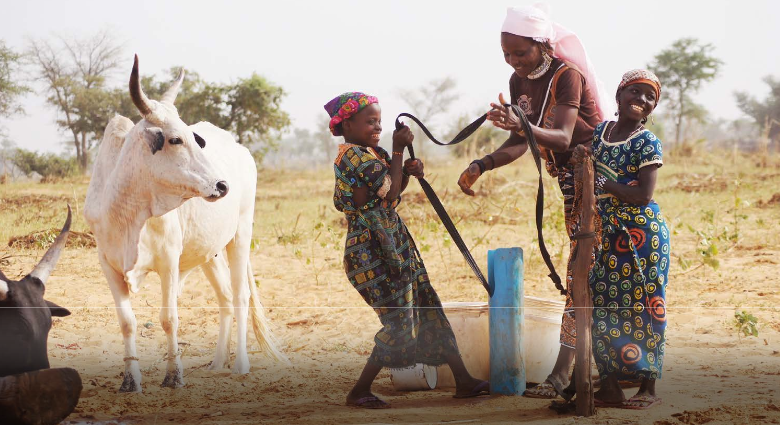
SSM Population Health. 2020 Aug; 11: 100621. doi: 10.1016/j.ssmph.2020.100621. Image credit: Adama Ali Zourkaleini 2017
- Log in to post comments