










































Asia Child Marriage Initiative: Summary of Research in Bangladesh, India and Nepal
International Center for Research on Women (ICRW)
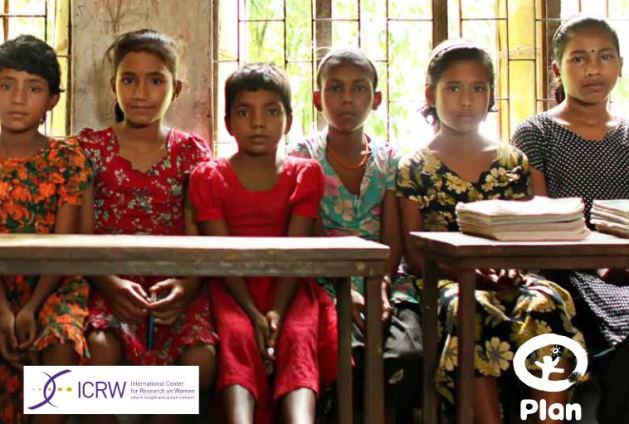
This study on child marriage in Bangladesh, India, and Nepal is written to add to the growing understanding of the causes and consequences of child marriage and the factors that contribute to its reduction. It is created by the Plan Asia Regional Office and the International Center for Research on Women (ICRW). Plan’s Asia Child Marriage Initiative (ACMI) is a multi-country initiative, started in 2010, to prevent child marriage and mitigate its negative consequences and explore pathways for addressing the issue.
"The current study is based on primary qualitative data gathered from in-depth interviews and focus group discussions with girls and boys, parents, community leaders, and government officials....The themes discussed in the interviews and focus group discussions covered a range of issues and their effect on age at marriage. These included education patterns and changing trends among girls and boys, the aspirations of young persons and parents, perceptions on the importance of marriage, decision-making and child rights, the causes and consequences of child marriage, and knowledge about and adherence to marriage laws. The focus of this study is on child marriage among girls, who are affected by this practice more than boys in both prevalence and severity of consequences."
Among the key findings are the following: "Almost all the girls, boys and parents interviewed for the study said that they were against child marriage and recommended various methods for preventing the practice, such as raising awareness, strict implementation of the law, eradication of dowry and promoting girls' education." In addition, community leaders and government officials cited a growing awareness due to the work of non-governmental organisations (NGOs) and government and encouraged more awareness-building about the negative consequences of child marriage and better law implementation. "Plan promotes children's organisations and participation in creating awareness about social issues including child marriage. Children reported increased knowledge and confidence as a result of participation in these forums; participation has also taught them about their rights and how to negotiate with adults in this regard....Partnerships with the state have yielded positive results. The scale of government programmes combined with the community outreach of civil society organisations makes optimal use of the respective strengths of the two sectors." Plan employs young women as teachers in their child development centres according to their finding that expanding opportunities and roles for women may make it meaningful for parents to invest in their daughter’s education.
From Plan: "Amidst the pervasive cultural norms that perpetuate child marriage, there is a gradual and positive shift observed towards delaying child marriage in both Plan’s programme and non-programme areas, as the study findings reveal. The study found extremely few cases of parents and girls who delayed child marriage in the face of significant social and family pressures. Rising aspirations and opportunities towards higher education, employment and economic independence were critical factors for resisting community and family pressures for both girls and parents. The report discusses these factors in greater detail."
Recommendations for programmes include the following:
- "Strengthen community based organisations (CBOs) to develop systems for regular engagement with parents, including home visits....
- Engage with male members of the family: It is critical to engage with adult and younger males in the family....There are examples of programmes that have successfully helped men and boys challenge traditional gender roles and notions of manhood that support child marriage.
- Use mass media to spread the campaign in the community: Community education must emphasise the need to respect the decisions of boys and girls to remain unmarried as long as they wish, rather than stigmatising the unmarried ones.
- Strengthen capacities and empower girls and boys: ...Building the capacities of young women and men to negotiate in a non-confrontational manner will enable them to take a firm position without endangering family relationships....
- Leverage rising aspirations: Parents and young girls are increasingly recognising the value of education....
- Develop specific programmes for children married early: ...At a minimum, outreach services must be available in sexual and reproductive health, as well as other life skills....
- Promote livelihood programmes for women and girls: Promot[e] vocational and skills-based training.
- Make greater efforts with poorer and excluded families....
- Make elimination of child marriage a primary objective... as opposed to a secondary or tertiary objective subsumed under educational or health initiatives.
- Promote safety of girls: Promoting safety for girls has two dimensions: first, it requires building their self-esteem and confidence; and second, it requires building community awareness and responsiveness about the issue. Children’s organisations and CBOs should include sexual violence and harassment in discussions, particularly in work with boys and men.
- Implement demonstration projects....
- Find champions among religious leader...."
Policy recommendations include:
- "Promote girls' access to quality secondary education....
- Develop stronger coordination among stakeholders: Several players are putting in efforts to eliminate child marriage: government bodies, law enforcement officials, civil society organisations and community leaders. There is a need for better coordination and cooperation among these groups to create a social force that will change the norms around child marriage.
- Strengthen law enforcement: ...There needs to be greater capacity building of law enforcement officers, registrars, judiciary officials and religious leaders about the negative impacts of child marriage. The public also needs greater awareness about the content of child marriage laws and penalties.
- Support economic empowerment initiatives...."
ICRW website, accessed on July 16 2013, and email from Tina Khanna to The Communication Initiative on July 19 2013. Image credit: Plan/Bernice Wong.
- Log in to post comments