











































Armed Conflict, A Neglected Determinant of Childhood Vaccination: Some Children Are Left Behind
University of Gothenburg (Ngo, Pemunta, Adedze); Government Bilingual High School - GBHS (Muluh); consultant (Basil); Innovative Biotech USA Inc (Agwale)
Armed conflict disrupts societal function and hampers access to health care, including vaccination services. Children who are affected by conflict suffer disproportionately from vaccine-preventable disease (VPD) outbreaks. For instance, of about 3,400 cases of polio reported globally between 2010 and 2016, 70% were in conflict-affected countries. By spotlighting the impact of armed conflicts on vaccination coverage, this article aims to strengthen advocacy for vaccination, such as by calling for the fortification of existing treaties on the rule of engagement during conflicts.
Based on a literature review, the article explores the benefits of vaccination, children's right to vaccination, and hesitancy around the practice, which can be exacerbated by conflict. To expand on the latter issue: Some parents lack confidence in vaccination and in healthcare providers, especially during conflicts, because of suspicion regarding the motives behind vaccination. For instance, in some parts of Nigeria, preexisting political, religious, and ethnic tensions have historically stoked rumours about vaccine safety that have led to refusals and even boycotts of the oral polio vaccine.
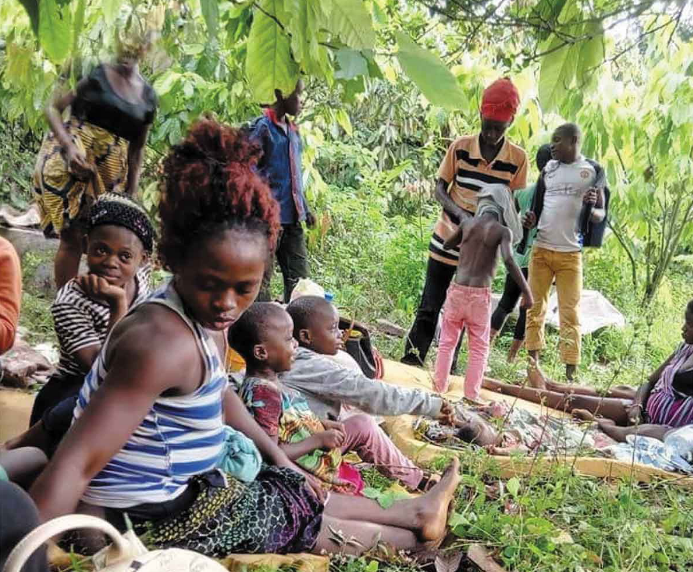
As reported here, the mechanisms through which childhood vaccination services are affected by armed conflict, causing the emergence and spread of VPDs, are multifaceted. Prevailing factors include the destruction of healthcare facilities, crippling of the healthcare system, killing of healthcare workers, displacement of people into the bushes, obstruction of humanitarian access, overcrowding in camps, poor hygiene conditions, and poor nutritional status - all causing a low immunity and high susceptibility to infection among displaced individuals.
The authors argue: "There is an urgent need for the expansion of vaccination coverage during conflicts to include non-camp populations. Armed conflict remains a direct war on children and an indirect weapon of mass destruction. Those affected are pushed into the poverty trap, which creates a spiral of deprivation that robs them of their health, education, and by extension, their future wellbeing. They are not only left behind in terms of vaccination but are also deprived of their overall cognitive and socioeconomic development that results from healthy living. Leaving some children behind is also a problem for those around them and the world at large. No country is immune to a communicable disease, likewise VPDs. With extensive globalization and migration, even regions and countries that seem to be a safe heaven are potential time bombs."
They conclude that "[u]rgent attention is needed to nip the escalating challenges of childhood immunization during conflicts, including upholding and strengthening not just in theories but in principles international treaties that protect education and health-care facilities, health workers, essential and emergency services during conflict. There is a need for improved technology to reach those in need. It is time to tackle armed conflicts as a significant determinant of childhood immunization else global efforts toward the control, eradication, and elimination of VPDs will remain far-fetch[ed]."
Human Vaccines & Immunotherapeutics, DOI: 10.1080/21645515.2019.1688043
- Log in to post comments