










































Agriculture and ICT in Africa: An Adventure Continues on the Road to Success [Agriculture et TIC en Afrique: Une aventure qui continue sur les rails du succès]
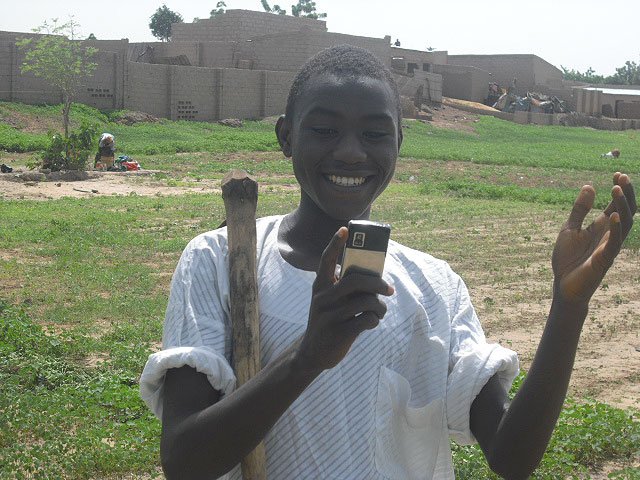
Writing in French, young journalist Alain Georges Lietbouo describes some of the trends that emerged from the International Conference on ICT4ag, which was co-hosted by the Technical Centre for Agricultural and Rural Cooperation (CTA) and the Rwandan Ministry of Agriculture and Animal Resources (MINAGRI), November 4-8 2013, Kigali, Rwanda. He notes that over 400 experts in the agricultural world and technologies from 5 continents exchanged information and presented innovative tools in the ICT sector that are designed to contribute to the development of agriculture in the African, Caribbean and Pacific (ACP) countries.
During the Plug and Play component of the conference, 20 youth organisations presented to the public the latest technological tools in the agriculture sector. Providing appropriate mobile content, access to agricultural information, and interaction with small producers were among other themes addressed. One presenter was 26-year-old Yacouba Dao of Burkina Faso, member of an association that created an application (app) called AGRICO that aims to facilitate data management within an agricultural cooperative by centralising data (producers, employment contracts, agricultural inputs, etc.) in a computer database, thereby producing statistics. For his part, young Cameroonian developer Nguena Tsafack invented AGRO SIM, a stimulator that provides specific information to farmers. The user simply puts it in the ground, and all the weather information, types of suitable product, etc. will be immediately sent to the farmer via his or her mobile phone.
Lietbouo states that Africa is gradually being incorporated in the digital era. The rate of mobile cellular penetration in Africa in 2010 was 45.2% - higher than it was for the Americas region in 2004 (42.8%). Penetration of the internet increased from 0.5% to 10.8% between 2000 and 2010. Rwanda is embarking on an ambitious project to create 200,000 jobs per year in the agricultural sector. One strategy for doing so is "e-soko", a searchable system on cell phone or computer that provides information on market prices, allowing buyers and sellers to determine where to conduct their operations at the best price. Through a pilot study in Ghana funded by the Finnish government, researchers aim to determine whether access to market information and weekly weather forecasts via SMS (short messaging service, or text) can enable farmers to increase their yields and incomes. In Cameroon, through the action of the non-governmental organisation (NGO) SAILD, the Hello Engineer programme has reportedly received 6,939 calls from all 10 regions of Cameroon in its 8 years of existence.
Despite statistics that show a steady development of ICT, there is still work to do in the ACP countries, according to Lietbouo. For instance, data compiled by Internet World Stats show that, of the nearly 2.2 billion internet users reported worldwide in March 2011, only 110 million of them are African (5% of the total). As of the time of this writing, Lietbouo says, penetration on the continent is at 11%, compared with a rate of 30% globally.
Email from Stéphane Gambier to The Communication Initiative on December 6 2013. Image credit: eLearning Africa
- Log in to post comments