










































ACT 2015: One Goal, Many Voices
"Together, we can agree and advocate for a new post 2015 framework that ensures sexual and reproductive health and rights and addresses the realities of young people today."
This global movement-building initiative aims to secure a post-2015 development framework that advances the sexual and reproductive health and rights (SRHR) and HIV response for young people. Driven by 25 HIV-focused, youth-led, and youth-serving civil society organisations in collaboration with the Joint United Nations Programme on HIV/AIDS (UNAIDS), ACT 2015 also aims to strengthen the youth HIV community to mobilise for collective action within national HIV responses. Launched in September 2013, this advocacy initiative has 2 core components:
- A global campaign for country-level action to advance SRHR and the HIV response in the post-2015 development framework and in national responses based on grassroots organising methodology; and
- Implementation of a political advocacy strategy that focuses on influencing 10 opinion leaders via in-country and UN permanent mission lobbying and advocacy.
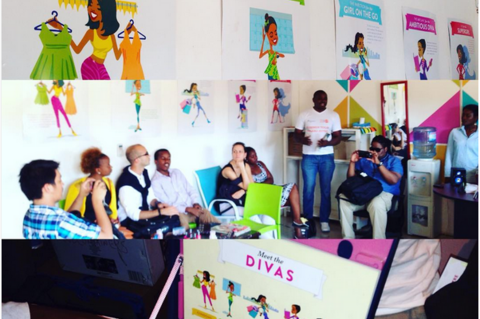
This is a youth-centred, participatory advocacy project using a variety of communication approaches and tools. In Phase I, ACT 2015 asked young people around the world to sign up and host community dialogues in their communities throughout the months of November and December 2013. Anyone between the ages of 15-29 and involved or interested in joining the SRHR and HIV movements were asked to participate. These community dialogues were designed to provide youth and their peers with the tools to share their own stories, find solutions together, and inspire action. Click here to read about a community dialogue organised by Catherine from Kenya. She notes that "we had two concurrent dialogues because our audience was composed of 60 school-aged girls whom we work with for our youth program 'I Choose, My Life'. The dialogue was held at Nakuru Girls [a boarding school in Nakuru, Kenya]....As part of the activities for the day, we watched a movie, 'PRECIOUS,' and the girls loved it. After the dialogue we had a short photo session. It is the girls who were responsible for taking notes during our dialogue. We also had Volunteers talk about their experiences so that we could draw from their real life experiences." As of February 2014, some 155 community dialogues were registered on CrowdOutAIDS.org (no longer in operation), and actions can be added at any time to the map on the ACT 2015 website.
In Phase II (January - July 2014), tools were made available for all youth organisations to take actions in their communities based on ideas proposed during Phase I. These tools include a customisable advocacy workbook and various negotiation briefs offered on the ACT 2015 online support platform. (See Related Summary below for the "ACT!2015 Advocacy Strategy Toolkit" which was published in March 2014). In addition, small grants and technical support were provided to one youth organisation in each of the 12 priority countries. Phase II culminated with a day of action around the world, including marches, panels, and demonstrations, to exercise young people's power and increase political pressure on governments to include SRHR and HIV in the post-2015 framework. A strategic action meeting was organised on the sidelines of AIDS 2014 (the 20th International AIDS Conference, Melbourne, Australia, July 20-25 2014).
In Phase III, the political advocacy strategy is being re-assessed and updated based on information related to the 2030 Agenda for Sustainable Development. The global ACT!2015 meeting: Tracking Progress Towards 2030, held in Lusaka, Zambia, December 7-11 2015, brought together youth representatives of national alliances to build capacity on Sustainable Development Goal (SDGs) and indicator processes to ensure that indicators on SRHR and HIV are adopted in country and global reporting mechanisms. Recognising that young people in the AIDS response have strong experience in advocacy, the training focused on building technical knowledge on monitoring and evaluation (M&E) processes. Young people also mapped accountability "ecosystems" to ensure that no one left is behind in the AIDS response in the monitoring of the SDGs at country level. Following this, participants will host national trainings with key youth partners, with support from UNAIDS, to build an effective knowledge-based advocacy strategy that influences country-level indicator processes.
The iCount Competition asks youth to submit a 3-minute video and a completed proposal (technical and financial) to contactyouthpact@gmail.com by February 14 2016. The winning tool will allow young people, including those with low literacy levels, to share information access to and quality of services, sexuality education, and real-life experiences with sexuality and their health. After this contest, in 2016, ACT 2015 will also build a platform using technology to allow young people to report on indicators based on their experiences with access to and quality of health services including treatment and comprehensive sexuality education.
HIV/AIDS, Youth, Sexual and Reproductive Health and Rights
In the words of organisers: "We believe that young people from key populations including young men who have sex with men, young transgender people, young people who use drugs, young people who sell sex and young people living with HIV have a critical role to play in ACT 2015 and the SRHR and HIV response. ACT 2015 aims to engage young people around the world, including young people from key populations and young people living with HIV, as leaders to help secure a post 2015 agenda that reflects their own needs and priorities."
The international development community and UN member states are currently debating the future of the next 15 years of development (following the Millennium Development Goals, or MDGs). The goals, targets, and indicators ultimately agreed to in the post-2015 development framework will drive national policy priorities and resources allocation until 2030. Standing on the shoulders of young people's leadership and engagement in the post-2015 process to date, ACT 2015 draws on the health recommendations outlined in the Open Letter to the UN Secretary General's High Level Panelist on post-2015 from youth partners in development. The letter, drafted by the Beyond 2015 Children and Youth Working Group and the Major Group of Children and Youth, was co-signed by some 60 youth organisations around the world, including many of the 25 HIV-focused, youth-led, and youth-serving civil society organisations collaborating within the PACT. The PACT is a collaboration framework that outlines 5 key themes and several sub-priorities for advancing the youth agenda in the context of HIV. The PACT was formed at the Youth and UNAIDS: A PACT for Social Transformation meeting in Hammamet, Tunisia, May 20-22 2013.
In words of one dialogue organiser, Catherine, cited above: "The lessons learnt from the dialogue are: it is crucial to involve youth and especially adolescent girls in global issues, they are largely affected by the decisions and thus they should be a part of the solution. I learnt that girls have a lot of ideas which if implemented would enable the government, civil society and communities to fight HIV/AIDS. During the dialogue it was evident that young people are able to share SRH information in spaces such as dormitories, during lunch and other platforms that would not be seen as important. I also learnt that there has been a lot of 'superficiality' with HIV/AIDS information dissemination with phrases such as 'HIV/AIDS kills' and 'AIDS IS REAL' being used. This doesn't give adolescent girls information on how to protect themselves. Young people also face stigmatization whenever they try to seek information, which is a big hindrance. However the guide was very resourceful on outlines and key areas that should be highlighted when dealing with SRH and HIV."
PACT, UNAIDS
Email from Mikaela Hildebrand to The Communication Initiative on February 21 2014; CrowdOutAIDS website no longer in operation, February 21 2014; and ACT 2015 website, January 12 2016.