










































Implementation of Maternal Influenza Immunization in El Salvador: Experiences and Lessons Learned from a Mixed-Methods Study
PATH (Fleming, Rowley, Bhat); Instituto Salvadoreño del Seguro Social (Baltrons); Universidad Francisco Gavidia (Quintanilla, Crespin)Pan American Health Organization, or PAHO (Ropero) University of Maryland School of Medicine (Ortiz, Neuzil); World Health Organization, or WHO (Lambach, Hombach); Global Alliance to Prevent Prematurity and Stillbirth (Stepanchak)
"Influenza vaccine acceptance by pregnant women is high and has improved over time, largely attributed to education targeting health care advisors."
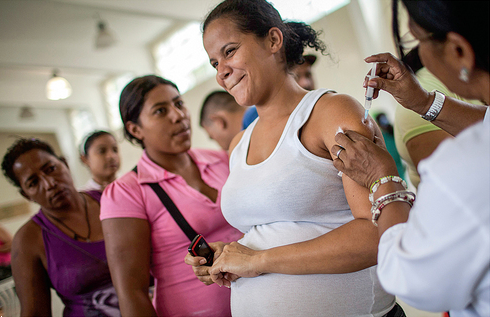
PATH, an international non-governmental organisation (NGO), collaborated with the World Health Organization (WHO) in the Maternal Influenza Immunization Project. Supported by the Bill & Melinda Gates Foundation, the project addressed obstacles to the introduction of maternal vaccines in low- and middle-income countries (LMICs). With relatively high maternal vaccination coverage (73% in 2016), El Salvador presents an opportunity to identify key factors facilitating successful immunisation delivery and high vaccine acceptance in a LMIC setting. Thus, a joint PATH and El Salvador research team conducted a study in 2015-2016 to document lessons learned from a diverse set of stakeholders; this article shares the results of that study.
The primary means of delivering influenza vaccine in El Salvador is Vaccination Week of the Americas (VWA), a region-wide, annual immunisation campaign that mobilises a large number of health workers and community volunteers to identify and vaccinate priority populations, including pregnant women. In addition, women in rural areas with limited access to fixed health sites receive influenza vaccine through the community health system. The rural network includes locally-based lay health workers called health promoters and municipality-based, multi-disciplinary Specialized Family and Community Health Teams (Equipos Communitarios de salud [ECOS]). Health promoters typically live in the community in which they work and are familiar with residents. Each health promoter is paired with an ECOS team, which consists of a doctor, a nurse, and a health educator who also tend to be familiar with the local population.
The researchers conducted focus group discussions, semi-structured interviews, antenatal clinic exit interviews, and key informant interviews with 326 participants from 2 municipalities in each of the country's 3 regions. Respondents included pregnant and recently pregnant women, family members, community leaders, health personnel, public health managers and communication experts, representatives of international public health organisations, and national policymakers.
National stakeholders asked about seasonal influenza vaccine introduction commonly described the Ministry of Health (MOH) encountering initial resistance to the vaccine from the medical community due to a lack of awareness and misunderstanding of the vaccine. Respondents noted that clinicians providing services to pregnant women were initially hesitant to counsel women about vaccinations because of their own lack of knowledge and comfort with providing vaccines to pregnant women. Respondents suggested that unlike paediatricians and family doctors, maternal health providers required additional education and advocacy to accept and support vaccinating pregnant women. They also reported that some medical personnel perpetuated unfounded safety concerns about the vaccine.
Study respondents described a similar mistrust of influenza vaccine by the community when it was first introduced. A recurrent theme expressed by pregnant women and family members was of initially having a negative view of influenza vaccine due to misinformation shared on social media that the vaccine could cause harm to a pregnant woman and/or a fetus. While social media was widely portrayed as being a source of negative information when influenza vaccine was first introduced, several respondents described its current use as an important avenue of communicating positive public health messages, including around vaccination. One health communication professional described utilising the rise in popularity and access to social media to support education efforts by encouraging young volunteers to post accurate information and stories about vaccines on Facebook and Twitter. However, the respondent also reported that since not all community members have access to the internet or are active on social media, traditional media outlets like radio and television were also used to communicate vaccine information, particularly during the VWA campaign.
Eighty-six percent (25/29) of pregnant women participating in exit interviews conducted as part of this process reported no concerns with receiving a vaccine during pregnancy. In focus group discussions, women reported no hesitancy with theoretically receiving multiple vaccines together during pregnancy, provided the risks and benefits of the vaccines were explained by a healthcare provider prior to vaccination.
As this evidence suggests, stakeholders interviewed at all levels commonly described an evolution in their views about maternal influenza immunisation and pointed to factors supporting acceptance of the vaccine:
- A member of the MOH from Central Region specifically credited improved provider acceptance of maternal influenza vaccine to education provided through the country's national immunisation technical advisory group, the Committee on Appropriate Immunization Practices, and a letter distributed through the medical school and health facilities indicating support of the national gynaecologist association for seasonal influenza vaccination for pregnant women.
- Health workers commonly cited the importance of using multiple avenues to reach pregnant women living in different areas and circumstances; with respect to outreach services, for example, study participants credited the support of the vaccine by health promoters, who were described as being highly respected by the local population and trusted advisors in health care decision-making, in achieving high maternal vaccine coverage in typically hard-to-reach, rural areas.
- Stakeholders at the national level commonly attributed the increase in community acceptance of influenza vaccine over time to improvements in knowledge and awareness of the vaccine by health workers. In addition to specific training about the disease and vaccine provided to frontline health workers, one health manager from Western Region attributed increased health worker support for the vaccine to the positive health benefits recognised over time with wide-scale implementation of maternal influenza immunisation.
- Women cited a vaccine's recommendation by health workers as valuable to their own acceptance of vaccination. Additional trusted advisors included family members and female friends.
Perceived challenges to pregnant women receiving health care and vaccination are discussed. For example, 31% percent (9/29) of pregnant women surveyed in exit interviews reported needing to ask permission to attend antenatal care visits. Of those requiring permission, 5/9 (56%) reported needing approval from their spouse or partner, 3/9 (33% a family member, and 1/9 (11%) their work supervisor. (The researchers suggest that education directed towards employers could be beneficial.) Another challenge is the fear of crime and social violence committed by gang members; several respondents indicated that reaching pregnant women in areas affected by violence often requires extraordinary negotiations. In some areas, MOH and health workers have gained access to vulnerable populations through availing their services to gang members themselves and, in turn, gaining their trust.
In reflecting on the findings, the researchers note that targeted education for stakeholders at all levels of the healthcare system was required for decision-makers and practitioners to overcome the initial distrust of the vaccine and complacency about its use. El Salvador's experience suggests that communication and advocacy efforts should not be limited to doctors and nurses alone; staff such as community health promoters and clinic-based health educators may have even more opportunities to interact with families, and their acceptance of vaccines is important for community support.
Social media, including social networking (Facebook, Twitter), is increasingly being used as a platform for health communication in LMICs. The researchers stress that, as access to the internet expands in LMICs, it will be increasingly important to commit both human and financial resources to promote credible media sites that promote accurate and timely information using voices that are trusted by the community.
In conclusion, the researchers express hope that, by identifying approaches and barriers perceived to affect maternal influenza vaccine delivery in El Salvador, they have shared information that could be useful to public health decision-makers and implementers in El Salvador and other countries considering introduction of new maternal vaccines or striving to increase coverage of vaccines currently provided.
Vaccine. 2018 Jun 27; 36(28): 4054-4061. doi: 10.1016/j.vaccine.2018.05.096. Image credit: Science
- Log in to post comments