










































Using Photovoice Methodology to Uncover Individual-level, Health Systems, and Contextual Barriers to Uptake of Second Dose of Measles Containing Vaccine in Western Area Urban, Sierra Leone, 2020
U.S. Centers for Disease Control and Prevention - CDC (Kulkarni, Ishizumi, Patel, Abad); ICAP Sierra Leone (Eleeza, Feika, Kamara, Bangura, Jalloh, Koroma, Sankoh, Sandy, Toure); World Health Organization - WHO (Igbu); Sierra Leone Ministry of Health and Sanitation (Sesay); ICAP (Fayorsey)
"Photovoice can provide a nuanced understanding of issues on immunization uptake, which are often unique to different communities. Owing to the community-driven process, an added strength of photovoice lies in identifying, reflecting, sharing, and clarifying community health priorities through photos of their choosing that echo their shared experiences."
Vaccination coverage for the second dose of the measles-containing vaccine (MCV2) among children has remained stagnant in Sierra Leone at nearly 67% since its introduction in 2015. The introduction of new vaccines in the second year of life has met various challenges, some of which are particular to urban settings, such as over-burdened health facilities and lower social cohesion and community organisation. This study is based on the belief that identifying community-specific barriers faced by caregivers in accessing MCV2 services for their children and by health workers in delivering MCV2 is key to informing strategies to improve vaccination coverage. The tool used for doing so is photovoice, a participatory approach that enables community members to photographically capture, represent, and reflect on barriers and collectively contribute to identifying potential solutions.
ICAP Sierra Leone conducted the photovoice activity in an urban slum area of Western Area Urban (WAU) district in Freetown, Sierra Leone from March-September 2020. Six female and 5 male caregivers of MCV2-eligible children aged 15-24 months and 6 healthcare workers (HCWs) participated in this activity. After receiving an interactive orientation to photovoice, they photographed barriers related to general immunisation and MCV2 uptake in their community. This process was followed by 3 facilitated discussions where participants elaborated on the barriers captured in the photos. Next, a photo exhibition was held for participants and key immunisation stakeholders (Sierra Leone Ministry of Health and Sanitation (MoHS), Essential Program on Immunization (EPI), the World Health Organization (WHO) country office, United Nations Children's Fund (UNICEF), local non-governmental organisations, and community leaders). An in-depth structured group discussion provided a forum where the participants could directly communicate with the stakeholders to discuss potential strategies to address barriers to MCV2 uptake.
The researchers identified and categorised 9 themes into 3 groups:
- Individual- or caregiver-level barriers, such as caregivers' lack of knowledge on MCV2, concerns about vaccine side effects, caregivers' negative perceptions of HCWs' skills and work ethic, and gender-related barriers;
- Health system barriers, such as HCWs' focus on children below one year, long waiting times and vaccine stockouts, and lack of financial incentives for providing immunisation services; and
- Contextual barriers, such as poverty, poor infrastructure, and the COVID-19 pandemic.
Participant-suggested strategies to overcome these barriers were community-level and policy approaches involving multiple stakeholders (i.e., the community itself and HCWs) and efforts to address underlying, deep-rooted contextual issues. For instance:
- Demand-related strategies: To reduce knowledge gaps on the importance and scheduling of MCV2 and address negative perceptions about the side effects of vaccines, the participants and stakeholders recommended a more intensified peer-to-peer and door-to-door approach for MCV2 campaigns. In addition to HCWs, it was suggested that the EPI consider mobilising and supporting caregivers and traditional and religious leaders to pass on immunisation-related information in local languages based on their intended audience's preferences. Radio and television programmes were brought up as important tools for sensitisation, because these platforms have the trust of community members and allow for broader coverage and listenership.
- Health systems strategies: To enhance caregiver-provider experiences, participants and stakeholders recommended HCW training for demand promotion and better interpersonal communication. The training could cover topics such as communication with caregivers about immunisations, listening skills, and responding to caregiver needs and concerns regarding vaccines. As a strategy for improving HCWs' motivation for immunisation service delivery, the reintroduction of performance-based financing (PBF) was discussed. Lastly, participants and stakeholders recommended that clear indicators for HCWs' performances and a shared understanding of service delivery objectives are established. Regular performance assessments and feedback were also mentioned as part of this accountability process.
The short, self-reported questionnaire after the project revealed that most participants thought they were now more knowledgeable about childhood immunisation and more cognisant of the different barriers in the community. Participants reported that showcasing issues through photos was a simple way of conveying immunisation-related issues and thought that similar photovoice activities coulld also be conducted in other communities in Sierra Leone. Decision-makers appreciated participants' efforts to shed light on new barriers to MCV2 uptake, which several stakeholders were unaware of previously.
Reflecting on the findings, the researchers stress that "Connecting the community with decision-makers is an essential component of the photovoice approach. It allows the community to highlight the issues they face and discuss solutions with the decision-makers directly. Participatory methods with community-led action have been shown to create localized solutions while improving trust in systems to ultimately improve immunization uptake....The photovoice exhibition allowed participants to have an open forum with decision-makers, including MoHS, EPI, WHO, community leaders, and other community-based organizations. Participants self-reported a general sense of empowerment because of their shared and unique perspectives. They understood the problem and collectively identified issues in the community, which brought about new insights for solutions. Literature also suggests that participants have greater control and confidence in their ability to affect change through their actions, using participatory methods, such as photovoice..."
In conclusion: "Photovoice can provide nuanced understanding of community issues affecting MCV2. As a methodology, it should be integrated in broader intervention planning activities to facilitate the translation of community-suggested strategies into action."
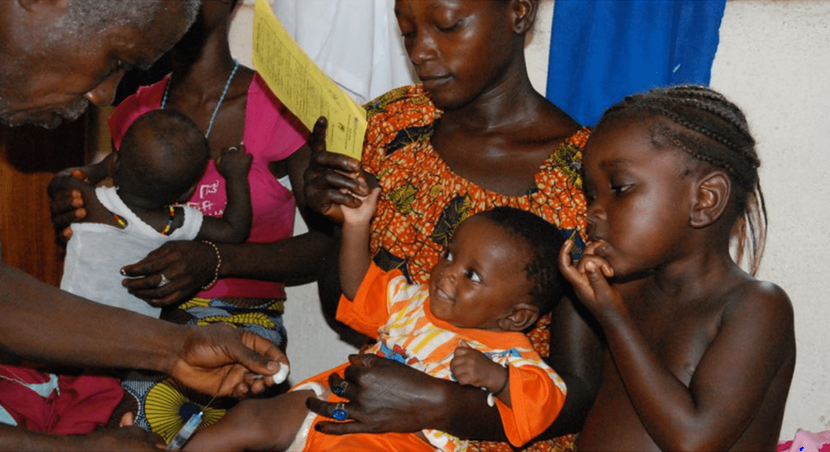
Vaccine: X 14 (2023) 100338. https://doi.org/10.1016/j.jvacx.2023.100338. Image credit: ICAP
- Log in to post comments