










































Individual- and Neighborhood-Level Factors of Measles Vaccination Coverage in Niamey, Niger: A Multilevel Analysis
The University of Tokyo Graduate School of Medicine (Kunieda, Jimba); Harvard T.H. Chan School of Public Health (Kunieda, Subramanian); Keio University (Kunieda); Ministry of Public Health, Niamey (Manzo); Harvard Center for Population and Development Studies (Subramanian)
"Vaccination is a proven equitable intervention if people take advantage of the opportunity to get vaccinated."
Niger is a low-income country in West Africa, with a 76% measles 1 vaccination coverage rate in 2016. The economically poorest and least educated populations in low-income countries remain at higher risk for measles. One way to prevent measles outbreaks is to enable economically poor mothers to vaccinate their children, but there is little evidence on how communities can do this effectively. This study was conducted to identify individual- and neighbourhood-level factors that could improve measles 1 vaccination coverage in Niamey, the capital.
The overall study design, sample size calculation, study participants, data sources, and study management are detailed in summary available at Related Summaries, below. But, in brief, October 2016, 460 mothers with children aged 12-23 months were surveyed. For individual-level variables of measles 1 vaccination status, the following were included: mother's age group, mother tongue, maternal education level, husband's job, where the mother gave birth (at home or at a health centre), and whether the mother discussed vaccination with friends. Neighborhood-level factors were access time to the health centre, household access to electricity, and a grand-mean-centred wealth score. Multilevel logistic regression analysis was performed.
At the individual-level, primary- and secondary-educated mothers were more likely to vaccinate their children against measles 1 (adjusted odds ratio (aOR) 1.97, 95% confidence interval (CI) 1.11-3.51). World Bank estimates suggest that Nigerien girls' access to primary and secondary education has improved over the last decade, so it is possible that measles 1 vaccination will improve as more mothers complete their education. Examining how decisions are made by low-literate mothers in Niger through future qualitative inquiry may also be necessary.
At the neighbourhood-level, no factors were identified. Among possible reasons: The enumeration areas and neighbourhoods may have been too small to detect differences. Therefore, a strengthened focus on equity-based, individual factors is recommended, including individual motivation, prompts, and ability to access vaccination services. The latter also includes child health or vaccination-specific decision-making power within the household, as a recent study identified that the medium decision-making power of the mother is associated with complete vaccination of her child.
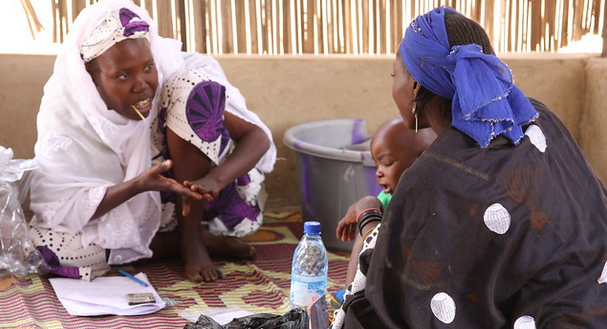
One behaviour that the researchers suggest examining further is "discussion on vaccination". In this study, questions on "discussion on vaccination" with family and friends were asked at the individual level. However, at an aggregated, neighbourhood-level, properly guided "discussions on vaccination" programmes could lead to the creation of a positive social norm regarding vaccination. Mothers might receive information on vaccination through an information hub and short messaging service (SMS) reminders that could work as prompts for discussing vaccination among family and friends. By participating in a discussion on vaccination, mothers may be motivated to access vaccination. More specifically, discussions may enable mothers to overcome their inabilities to access vaccination together and make sure that, together, they coordinate their visit, and a multi-dose measles vaccine vial can be opened.
Vaccines 2022, 10, 1513. https://doi.org/10.3390/vaccines10091513. Image credit: EC/ECHO/Anouk Delafortrie via Flickr (CC BY-NC-ND 2.0)
- Log in to post comments