










































Lessons Learned in Reaching the Final 20: Building a Next-Generation Immunization Supply Chain in Mozambique
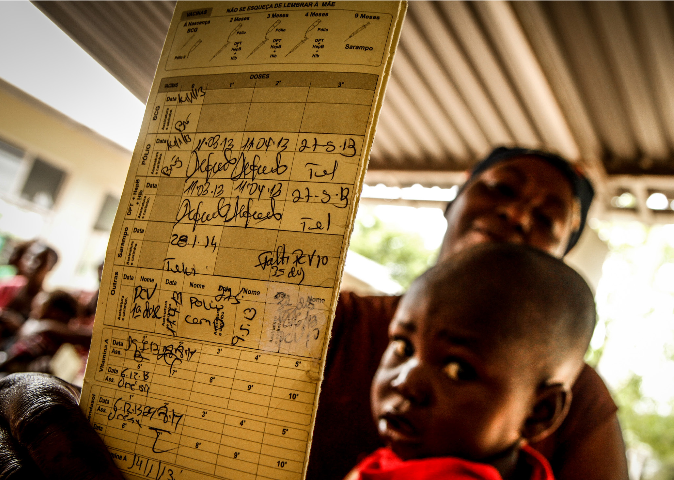
"Any changes to the supply chain require an effective leader to define the new vision for the system and the processes that lead to the transformation....The champion for system design must be willing to question the status quo and use evidence to show how improvements can be made."
This report provides an overview of VillageReach's immunisation supply chain (iSC) strengthening work under the Final 20 project, including lessons learned and other insights for countries looking to move to an updated or "next generation" iSC. As the reader learns, the Final 20 programme focused on instilling a sense of urgency to drive improvements and efficiencies to the iSC through government engagement and capacity building while creating tools to support that effort.
VillageReach, the Foundation for Community Development (FDC), and the Provincial Directorates of Health first developed and piloted a new iSC in Mozambique's northern provinces of Cabo Delgado and Nampula. Like most low- and middle-income countries (LMICs), the system of people, infrastructure, and equipment required to deliver vaccines was developed for a time when immunisation programmes were much smaller and vaccines much less costly. The country's health leaders recognised that poor supply chain performance hinders their ability to improve immunisation coverage and equity of immunisations for all children in light of the Global Vaccine Action Plan (GVAP)'s call to focus commitment on improving the quality and availability of vaccines by 2020. Initial support from the Bill & Melinda Gates Foundation for the Final 20 Program addressed the inefficiencies of the iSC in Mozambique, using evidence from provincial-level experience with the Dedicated Logistics System (DLS) to advocate for national-level adoption of the DLS as a key strategy for reaching the final 20% of children without access to vaccines.
The DLS is designed strategically to facilitate the use of data for decision-making and continuous improvement. In the DLS, data collection responsibilities for tracking vaccines and related supplies at the district and health centre levels are shifted to the dedicated logisticians using Sistema Electrónica de Logísticas de Vacinas (SELV), an implementation of OpenLMIS configured for Mozambique. OpenLMIS is an open source, web-based logistics management system with a simple user interface that can be customised to the medical commodities tracking needs of any country. Data entry on any device (desktop, laptop, tablet) can be done offline (without internet connectivity), which is essential for the Mozambican context. Further, being a web-based system, SELV allows access from any location or device, which is an improvement from previous electronic logistics management systems that relied on a locally installed software (such as Microsoft ® Excel) on each user's computer. Before the 2014 SELV roll-out, VillageReach worked closely with the dedicated logisticians, Ministry of Health (MoH) partners, and key stakeholders to identify user requirements criteria for both data collection and final aggregated reporting.
Using SELV on laptops or tablets, the dedicated logisticians enter data from different paper records available at the health facility level to confirm data validity, compare actual stock on hand with stock records, and provide immediate feedback to health workers on data quality, which helps improve data management capacity. This direct-to-digital data collection component reduces the opportunity for human error caused when data from paper- based records are manually aggregated along administrative tiers. Furthermore, the automatic data validation and calculations of stock requirements and wastage rates prevent possible errors during manual calculation using paper forms and can be addressed immediately while at the health facility. In addition, direct-to-digital functionality makes the data readily available since the logisticians sync the collected data at the end of a distribution, allowing for more immediate data report availability. This provides decision makers at the provincial and national levels with relatively real-time data. For data visualisation, SELV provides an off-line dashboard highlighting the key performance indicators (KPI) tracked, using both graphical visuals and data tables that can be tailored to user interaction: The data can be filtered down to a specific health facility or rolled up for a province-wide view, depending on the needs of the user.
During project implementation, VillageReach was part of a consortium of public and private sector partners brought together by the Bill & Melinda Gates Foundation to participate in the Visibility & Analytics Networks (VAN) Project Blueprint Reference Model. The VAN group worked to apply private sector supply chain management practices to public health supply chains with the objective of improving medical commodity availability. The model is built on 3 activities: (i) providing end-to-end visibility in data across the entire supply chain, (ii) analysing the data to gauge performance, and (iii) improving performance through an improvement plan.
One approach that the Final 20 program used to encourage data-driven decision-making in Mozambique and to encourage evidence-based system design is supply chain modeling. Computer simulated modeling can be used as a "virtual laboratory" to test the effects of different equipment, strategies, and policies as they relate to the structure of the supply chain. Modeling can help explain how the different components and processes - cold chain equipment, network of transport routes, human resources, number of distribution levels, policies related to stock management, among many others - interact in a complex system design, wherein each interaction depends on all components. As the first step, the MoH decided to conduct a modeling exercise in 2 provinces where the DLS was already operating, Gaza and Cabo Delgado, in order to build the evidence for modeling. The HERMES Logistics Modeling Team, a collaboration between the Pittsburgh Supercomputing Center at Carnegie Mellon University and Johns Hopkins Bloomberg School of Public Health, led this work with their software platform HERMES (Highly Extensible Resource for Modeling Supply Chains), which allows users to generate a detailed discrete event simulation model of any iSC. The process included data collection in each province, running preliminary models, and organising a capacity building workshop for a local team of experts in Mozambique on the concept of modeling, system design, and use of the user-friendly interface of HERMES.
One example of modeling results put to direct use comes from Niassa province, where modeling showed that 4 health facilities along with the provincial warehouse would not have sufficient capacity for the new Rotavirus vaccine. Additionally, both transport routes in the DLS would be constrained. With this information, the DPS redesigned the transport routes to follow 4 loops (instead of 2) of direct delivery from the province level, skipping the district level, to the health facilities, and adjusted the cold chain equipment at health facilities to meet the capacity needs required with the new vaccines. To address the storage constraint at the provincial level, the team used this micro-planning process and identified district-level warehouses that were along the distribution route from the national level. Instead of having the national-level cold truck deliver all vaccines to the provincial warehouse, as is typically the process and would have constrained storage capacity, the DPS team decided to have the cold truck deliver to the district-level warehouses along the route before arriving at the provincial warehouse.
In addition to supporting the MoH in vaccine distribution, data management, and utilisation and providing technical assistance to the MoH and DPS for improving management capabilities of iSC, the Final 20 programme conducted a number of sub-studies to explore other approaches to addressing the root causes of low iSC performance. These studies also provide information to the global iSC communities as other countries look to improve their supply chain performance. For example: Regular and systematic review of data can lead to improvements in the iSC. These and other Final 20 experiences have also shown that the true driver of change is leadership and political will. First started as a pilot project, the DLS has transformed into a government-run system with a cost-share approach. In one province, the medical officer has verbally committed to the DLS and has presented its effectiveness to decision makers at the national level. "His confidence is backed by reliable data collected for use in the DLS, showing evidence for system changes that can bring about efficiencies....This [type of] advocacy has not only helped open the eyes of decision makers to allow for system design modeling but has also driven forward the changes supported by modeling results....Leaders must be supported through an enabling environment, and leadership skills must be developed in order for effective leaders to apply creativity and innovation for system changes. This work in Mozambique has demonstrated that decision makers can become great leaders through their willingness to drive context-appropriate changes, despite deviation from the norm, and has shown their ability to generate support for such a change from a wide audience."
Key lessons learned from this process are outlined, one of the which is that system design cannot be seen as a pilot or a one-off project, but instead needs to be seen as a first step in a continuous process of improvement. As explored above, the communication-related components of data visibility and access to actionable data, as well as leadership and political will, were key. According to the report, the evidence generated by evaluation of the initial pilot, ongoing monitoring of distribution activities, and the results of modeling have empowered decision makers to question the status quo of the standard iSC and consider changes that will bring efficiencies.
The document concludes with a look ahead at how VillageReach is using its experience from Mozambique to help ensure all children have access to life-saving vaccines. As asserted here, the evidence from Mozambique and other countries like Senegal, Benin, and Nigeria - along with partnerships with Gavi, the Vaccine Alliance, the United Nations Children's Fund (UNICEF), the World Health Organization (WHO), and other partners working to improve the iSC - have been instrumental in helping influence other countries and broader iSC strategies critical for reaching global vaccine goals. "Now a systemic shift is on the horizon - a shift away from incremental improvements narrowly focused on individual aspects of iSC toward fundamental, comprehensive change to address all aspects of the iSC for sustained, system-wide improvement. Moving from acknowledgement into action will require a dedicated and long-term commitment and resources."
VillageReach website, September 22 2016. Image credit: Marc Ellison
- Log in to post comments