










































Media Representation of Vaccine Side Effects and Its Impact on Utilization of Vaccination Services in Vietnam
Institute for Preventive Medicine and Public Health, Hanoi Medical University (BX Tran, Le); Johns Hopkins Bloomberg School of Public Health (BX Tran); Vietnam Young Physicians Association (BX Tran, Latkin; Berkeley School of Public Health, University of California (Boggiano); Department of Public Health Sciences, Karolinska Institute (LH Nguyen); Institute for Global Health Innovations, Duy Tan University (HLT Nguyen, Tran); Department of Immunology and Allergy, National Otolaryngology Hospital (Vu); Department of Psychological Medicine, National University Health System (CSH Ho); Department of Psychological Medicine, Yong Loo Lin School of Medicine, National University of Singapore (RCM Ho)
"[T]he influential power of the media can be used in future interventions to encourage vaccinations and support consolidation of both immunizations and information campaigns across Vietnam."
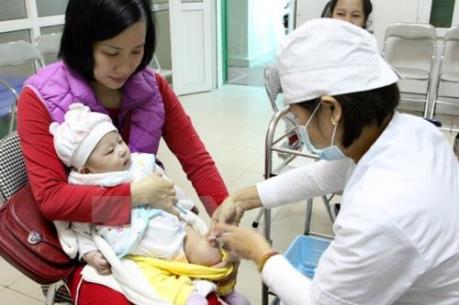
Studies finding that hearing negative stories in the mass media can be a barrier to individuals receiving vaccinations suggest that the may media contribute to public distrust of vaccines in many countries worldwide, and Vietnam is no exception. This study aimed to explore the impact of the media on beliefs and behaviours regarding vaccines and vaccine side effects in an urban clinic in Vietnam.
As detailed here, the Vietnamese Government has been implementing a national vaccination programme called the Expanded Program on Immunization (EPI) since 1981. Since then, Vietnam has achieved many vaccine-related milestones, such as becoming polio free in 2000 and eliminating maternal and neonatal tetanus in 2005. However, there have been examples in which reports in the media of adverse effects following immunisations (AEFIs) have threatened these successes. For instance, in 2013, a few AEFIs were reported after infants received the Quinvaxem vaccine, a pentavalent vaccine (diphtheria, tetanus, whooping cough, hepatitis B, haemophilus influenza type B) that was delivered freely via the EPI in Vietnam. These reports triggered controversies between the benefits and drawbacks of Quinvaxem in many print and internet-based Vietnamese newspapers, and there were also several discussions about the safety of the vaccine on social network sites (e.g., Facebook). The Vietnamese Ministry of Health hired the World Health Organization (WHO) to investigate these AEFIs. The WHO confirmed that although some of the allergic and other non-fatal AEFIs might have been linked to vaccine reactions, the reasons for the fatal AEFIs and many of the non-fatal AEFIs were not related to Quinvaxem and were purely coincidental. Despite this news, public trust was lost, and parents decided not to allow their children to receive Quinvaxem. Parents instead chose to wait for Pentaxim (Sanofi Pasteur, Lyon, France) - another pentavalent vaccine. However, a shortage of the latter vaccine led to the reductions of coverage of immunisations in Vietnamese infants from 99% to 83% for diphtheria-tetanus-whooping cough, and from 76% to 56% for hepatitis B birth dose between 2012 and 2013.
A cross-sectional study was conducted in an urban vaccination clinic in Hanoi, Vietnam from November 2015 to March 2016. Multivariate logistic regression was used to identify factors associated with subjects' behaviours regarding vaccines.
Among 429 subjects, 50.7% and 86.5% of respondents believed that EPI vaccines and for-profit vaccines were good or very good and could be trusted, respectively. Most subjects (90.6%) were concerned about vaccine complications reported in the media. This concern was higher among parents bringing their children to obtain vaccines than those receiving vaccines themselves (P<0.05). Although most respondents sought information about immunisations via the media (72.4%), staff at hospitals with vaccination clinics were perceived to be the most trustworthy source (38.0%). The results show that most respondents began to worry more about receiving vaccines after hearing about AEFIs in the media (59.6%). Participants also used the media to find additional information about AEFIs (68.9%). A total of 68.2% of subjects hesitated to receive vaccines after hearing about AEFIs in the media, and 12.4% subjects would refuse vaccination altogether after hearing about AEFIs. Wealthy individuals (odds ratio (OR)=0.41; 95% confidence interval (CI)=0.19-0.88), and those who displayed trust in government-distributed vaccines (OR=0.20; 95% CI=0.06-0.72) were less likely to display hesitancy regarding vaccination. Receiving information from community health workers (OR=0.44; 95% CI=0.20-0.99) and their relatives, colleagues, and friends (OR=0.47; 95% CI=0.25-0.88) was negatively associated with vaccine hesitancy, but facilitated vaccine refusal after reading about AEFIs in the media (OR=3.12; 95% CI=1.10-8.90 and OR=3.75; 95% CI=1.56-9.02, respectively).
In reflecting on the findings, the researchers discuss the role of trust. In the literature, trust has been highlighted as an important factor for cultivating desire to receive vaccines; in other words, insufficient trust leads people to demand more clarification and assurance about the protective benefits of vaccines for their health. In addition, they found that subjects preferring to receive vaccine information from health workers at primary health care levels were more likely to refuse vaccines. These unusual findings may also relate to trust. In Vietnam, people generally perceive the quality of commune-level health workers to be limited, which may have led the people in the study to have reduced trust in the information that these health workers provided in regard to vaccines. "More effort should be spent in educating health workers on both the vaccines themselves and how to transmit information about the vaccines effectively to patients and families."
Similarly, the results indicate that people receiving information from friends, relatives, or colleagues were more likely to refuse vaccines. Some subjects reported that they read stories from friends or colleagues about their own experiences with the vaccines on social media sites (e.g., Facebook).
Several recommendations can be drawn from this study:
- The quality of vaccination distribution services should be improved at the community level to enhance subjects' trust in both the vaccines themselves and the overall EPI programme in Vietnam. This might reduce the influence of information from unofficial media sources on individuals' willingness to receive vaccines.
- The government and/or local health workers should create educational campaigns to sustain people's awareness of the importance of vaccines to protect health, as well as their confidence in vaccine production and distribution through the EPI programme. They could include information about the safety of vaccines, the importance of immunisation for community health, and the ease with which vaccines can be obtained at local health centres, among other information.
- Collaboration with the news media might be warranted to discuss coverage of AEFIs and vaccines in general. The Vietnamese government could also consider implementing new media strategies such as text message or YouTube campaigns to increase national confidence in the EPI programme.
In conclusion, these results reveal a significantly high rate of vaccine hesitancy and refusal among subjects living in an urban setting in Vietnam, after hearing about AEFIs in the media. The implication is that Vietnam needs to develop accurate information systems in the media about immunisations to foster increased trust between individuals, health care professionals, and the Vietnamese government.
Patient Preference and Adherence 2018:12 1717-1728. Image credit: bnews.vn
- Log in to post comments