

























Development action with informed and engaged societies

After nearly 28 years, The Communication Initiative (The CI) Global is entering a new chapter. 

Following a period of transition, the global website has been transferred to the University of the Witwatersrand (Wits) in South Africa, where it will be administered by the Social and Behaviour Change Communication Division. Wits' commitment to social change and justice makes it a trusted steward for The CI's legacy and future. 

On the transfer, co-founder Victoria Martin expressed her pleasure to see this work continue under Wits' leadership, knowing that co-founder Warren Feek (1953–2024) would have felt deep pride in The CI Global's Africa-led direction. 

As Wits, we honour the team and partners who sustained The CI for decades and look forward building from that strong base. This includes co-founders Warren Feek (1953-2024) and Victoria Martin as well as La Iniciativa de Comunicación (CILA), which continues independently at lainiciativadecomunicacion.com with links to The CI Global site. We are also eager to forge new partnerships and entertain new ideas as we consider how best to contribute to social and behaviour change in our rapidly evolving environment.

If you are joining the International Social and Behaviour Change Communication (SBCC) Summit in Panama, please join Wits and CILA on Monday, 22 June, to share your thoughts and suggestion for the relaunch of the Communication Initiative. We will be in Pacifica 5 from 12-1:25 for the Refuel, Reflect, and Renew Lunch Series: The Communication Initiative: celebrating a driving force for Communication for Social Change and the way forward. We will reflect on the legacy of Warren Feek and family in creating the Communication Initiative, consider the contributions of CI over the years and then turn our attention towards the future in this dynamic session. 

If you are unable to join us in Panama, we still want to hear from you. Please contribute your thoughts by following this link: https://redcap.link/CommunicationInitiative2026 or reaching out to ci_surveys@commint.com

You can also follow the QR Code:

 https://redcap.link/CommunicationInitiative2026

Time to read
less than
1 minute
Read so far

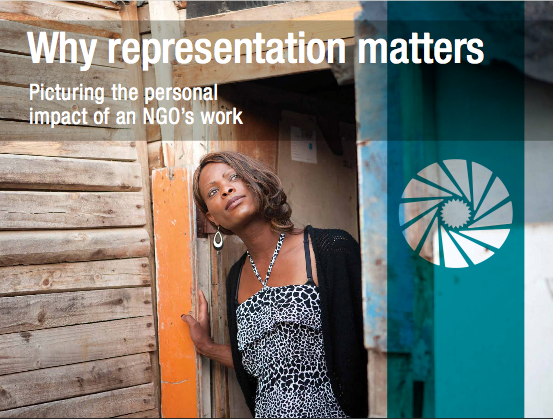
Why Representation Matters - Picturing the Personal Impact of an NGO's Work
0 comments
Image
SummaryText

Personal stories told though photography, film, and first-person accounts can be a powerful tool to build support for a non-governmental organisation (NGO)’s mission. Drawing on the experience of the photographers and filmmakers documenting the work of the AIDS Alliance, this publication offers guidance on how to use photography and film responsibly, and to tell inspiring and real stories that reflect an NGO’s values and mission and that are respectful to the person featured.

For instance, the guide seeks to encourage NGOs and the media to avoid images that portray people as victims, as this kind of imagery can lead to:

  • a homogeneous view of people and cultures
  • a pity culture that dehumanises people and fuels stereotypes
  • disengagement - “These people are different, it’s not relevant to me.”
  • apathy through repetition – “How is my money helping? It’s clearly not working.”

Instead, the guide encourages organisations and the media to use photography and film in a way that challenges stereotypes and perceptions and makes a contribution to reducing stigma and discrimination. Stories should also involve the person whose story it is so that representation is collaborative and something that they have ownership of.

In order to illustrate the above points, the guide uses anecdotes from photographers and filmmakers who have documented the work of the AIDS Alliance, as well as examples of images and links to documentaries.

Publication Date
Languages

English

Number of Pages

8

Source

AIDS Alliance website on January 18 2017.