










































AIDSFree HIV Prevention Knowledge Base
The AIDSFree HIV Prevention Knowledge Base is an online collection of research and tools to help people who plan and implement evidence-based HIV prevention activities find what works in prevention. Each knowledge base topic is introduced with a short description of the activity, its epidemiologic importance, a short synthesis of the core elements of the intervention, and a description of the current state of practice followed by:
- What We Know - Summaries of the research providing the evidence base that supports the prevention approach
- Putting It into Practice - Summaries of promising interventions
- Tools and Curricula - Adaptable programme materials, including tools, curricula, and models
- Additional Resources - Links to additional materials and websites. (Throughout, full citations and available links are provided so that people who may want additional information can learn more.)
The resource is divided into these sections:
- Combination Prevention - example topic: Positive Health, Dignity, and Prevention (PHDP), which "helps people living with HIV lead a complete and healthy life and reduce the risk of transmission of the virus to others. PHDP is characterized by its systematic delivery of a range of combination, behavioral, and sociocultural services within local communities."
- Biomedical Prevention - example topic: HIV Testing Services [HTS] as Prevention, which "help to prevent HIV transmission by identifying HIV positivity and informing individuals, partners and couples, and families of their HIV status and counseling them to develop appropriate measures to prevent or minimize HIV risks in sexual behavior, alcohol and drug use, and other behaviors."
- Behavioral Prevention - topics as of this writing include:
- Structural Prevention - example topic: Interventions Addressing Policy Factors, which "are generally developed through careful research, application of international standards and best practices, and a lengthy consultative process with relevant constituency groups at the community, national, and international levels. HIV and AIDS policies that are adopted in response to top-down pressures may lack local political commitment and prove to be inconsistent with local realities or national priorities."
The Strengthening High Impact Interventions for an AIDS-free Generation (AIDSFree) Project is a 5-year cooperative agreement funded by the United States (US) President's Emergency Plan for AIDS Relief (PEPFAR) and managed by the US Agency for International Development (USAID)'s Office of HIV/AIDS. Focus areas of this initiative include: promoting gender equality and women's empowerment in HIV responses; promoting high-quality HIV testing and counseling for individuals and linking it to care; reaching more people with appropriate combination, biomedical, structural, and behavioural prevention services; eliminating mother-to-child-transmission of HIV; delivering life-saving therapies to those who need them most; and accelerating scale-up of voluntary medical male circumcision (VMMC). For additional AIDSFree resources, see Related Summaries, below.
Publishers
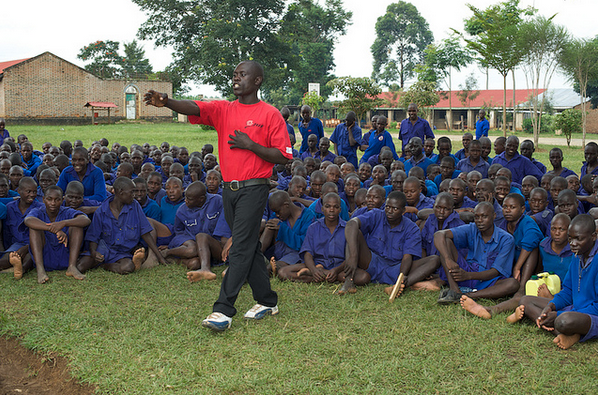
Email from Vanessa Miranda to The Communication Initiative on July 27 2016; and AIDSFree and AIDSFree HIV Prevention Knowledge Base FAQs - both accessed on July 27 2016. Image caption/credit: "USAID/Kenya's program to prevent HIV/AIDS targets many audiences who are often forgotten, such as these prisoners watching an educational theater piece." USAID/Neil Thomas
- Log in to post comments