










































'We Will Soon Be Dead': Stigma and Cascades of Looping Effects in a Collaborative Ebola Vaccine Trial
The University of Amsterdam; Barcelona Institute for Global Health
"Can the careful implementation of global health research reduce the stigmatization of involved human subjects?"
This study analyses stigma in an Ebola vaccine clinical trial in West Africa that deployed complex community engagement strategies, including a sensitisation component. Drawing on and advancing Hacking's notion of "looping effects", the paper argues that stigma was a product of a wider socio-historical context beyond the control of community-based interventions.
In 2014, several clinical trials were launched in West Africa to test vaccines against Ebola Virus Disease (EVD); before this, large-scale human subject research did not exist in Liberia. As author Arsenii Alenichev explains, at the time the research was launched in Liberia, numerous rumours were proliferating that Ebola was not real, that Ebola was a man-made disease designed to kill Africans, and that the government had created the Ebola scheme to attract international funding. Ebola-related anxieties and conspiracies were extended to the trial and its collaborative component.
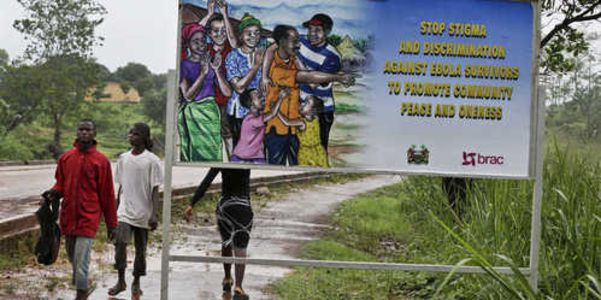
To respond to stigma, rumours, and myths, Ebola research teams in West Africa developed complex engagement and mobilisation strategies meant to make the research more community and participant centred. As part of collaboration between the United States (US) and Liberian governments, more than 100 Liberians were employed to establish culturally sensitive communications, advocacy, and community engagement. For instance, community engagement teams organised mobile units and discussion forums to disseminate information about the trial in various communities. Informed consent procedures were led by Liberian trial educators and included individual face-to-face sessions to discuss the trial and its risks. An Ebola hotline was established to resolve misconceptions and confusions about the trial. Independent news reporters were provided with training in scientific literacy and enhanced understanding of trial procedures in order to avoid reporting biases. Community mobilisation teams trained some Liberians to address participants' questions, concerns, and complaints, as well as to collect and minimise rumours and counter stigma. Collaborative partnerships also involved close work with traditional leaders and artists, some of whom created and promoted songs about collaboration with Ebola research.
Despite these efforts, people who had participated in the trial still faced negative appraisals by their neighbours one year after the trial ended. Ian Hacking's (1991, 2007) work on "looping effects" provides insights into stereotyping: "Trial subjects" (a locally new kind of person) are situated in unique socio-historical settings in which specific and often stereotypical information is attributed to them as people subjected to a new classification. As a result, such people are targeted by various kinds of socially embedded knowledge; in this process of "dynamic nominalism", institutions, social contexts, and socially embedded knowledge produce various kinds of looping effects.
Alenichev's article is based on information obtained between August and December 2016 from 25 former trial participants ("informants") through 11 face-to-face in-depth interviews and 5 focus group discussions (FGDs); rumours about participation were collected during informal interactions with community members over the course of the 3 months of fieldwork.
The conversations revealed that various people seeking economic and healthcare benefits took on the new identity of a "trial subject". While research teams attributed objective and rational clinical discourses to trial subjects, those same people were attributed with negative information in their communities. Gossip about participants extended to their friends and families, based on fears of disease contagion, unwillingness to be associated with a supposedly dying person ("people were saying that we will die"), and suspicion that people partaking in research were engaged in Ebola businesses and conspiracies. Trial subjects were said to be engaged in kpakpakpa, a colloquial Liberian-English term for hustling behaviour that in Liberia is commonly associated with the activities of zogos - groups of young drug users living on the streets, involved in legal and illegal trade, many of whom are ex-combatants from Liberian civil wars and involved in criminal activities to provide for themselves. Community members even mocked participants, saying they would turn into the biblical Goliath and monsters. Per Alenichev, "intentional infection and transformation of trial subjects into animals and monkeys can be linked to a recent history of controversial hepatitis vaccine research conducted on chimpanzees at the Liberian Institute for Biomedical Research in the 1970s-90s."
Resulting in stigma and discrimination, such destabilising looping effects led to the suffering of those who had received the vaccine, many of whom were already stigmatised for other reasons. Trial participants were avoided on the streets, and some even lost their jobs. These acts of looping occurred despite the thoughtful implemention of anti-stigma efforts on the part of research teams, detailed above. "Frustratingly and tragically, this complexity suggests that the ultimate solution to eradicate stigma requires the removal of its historical and intersectional layers; it requires utopian and unrealistic forms of control over the socially-embedded knowledge and feelings of people..."
Alenichev suggests that the findings of the present study could be utilised to further explore stigma against Ebola vaccine recipients and evaluate collaborative stigma-reduction campaigns. "By approaching stigma against trial subjects as cascades of looping effects powered by socially embedded knowledge, this study suggests that contemporary research ethics should be reinforced with a more serious historical and sociological examination of the contexts in which research and community engagement practices unfold."
Critical Public Health, DOI: 10.1080/09581596.2019.1682124. Image credit: Voice of America
- Log in to post comments