










































Understanding Social Norms: A Reference Guide for Policy and Practice
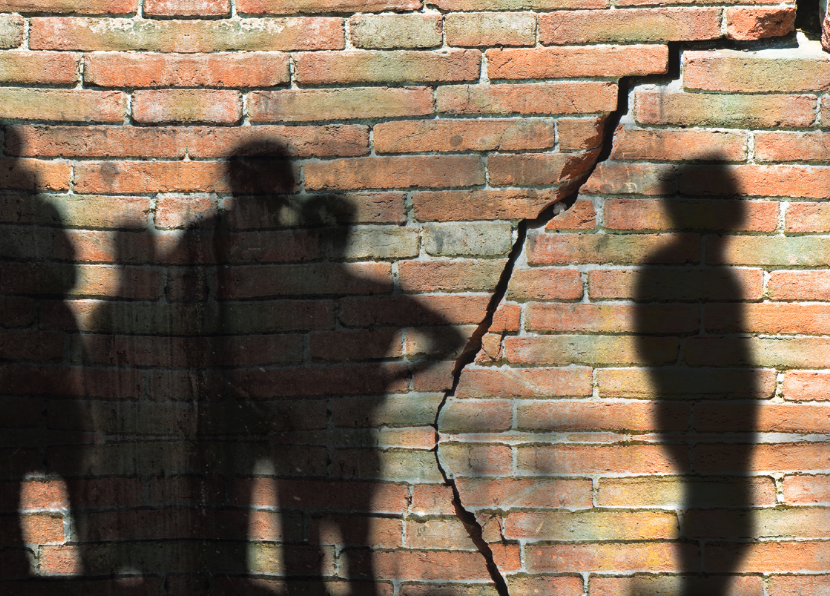
"In fragile and conflict-affected contexts, social norms are likely to have greater influence in relation to other factors than in stable democracies."
Far from being the exception, corruption in fragile and conflict-affected states (FCAS) is the rule. According to the Corruption, Justice and Legitimacy Program (CJL), understanding the systematic/endemic nature of corruption in such contexts requires looking at the role of social expectations that require people to abuse entrusted power for personal/familial/network gain - in other words, social norms. This document translates, distills, and adapts material on social norm change often developed in other fields and different contexts into a resource for anti-corruption and integrity promotion practitioners. It provides practical guidance on what social norms are, explains why they should matter to those working to diminish corruption in FCAS, and describes how social norms influence corruption in these contexts.
Social norms are the mutual expectations held by members of a group about the right way to behave in a particular situation. Even if all the other aspects of a robust integrity system are in place, the system of corruption will endure if the social norms affecting people's decisions to engage corruption are not addressed. Social norms are often more influential than personal attitudes and even morals when it comes to decisions around how to act. This observation is particularly pertinent in FCAS, where a person's relationships and networks with like-minded people are key to a his or her ability to survive and navigate life (governance institutions have far less reach and influence than they do in stable democracies). The innate need people have to fit in allows the group to exert pressure through social rewards and punishments, especially in a reality (FCAS) that places a primacy on cultivating and maintaining relationships within one's group or social network.
Throughout the resource's four sections - The Importance of Social Norms (Section A), Understanding Social Norms and Corruption (Section B), How Social Norms Influence Corrupt Behaviors (Section C), and From Theory to Practice (Section D) - various real-world examples are provided. For instance, in the case of systemic corruption of Uganda, the reader learns that the police officer, judge, or magistrate who demands bribes may do so in part because lack of enforcement of anti-corruption laws makes it easy for him to get away with it. But he is likely also experiencing significant pressure from family and friends to accumulate wealth and to provide for them once he has reached this important position. Thus, even if he wants to act with integrity, if he does not accumulate sufficient wealth, he will be criticised, ostracised, and potentially punished by his family in other ways. Social norms are central here in influencing corrupt patterns of behaviour in this fragile context - and many others.
Notably: "Just changing social norms is not the answer to stopping all corrupt acts. There are many factors that drive and enable behavior and programming will need to understand which are in play and how they relate in order to develop an effective, multi-faceted strategy. Systems-based analysis aids in understanding the influence of the factors and their relationships." The reference guide provides the tools for undertaking such an analysis. For example, the worksheet provided in Section D outlines a questions-based process that is designed to help: (i) identify whether and how social norms may be important contributing factors to systemic corruption; and (ii) determine which social norms are at play.
The reader is cautioned that "Interventions that proceed without deep enough analysis risk targeting attitudes or behavior, rather than unwritten rules behind the behavior, or may target the wrong people. Worse yet, there is the potential for doing real harm. A well-intentioned media campaign, for example, can easily reinforce the corrupt behavior, even when the message is positive. A program based on insufficient analysis could also put people at risk if it provokes a backlash or challenges powerful interests."
Appendices provide material such as a glossary, a bibliography for further reading, and a discussion of what those in fields other than FCAS are doing with social norms work.
90
Updates from the Social Norms Learning Collaborative, April 4 2022; and CJL website, April 11 2022.
- Log in to post comments