










































Manual for Oral Cholera Vaccination Campaigns
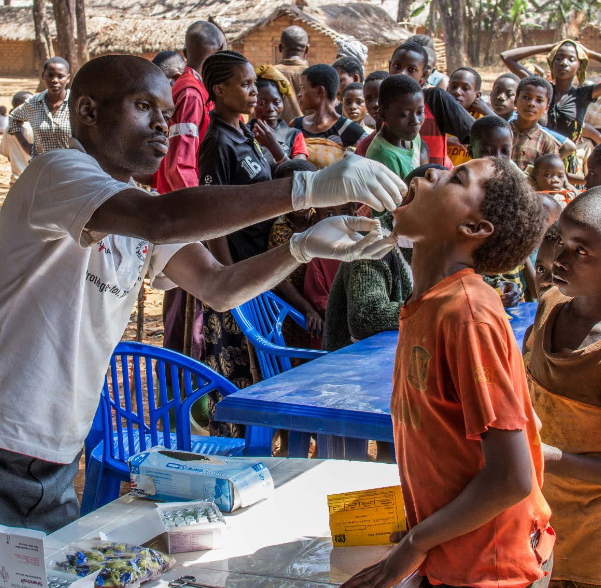
This manual is meant to be used by immunisation programme managers to develop training sessions in preparation for carrying out oral cholera vaccine (OCV) campaigns. It is also intended to serve as a reference guide for health care workers conducting the campaigns and administering the vaccine. The manual should enable programme managers to prepare quality training sessions and their own training materials in a relatively short period of time. The text throughout the document may be adapted to the specific needs of particular country and context. To assist planners, general information is provided along with instructions, comments, and space for inserting information to make the manual country- and context-specific.
Contents include:
- Introduction
- Background on cholera
- General information about oral cholera vaccines
- How oral cholera vaccines are used
- Integrating cholera vaccination with other interventions
- Educating and mobilising a community for a vaccination campaign - this section includes for example, a list of tips for developing social mobilisation activities for cholera vaccination campaigns:
- "Messages should address key concerns, beliefs, and misperceptions of the population. Beliefs and concerns can be discerned by, for example, interviewing health workers and holding focus group discussions with community members in the target areas.
- Form a technical committee to plan and organize the IEC [information, education, and communication] campaign. The committee should include community leaders, medical professionals, educators, women's association members and other key members of the community.
- Organize meetings such as a press conference and/or interviews with media representatives because they can play a vital role in raising awareness about cholera, educating about the vaccine, informing the public about the vaccination campaign, dispelling rumors and correcting misinformation.
- Try to have a prominent political or community leader launch the campaign and take the vaccine in a public location. Additionally, ensure that broadcast and print media cover the launch.
- During the first vaccination session, give the vaccine recipient written and verbal reminders about the need to obtain a second dose."
- Preparing for and conducting cholera vaccination campaigns
- Supervision and monitoring
- Conclusion
- References
- Annexes (Annexes A, B, D, and E are available in French as well as in English. Click here and scroll down for access.)
Before implementing a vaccination campaign, it is noted here that health workers need to be equipped with the knowledge and skills required to administer OCV and the ability to follow appropriate immunisation practices. Learning objectives for training health workers in conducting OCV campaigns are listed in the resource and include, for example: "Demonstrate the ability to effectively communicate to the public and clients about cholera and the vaccine, including providing accurate information about how to prevent cholera, where and when to seek health care, why the vaccine is being given, its safety, who is eligible to receive it, and the need for a second dose."
Funding for this activity was provided by the Delivering Oral Vaccine Effectively (DOVE) project. Supported by a grant from the Bill and Melinda Gates Foundation, DOVE is administered through the Johns Hopkins Bloomberg School of Public Health. The content of this manual is informed by documents originated by Médecins Sans Frontieres (MSF), the United Nations Children's Fund (UNICEF), and the World Health Organization (WHO).
English, with 4 of the 5 annexes also available in French
66
Stop Cholera website, July 11 2016. Image credit: Erwan Rogard, Médecins Sans Frontieres, 2015
- Log in to post comments