










































Dignity and Humanitarian Action in Displacement
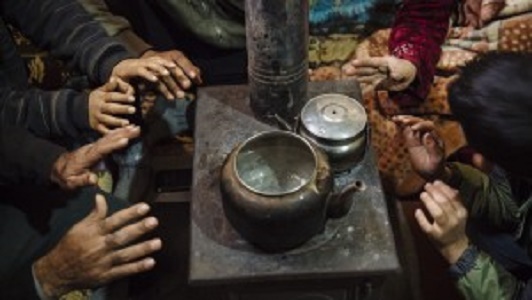
Humanitarian Policy Group (HPG) at the Overseas Development Institute (ODI)
"Dignity is a frequently invoked concept in humanitarian action and human rights. Yet, despite being a word with positive connotations, there is little agreement as to what it exactly entails."
From the Humanitarian Policy Group (HPG) of the Overseas Development Institute (ODI), this report describes findings of a two-year project to " understand what [dignity] meant to affected people in different places, with different cultures and at different times..." including "refugees, internally displaced people (IDPs) and returnees in Afghanistan, Bangladesh, Colombia, Lebanon, the Philippines and South Sudan understand dignity....It then compares their understanding with that of humanitarian workers in these responses, analysing what this means for humanitarian policy, programme design and implementation more broadly, and the localisation agenda more specifically. One of the questions that this project sought to answer was whether a more local response would be a more dignified response."
The research included a literature review in 2018, two in-depth case studies in 2018, and four smaller case studies in 2019. For the case studies, 340 individual interviews and 36 focus group discussions (FGDs) were conducted with displaced people and aid staff from various agencies in person and via phone and email by local researchers and research teams. "'[D]ignity’ was translated into the local language by local researchers, and the corresponding terms - wigar, haisi-yath and arzakhth in Pashto (Afghanistan); ijjot in Rohingya (Bangladesh); dignidad in Spanish (Colombia); karama in Arabic (Lebanon); maratabat and pagadatan in M’ranao (the Philippines) and twöit and kuga ba ‘borik in Kuku (South Sudan) - were used to analyse what the [local] populations meant by 'dignity'."
The report offers an overview of displacement contexts, the main findings, and the point of view of the humanitarian actors, including an analysis of similarities to and differences from the affected population. It concludes with key recommendations for policy and practice.
The report assigns importance to the root causes of displacement and the circumstances of the displaced, finding that the situation from which people fled, the location from which they fled (whether internally displaced or internationally displaced - IDP), and the length of displacement resulted in differing responses. Respect and self-reliance were common themes linked to religious practices (Rohingya and Afghanistan case studies), rights (Syrians in Lebanon), justice (IDPs in Colombia), and honour (IDPs in the Philippines).
Responses put more emphasis on "how aid was given, rather than what was given." For example, being treated courteously in queues for receiving material aid rather than being shouted at or beaten was stated by several population groups. "The main components of a dignified response included transparency, clear targeting and face-to-face communication." For example, a dignified distribution of feminine hygiene kits was cited as home delivery rather delivery in public queues. The explanation of equal distribution of aid was important as a measure of transparency - if larger families got larger amount or if the distribution policies were unclear. Cash-based aid was seen as more dignified, but only if it was delivered in a dignified way. People preferred being spoken to calmly and personally rather than receiving text messages. "The substance of aid became an issue of dignity only when it was deemed culturally insensitive or inappropriate." For example, "'dignity kits' given to [Rohingya] women as they crossed the border included pieces of white cloth, which no Rohingya wanted to wear because it resembled the kafan cloth used by Muslims for burial. "
Humanitarian aid workers spoke about dignity as "rights and protection, respect and communication, agency and independence and, in acute emergency settings, meeting basic needs." However, where responses from the two groups differed, the affected population felt that the aid response was dignified in Lebanon, where responses were similar, the displaced Syrians felt the response to be undignified. In addition, whether the response was from local or international aid workers did not seem to matter to the affected population, as long as it was dignified in their understanding.
The report suggests the following six recommendations for incorporating dignity into a humanitarian response including:
- "Invest time and resources in listening to the affected population from the start of the response, and use this information to inform project design and implementation.
- Use more face-to-face communication, especially in the assessment phase of the humanitarian response, and pay attention to what means of communication are appropriate at each stage.
- To better understand the local culture and language, include anthropologists, sociologists, translators and others in the response, who can help in understanding the affected population and the dynamics of their situation.
- Invest in programmes that promote self-reliance, where possible, and encourage more participation by affected communities in project design and implementation.
- Seek complementarity between local, national, regional and international actors to harness their strengths and reach better humanitarian outcomes that support the dignity of affected populations.
- Be more realistic about what humanitarians can and cannot do, and do not promise to uphold dignity. Rather, understand what it means in practice, in each context, and the limits of what can be done about it in the midst of a humanitarian response."
For case studies, please see "Dignity in displacement: case studies from Afghanistan, Colombia, the Philippines and South Sudan - March 5 2019" (Click here) and "Dignity and displaced Syrians in Lebanon - November 26 2018" (Click here).
C4D Network website, posted April 3 2019, accessed August 28 2019. Image credit: Kerrie Holloway
- Log in to post comments