











































Collective Communication and Community Engagement in Humanitarian Action
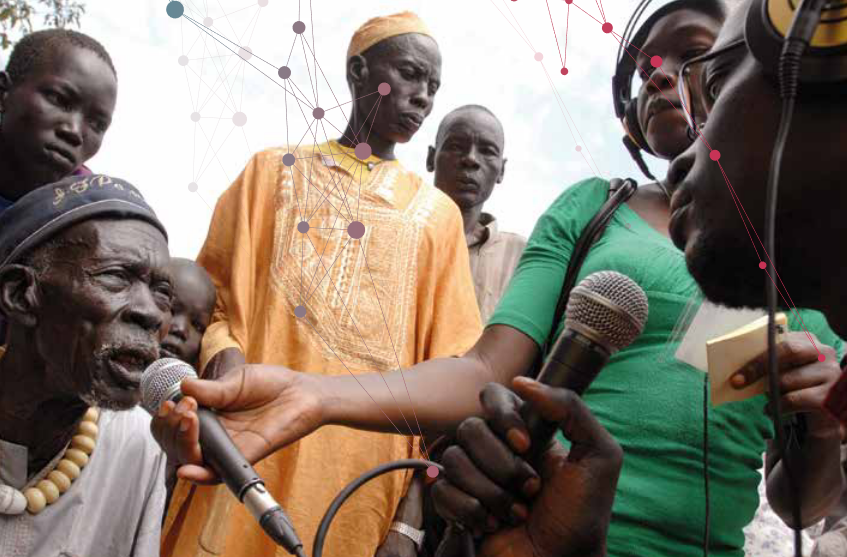
"Humanitarians now recognise that keeping people connected to each other, providing information for and communicating with people affected by conflict or natural disasters are among the most important elements of emergency response."
Communication and community engagement is an area of humanitarian action based on the principle that communication is aid. When affected people's voices are heard and they know what to expect, they can rebuild and connect with the wider world, speeding up recovery. From the CDAC Network, this is a guide for those implementing communication, community engagement, and accountability in humanitarian action. It suggests practices to support an active role for communities in humanitarian services and decision-making, to improve access to information, and to keep people connected to support their own ways of coping. It emphasises a collective approach where humanitarian actors coordinate, collaborate, and are held accountable for their actions.
The guide is based on action research into a number of initiatives and organisations, as well as gap analyses and recommendations for strengthening and scaling practice. It is intended primarily for practitioners and leaders working in national and international humanitarian and media development organisations, as well as other entities involved in preparedness, response, and recovery. Experience in the humanitarian sector and prior knowledge of relevant policies, plans, and processes is assumed, as is familiarity with the humanitarian architecture, the humanitarian programme cycle, and accountability to affected populations.
Main contents include:
- Part One explains why a guide on communication and community engagement is needed.
- Part Two describes what communication and community engagement encompasses, the vision for a collective approach, and the minimum actions and services for preparedness and response.
- Part Three provides guidance on implementing the minimum actions and services.
- Part Four explores the setting up of national, multi-stakeholder platforms.
- Part Five offers guidance on providing leadership, championing, and advocacy for change in this area.
- The Annex outlines commitments, standards, and donor requirements for communication and community engagement.
Case studies featured hail from Nepal, Bangladesh, Democratic Republic of the Congo, West Africa, the Philippines, Yemen, Dominica, and Greece. Key CDAC resources are indicated throughout the guide.
English, Arabic, French, Portuguese, Spanish
76
CDAC Network website, April 20 2022. Image credit: United Nations Office for the Coordination of Humanitarian Affairs (OCHA)
- Log in to post comments