










































Citizen Voices on Pandemic Flu Choices
"This Pilot Project provides 'proof of principle' to the vaccine community that a diverse group of stakeholders and citizens-at-large can be recruited to learn about a technical subject, interact respectfully, and reach a productive outcome on an important policy question."
This report examines the Public Engagement Pilot Project on Pandemic Influenza (PEPPPI), which was initiated in July 2005 by a network of 14 public and private organisations throughout the United States. Their goal was to discuss and rank goals for a pandemic influenza vaccination programme, and to pilot-test a new model for engaging citizens on vaccine-related policy decisions (The Vaccine Policy Analysis CollaborativE, or VPACE). The concern that motivated this action was the assessment, in the spring of 2005, that gaps existed in the first Health and Human Services (HHS) Influenza Pandemic Plan; more guidance was considered desirable on how best to allocate the relatively meagre supplies of vaccine likely to be available in the first months of a pandemic. To whom should it be given? To achieve what objectives?
The report describes the convening of a representative group of stakeholders and citizens-at-large, the structure and process of the resulting dialogues and deliberations, and the decisions and recommendations that emerged. In so doing, it offers insights about the effectiveness of this strategy - one that "goes well beyond the focus groups, consultations, and listening sessions that are routine today" - for addressing risk communication and policy-making.
Specifically, as explained here, PEPPPI was based on 3 premises: (1) that the formulation of vaccine policies which involve a consideration of values as well as science requires that policymakers understand the range of society's values on the issues; (2) that the process which will best reflect society's values is a public engagement process which involves both stakeholders and citizens with diverse backgrounds and perspectives; and (3) that an inclusive public process that provides an opportunity for frank, open dialogue and careful deliberation will produce sounder, more supportable decisions in the short term, and result in greater public trust over the longer term. With these principles in mind, organisers developed a public consultation that was carried out in 5 phases (2 day-and-a-half dialogue and deliberation meetings with approximately 50 national stakeholders and consultants; a day-long consultation with over 100 citizens-at-large in Atlanta, Georgia; and 3 half-day sessions conducted with approximately 150 citizens-at-large in Massachusetts, Nebraska, and Oregon).
An excerpt from the Preface of the report follows:
"At the outset of the project, some in the vaccine community feared the process could be disruptive by providing a platform for extreme viewpoints espoused by a small minority; that citizens could not be enticed to participate; that citizens would not be able to gain sufficient understanding of the technical issues surrounding pandemic influenza to offer useful advice; that the project would be a wild card added into the game of policy making around vaccines. No one who observed any of the multiple meetings of this project has described them as disruptive. Quite the contrary, most observers were surprised by the general public's interest in participating, their rapid grasp of the central issues, and their willingness to deliberate and make hard choices.
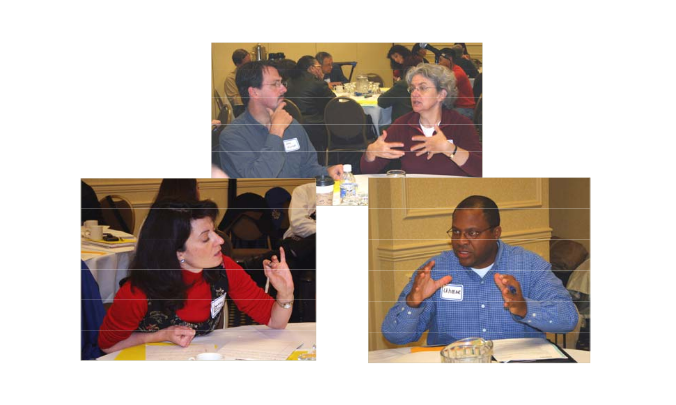
We were genuinely moved by seeing our democracy in action - seeing very diverse groups in Washington, D.C., Georgia, Massachusetts, Nebraska, and Oregon gather in table groups and engage in respectful, often passionate dialogue, knowledgeably shoulder the burden of weighing alternatives, find common ground, answer the vaccine question of interest to policy-makers, and provide their own ideas about how to best prepare for pandemic influenza.
We believe that this project has provided a much needed and timely demonstration for the vaccine community - that enhanced public engagement to address value laden issues in vaccine policy is feasible in real time and can yield useful recommendations."
An excerpt from the Executive Summary follows:
"Both citizens-at-large and the National Stakeholder Group decided - with a very high level of agreement - that assuring the functioning of society should be the first immunization goal followed in importance by reducing the individual deaths and hospitalizations due to influenza (i.e. protecting those who are most vulnerable and at risk)...
The groups also defined the federal government's role as providing broad guidance with responsibility for more specific interpretation and implementation remaining with state and local health authorities...
In addition, the PEPPPI groups developed and deemed important several recommendations related to pandemic planning. They stated the government needs to: (1) build and maintain the public's trust by decision-making that is transparent and characterized by seeking the public's input and coupled with enhanced communication and education; (2) allow the flexibility in the plan to address the unique circumstances dependent on the epidemiology of the event; (3) take action in addition to market forces to increase vaccine production capacity; (4) support the development of other public health measures to protect the public from the influenza illness; and, (5) provide resources to other regions of the world..."
University of Nebraska Public Policy Center website, December 10 2007 and May 27 2020.
- Log in to post comments